REVIEW · SCOTLAND TOURS
Elgin: Cathedral Exterior Tour
Stone remembers everything. At Elgin Cathedral, a two-hour guided walk brings royal feuds, fires, graves, and religious upheaval into focus around one of Scotland’s most striking ruins. I like the way the tour treats the cathedral as more than a photo stop, and I especially like that guide Lynda adds humor and lively anecdotes to the history. The main catch is practical: the tour does not include admission to the cathedral or access to its grounds, so you’ll need a separate ticket if you want to explore inside the official site.
This is a good choice if you want context before seeing the ruins on your own. You’ll hear how Elgin became the principal church of Moray, why conflict with royalty damaged the building, and how the Protestant Reformation helped leave it roofless. Wear solid shoes, watch for uneven ground, and dress for Moray weather.
In This Review
- Key points to know before you book
- Why Elgin Cathedral deserves more than a quick photo
- Starting at the 13th-century West Front
- Royal disputes and a battle inside the cathedral
- The two fires and the cathedral’s long decline
- Graveyard etiquette and the people beneath the stones
- From forgotten ruin to major attraction
- What the $21 price gets you
- Timing, comfort, and access
- Who will enjoy this Elgin experience most
- Should you book the Elgin Cathedral Exterior Tour?
- FAQ
- Where does the Elgin Cathedral Exterior Tour meet?
- How long does the tour last?
- How much does the tour cost?
- Is admission to Elgin Cathedral included?
- Can I access the cathedral grounds during the tour?
- What languages are available?
- Is the tour wheelchair accessible?
- Are pets allowed?
- Can I cancel the booking?
Key points to know before you book
- A two-hour story-led walk: The guide follows Elgin Cathedral’s rise, destruction, abandonment, and later revival rather than simply pointing out attractive stones.
- Meet at the West Front gates: The tour begins outside the towering 13th-century entrance, one of the most impressive parts of the cathedral complex.
- Royal conflict shaped the ruins: You’ll hear about disputes with Scottish royals and a battle fought within the cathedral walls.
- Graves are part of the story: The guide explains graveyard etiquette, points out burial locations, and discusses selected burials.
- Lynda brings humor to serious history: Her passionate delivery and colorful anecdotes were the most praised part of the experience.
- The cathedral admission is separate: The guided exterior tour and official access to the cathedral grounds are not included in the $21 price.
Why Elgin Cathedral deserves more than a quick photo
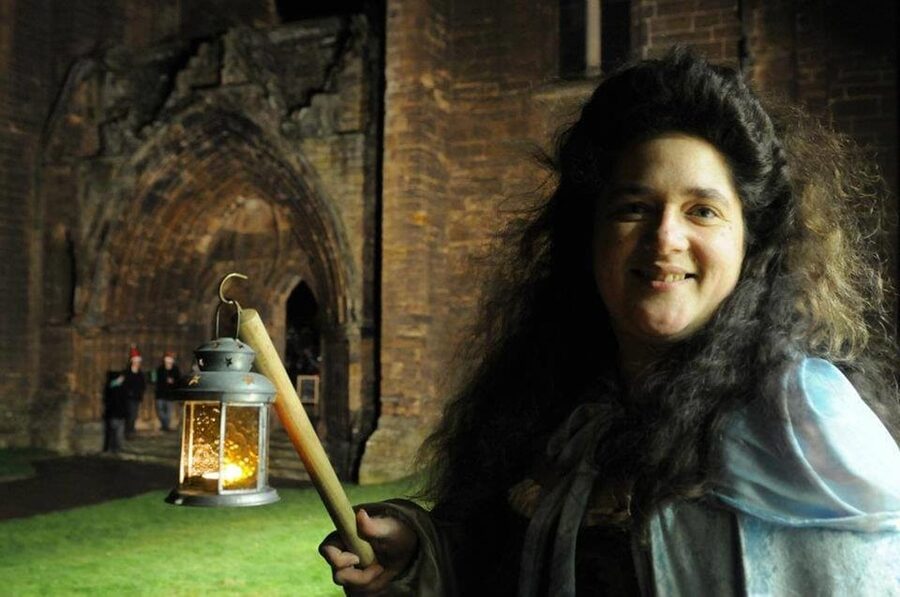
Elgin Cathedral is often called the Lantern of the North, a name that hints at its former importance. It was not built as a quiet country church. It served as the principal church of Moray, with bishops, clergy, royal connections, and considerable ambition attached to it.
That matters because ruins can be hard to read without help. A broken arch may look beautiful, but it does not automatically explain who paid for it, who worshipped beneath it, or why the roof vanished. This tour gives you that missing frame.
I like the way the experience focuses on cause and effect. The cathedral was built, damaged, repaired, altered, abandoned, and later reclaimed as a major historic attraction. You are not just shown a medieval shell. You are shown the chain of events that turned a powerful religious center into a roofless monument.
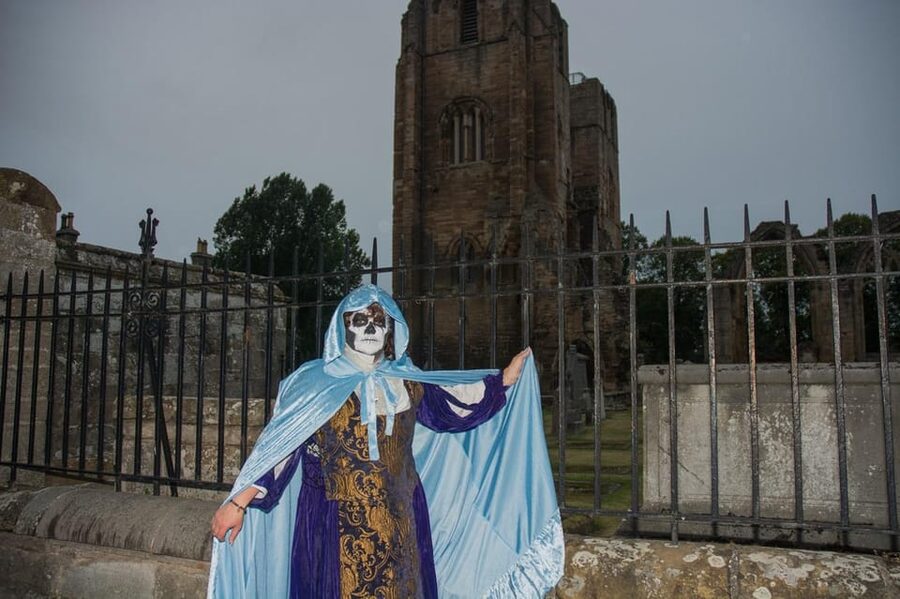
The exterior setting also suits the subject. You meet at the gates of the West Front, where the scale of the 13th-century architecture gives you an immediate sense of the cathedral’s former power. Even before the stories begin, the stonework makes a strong first impression.
A few more options to weigh up in Scotland
- Edinburgh: Loch Ness, Glencoe & the Scottish Highlands Tour
★ 4.6 · 17,446 reviews - From Edinburgh: Loch Ness, Glencoe & Scottish Highlands Tour
★ 4.7 · 11,381 reviews - Inverness: Isle of Skye and Eilean Donan Castle Day Trip
★ 4.8 · 4,136 reviews
Starting at the 13th-century West Front
The meeting point is the gates of Elgin Cathedral. This is useful because you do not need to search for a café, hotel, or distant pickup point. You arrive at the landmark itself and begin with the most dramatic architectural view.
The West Front is the natural opening chapter. Its height and surviving detail help you picture how imposing the complete cathedral must have been. From here, the guide can explain Elgin’s role as the main church of Moray and set up the cathedral’s later troubles.
I would arrive a little early so you can get oriented before the walk starts. The tour does not provide transportation, so you need to make your own way to Elgin Cathedral. Food, drinks, and personal expenses are also not included.
Because this is an exterior tour, you should understand what you are buying. The guide provides the history and interpretation, but the official cathedral admission and access to the cathedral grounds are separate. If you plan to see the site from inside the managed visitor area, budget for that additional visit.
Royal disputes and a battle inside the cathedral
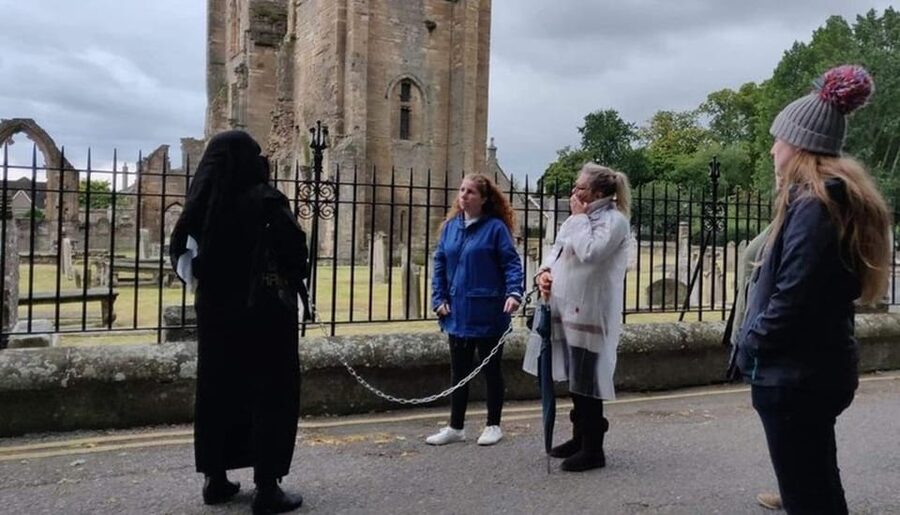
The strongest stories here are not limited to architecture. The tour covers disputes with royals that caused damage to the cathedral, along with a battle fought within the walls.
That combination gives the ruins a sharper edge. Medieval cathedrals were religious buildings, but they also sat close to political power. Bishops could be influential, royal decisions could affect church property, and local conflicts could spill into sacred places. Elgin’s damage was tied to that uneasy mix of religion, authority, and force.
I find this part especially useful for anyone who has seen Scottish castles and churches but wants to understand how they connect. The cathedral was not isolated from national politics. Its fate was shaped by the people who controlled Scotland and by the struggles that reached Moray.
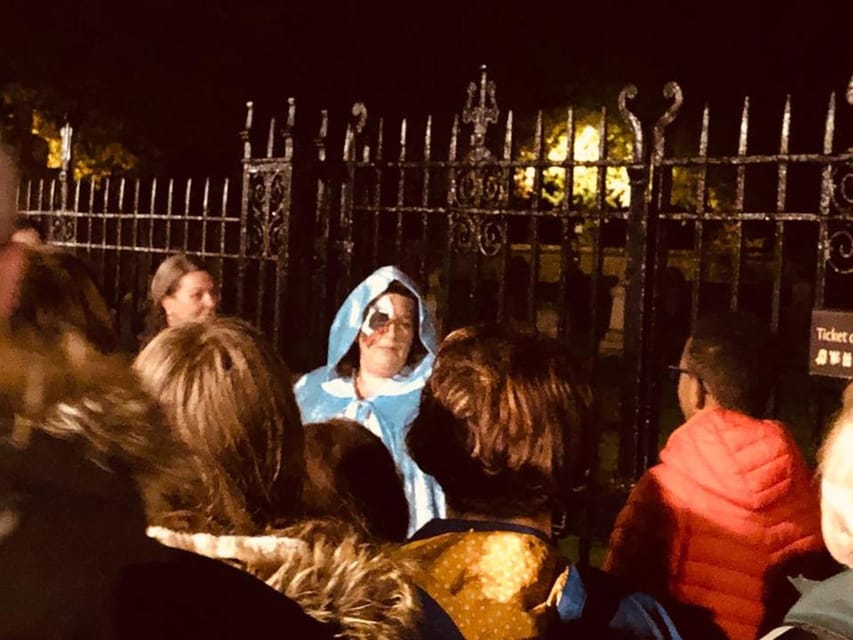
The guide’s job is important here. A list of dates would make the story feel distant. A passionate guide can show why a disagreement mattered and how a political clash left marks on the building. Lynda’s humor and anecdotes appear to be a real strength, helping heavy material stay lively without making light of the site.
The two fires and the cathedral’s long decline
The tour also explains the Tales of the Two Fires, along with the structural confusion that followed the Protestant Reformation of 1560.
Fire is easy to understand as a force of destruction, but a cathedral’s decline rarely comes from one event alone. Damage can weaken a building, repairs can change its shape, religious policy can remove its purpose, and abandonment can leave the rest to weather and neglect. This is the kind of layered explanation that makes a ruin easier to read.
The Reformation forms a major turning point. When religious life changed in Scotland, the cathedral no longer held the same place in public and spiritual life. The tour connects that upheaval with the building’s later condition, including the loss of its roof and the long silence that followed.
You may hear the site described as surviving abandonment, but that survival should not be confused with good preservation. A roofless cathedral is dramatic precisely because so much is missing. The tour helps you separate what was destroyed by fire, what was damaged by conflict, and what disappeared after the building no longer served its original purpose.
A different kind of day out entirely:
- Edinburgh: Glenfinnan Viaduct, Glencoe & Fort William
★ 4.8 · 3,366 reviews - Loch Ness: Urquhart Castle Round-Trip Cruise
★ 4.4 · 3,070 reviews - Edinburgh: Loch Ness, Glencoe, Coos & the Highlands Day Tour
★ 4.6 · 2,539 reviews - From Edinburgh: 3-Day Isle of Skye and The Highlands Tour
★ 4.8 · 2,405 reviews
Graveyard etiquette and the people beneath the stones
The cemetery adds a quieter, more personal layer to the experience. The tour includes guidance on historic graveyard etiquette, the locations of graves, and details about some of the burials.
This is practical as well as interesting. Old graveyards are active places of remembrance, not just collections of atmospheric photographs. Knowing where to walk, how to behave around stones, and when to lower your camera helps you visit with respect.
Photography is allowed, but the site calls for restraint. You may find striking angles in the stonework and graves, especially in changing Scottish weather, but avoid treating every marker as a prop. The guide’s explanation of grave locations can also help you notice details you might otherwise pass without seeing.
I appreciate that burials are included in the tour rather than treated as an unrelated aside. The cathedral was a place of worship, power, and burial. Grave markers connect the grand story of bishops and royals to individual lives that continued around the building for generations.
The subject can be macabre, but the tone is not necessarily grim. Lynda’s humor and anecdotes are particularly valuable here, giving the cemetery section a human touch while keeping proper respect for the dead.
From forgotten ruin to major attraction
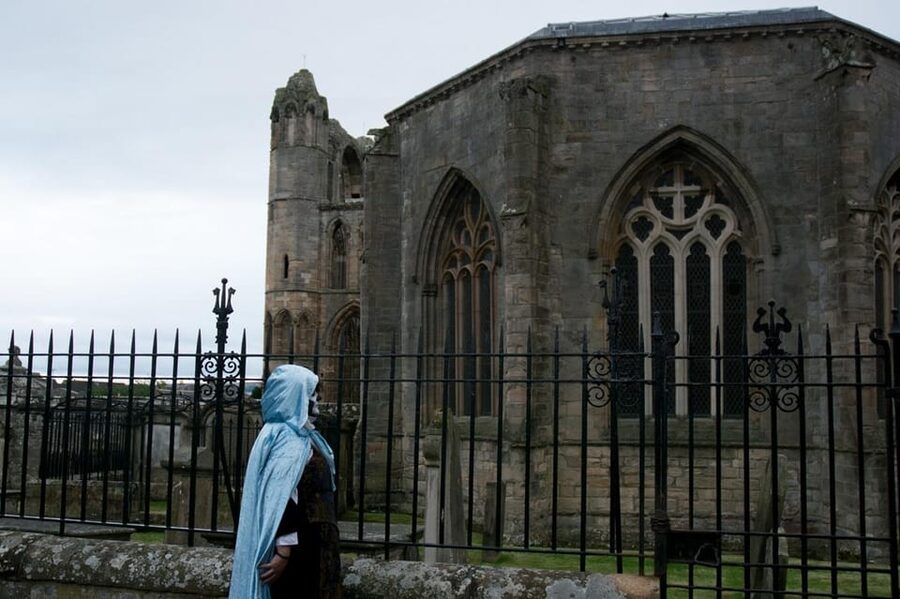
The final part of the story looks at the cathedral’s 19th-century revival. After years of abandonment, Elgin Cathedral was transformed from a neglected ruin into a major visitor attraction.
That change says a lot about how Scotland began to value its medieval remains. The building no longer functioned as a cathedral, but its architecture, setting, and stories gained a new public life. Preservation did not restore the church to its original purpose. Instead, it protected the remains so you could study and appreciate them today.
I like this ending because it avoids presenting the ruin as a simple tragedy. Elgin Cathedral did fall, but it was not forgotten forever. Its later revival created the experience you can have now, where broken walls still carry political, religious, and social meaning.
This is also where a separate admission may make sense. The guided walk gives you an interpretive foundation, while a later visit to the official cathedral site can let you spend more time with the surviving architecture. Booking the tour first may help you know what to look for when you visit the grounds yourself.
What the $21 price gets you
At $21 per person, the tour is not the cheapest way to see Elgin Cathedral because it does not include admission. Still, the price can be reasonable if you value a guide who explains the site rather than leaving you with a handful of dates and photographs.
You are paying for two hours of live storytelling in English or Spanish. The guide covers construction, political conflict, fire, the Reformation, burial customs, graves, abandonment, and the 19th-century revival. That is a substantial amount of interpretation for a single landmark.
The best value comes if you are genuinely interested in the cathedral’s story. If you only want a quick look at the West Front, you may prefer to visit independently. If you want to understand why the ruins look as they do, the guided format earns its keep.
A verified booking from Belgium gave the experience a five-out-of-five rating and singled out Lynda’s passion, humor, and detailed anecdotes. The most useful advice was to take the tour before visiting the cathedral itself. I agree with that order: first learn the story, then spend time looking at the stones.
Timing, comfort, and access
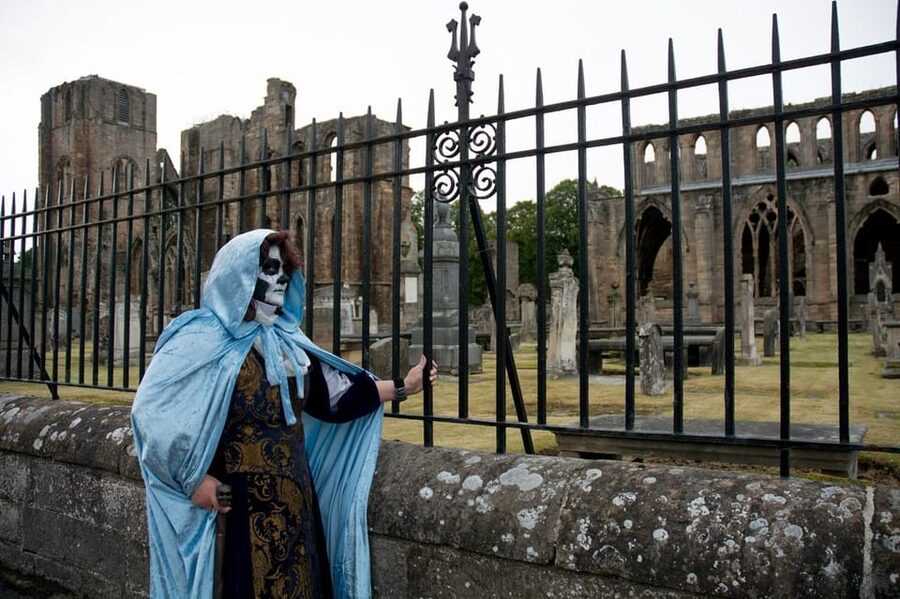
The tour lasts two hours, so it is long enough to develop the story without taking up an entire day. Starting times vary, so check availability when you book and build in enough time to reach the gates.
Wear comfortable walking shoes. The ground may be uneven, and you should watch your step, especially while listening to the guide and looking up at the architecture. The tour is listed as wheelchair accessible, but uneven surfaces can still affect comfort and movement, so it is sensible to confirm current site conditions if that is important for your visit.
Moray weather can change quickly. Check the forecast and dress appropriately, with protection from rain and wind if needed. There is no indoor comfort built into an exterior walk, so your clothing will shape the experience more than it might on a museum visit.
Pets are not allowed, although assistance dogs are permitted. Photography is allowed, but use good judgment around the graveyard and other sensitive parts of the site.
Cancellation is flexible, with a full refund available when you cancel at least 24 hours in advance. You can also reserve now and pay later, which helps if your Scotland itinerary is still taking shape.
Who will enjoy this Elgin experience most
I would recommend the tour to you if you enjoy:
- Medieval churches and Scottish religious history
- Ruins that need explanation to make sense
- Stories about royal conflict and local power
- Graveyards, burial customs, and historic places
- Guided walks with humor and personal storytelling
- Photography with historical context
It is also a good fit for a visitor who wants more than a polished attraction. The cathedral’s appeal lies partly in its damage and survival. You will hear about fire, political struggles, religious change, and neglect, not just admire the remaining arches.
Families with older children may enjoy the battle and fire stories, especially if young listeners like dramatic history. The graveyard etiquette section can also teach respectful behavior at historic sites.
I would be more cautious if your priority is a fully indoor activity, a short photo stop, or a tour that includes every admission fee. This walk takes place outside, lasts two hours, and requires separate planning for the cathedral grounds.
Should you book the Elgin Cathedral Exterior Tour?
Book it if you want the ruins to make sense. The price is fair for two hours with a live guide, especially when the subject includes royal disputes, fires, the Reformation, graves, and the cathedral’s later revival. Lynda’s humor and passion add the human touch that turns a stone wall into a story.
Plan the visit in two parts if possible: take the exterior tour first, then pay separately to enter the cathedral grounds. Bring sensible shoes, weather-ready clothing, and a respectful approach to photography.
Skip it if you only need a fast view of the West Front or do not want to pay separately for admission. For most history-minded visitors, though, this is a worthwhile way to meet the Lantern of the North before exploring its ruins at your own pace.
FAQ
Where does the Elgin Cathedral Exterior Tour meet?
The meeting point is at the gates of Elgin Cathedral.
How long does the tour last?
The tour lasts two hours.
How much does the tour cost?
The listed price is $21 per person.
Is admission to Elgin Cathedral included?
No. Admission to Elgin Cathedral is not included in the tour price.
Can I access the cathedral grounds during the tour?
Access to the Elgin Cathedral grounds is not included.
What languages are available?
The live tour guide is available in English and Spanish.
Is the tour wheelchair accessible?
Yes, the activity is listed as wheelchair accessible. The ground may be uneven in places, so watch your step.
Are pets allowed?
Pets are not allowed. Assistance dogs are permitted.
Can I cancel the booking?
Yes. You can cancel up to 24 hours in advance for a full refund. You can also reserve now and pay later.
Just added in Scotland
- From Edinburgh: Best of Scotland Small-Group Day Tour★ 4.7 · 61 reviews
- Stornoway: Private Tour Isle of Lewis★ 5.0 · 2 reviews
- Stirling: Daily Guided Walking Tour (11am & 2pm)★ 4.7 · 66 reviews
- Stirling: Private Old Town & Castle Walking Tour★ 4.9 · 17 reviews
- Edinburgh: Stirling, Whisky & St Andrews Tour in Italian★ 3.9 · 14 reviews
- Stirling: Historical Walking Tour in Spanish★ 4.4 · 4 reviews
- Stirling Castle: Skip-the-Line Guided Tour in Spanish★ 4.8 · 19 reviews
- From Glasgow: Standing Stones, Castles & Highlands Tour★ 4.8 · 44 reviews
Scotland Tours, compared.

Loch Ness, Glencoe & the Scottish Highlands Tour
Read our review →
Isle of Skye and Eilean Donan Castle Day Trip
Read our review →


‘Firth of Forth’ Three Bridges Sightseeing Cruise
Read our review →