REVIEW · SCOTLAND TOURS
Elgin: In and out the Dusty Closes
Elgin’s narrow closes still tell uncomfortable stories. This two-hour walking tour takes you away from the main street and into the stone passageways where families lived, worked, argued, worshipped, and coped with disease long before modern services arrived. I like the focus on ordinary daily life and the attention given to women, widows, and housewives, subjects often pushed aside in town histories. I also like that you see original details from the 1600s rather than hearing only a general story about Elgin.
The main consideration is the walking surface. The tour is listed as wheelchair accessible, but historic areas can include uneven ground, and comfortable shoes are essential. Some topics are also grim, including epidemics, public humiliation, and penalties imposed on women, so this is not a light ghost-story stroll.
In This Review
- Key things to know before you book
- Why Elgin’s closes are worth your time
- Meeting the closes at the stone pillar
- Water, animals, and homes before modern services
- Epidemics in crowded passageways
- Women, widows, and the rules of respectable life
- Original details from the 1600s
- How the two-hour walk fits your day
- Who will enjoy this Elgin walk most
- Practical advice for a better visit
- Should you book In and Out the Dusty Closes?
- FAQ
- How long does the Elgin Dusty Closes tour last?
- What is the price?
- Where is the meeting point?
- Which languages are available?
- Is the tour wheelchair accessible?
- What should I wear?
- Are pets allowed?
Key things to know before you book
- The closes are the main attraction: You walk through narrow historic alleyways that helped shape Elgin from the 1100s onward.
- Daily life comes first: Expect practical details about water, livestock, housing, sanitation, family security, and work.
- Women’s stories receive real attention: The tour covers widows, housewives, religious pressure, and punishments for speaking or acting against social rules.
- The past was not sanitary: Epidemics, including bilious fever in the 1840s, form an important part of the story.
- The meeting point is easy to identify: Look for a stone pillar with a few steps at its base and two benches nearby.
- The price is moderate: At $21 per person, the tour offers a focused local-history experience without the cost or time commitment of a large attraction.
Why Elgin’s closes are worth your time

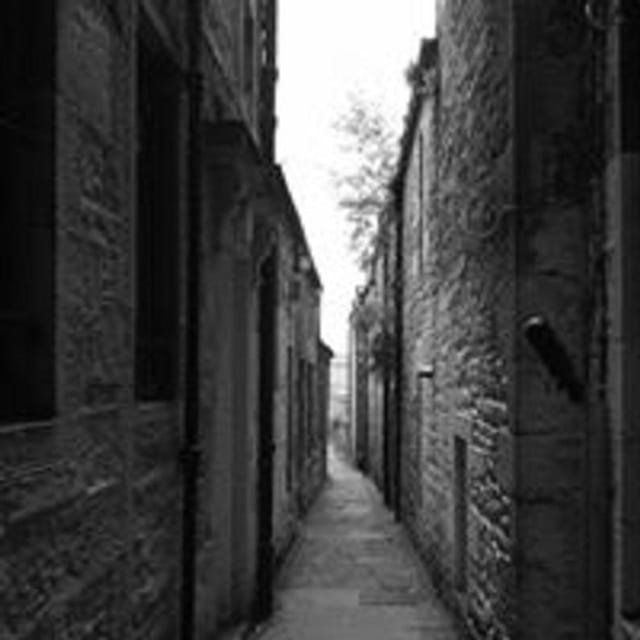
Elgin’s High Street gives you the public face of the town. The closes show you something more private and cramped. These narrow lanes were not simply shortcuts between streets. They were places where people lived close together, carried water, kept animals, raised children, earned money, and dealt with neighbors at very short range.
That physical setting matters. A museum can show you a drawing of an old dwelling, but walking through a tight stone passage gives you a better sense of how little space many families had. The close becomes part of the evidence. You can look at the surviving structure while hearing how people used it.
The tour reaches across several centuries, from the medieval town founded as a Royal Burgh in the 1100s through the 1600s, 1700s, and 1800s. That broad time span lets you see both change and stubborn continuity. Buildings and customs shifted, but basic problems such as water, waste, illness, money, and social control remained familiar for generations.
I find this kind of town walk most useful when it connects grand events to small tasks. Instead of treating Elgin’s past as a list of dates, the tour asks how someone actually got water, fed a family, protected a home, or survived an outbreak. Those questions make the old streets easier to understand.
A few more options to weigh up in Scotland
- Edinburgh: Loch Ness, Glencoe & the Scottish Highlands Tour
★ 4.6 · 17,446 reviews - From Edinburgh: Loch Ness, Glencoe & Scottish Highlands Tour
★ 4.7 · 11,381 reviews - Inverness: Isle of Skye and Eilean Donan Castle Day Trip
★ 4.8 · 4,136 reviews
Meeting the closes at the stone pillar
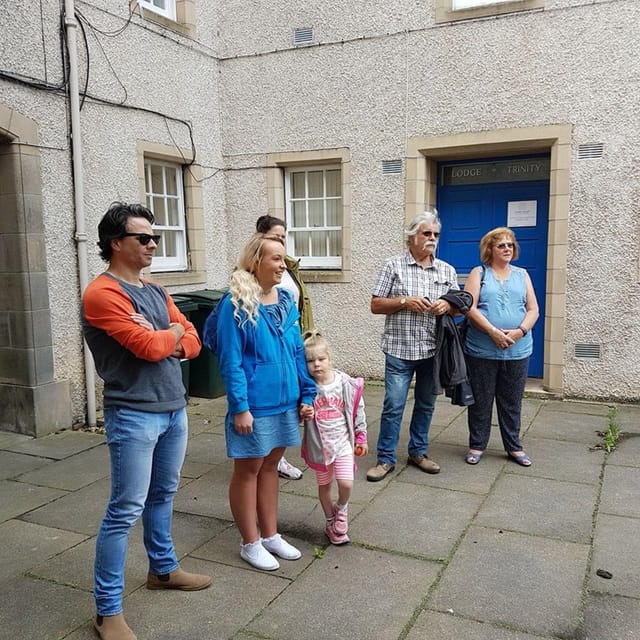
Your starting point is marked by a stone pillar with a few steps at the bottom and two benches beside it. That is a useful landmark in an old town, where a street address alone may not be enough. Arrive with enough time to identify the pillar and settle in before the guide begins.
The opening part of the walk should help you understand what a close was and why these passages mattered. You will be looking at more than a pretty old lane. The guide connects the physical layout to the people who occupied it, including residents whose work and home life were mixed together.
Do not expect a long coach ride or a string of distant sights. This is a compact walking experience in historic Elgin. That keeps the focus tight, but it also means you spend most of the two hours on foot. If you prefer a tour with frequent indoor stops, seating, or elaborate displays, this may feel fairly spare.
The tour is described as lasting two hours, although the general information also gives a one-to-two-hour range. Plan for the full two hours, and check the available starting time when booking. The guide speaks English or Spanish, so choose the language that will let you follow the social and historical details most comfortably.
Water, animals, and homes before modern services
One of the strongest parts of the walk is its attention to basic household survival. Before indoor plumbing and electricity, a home required far more daily labor than most modern visitors first imagine.
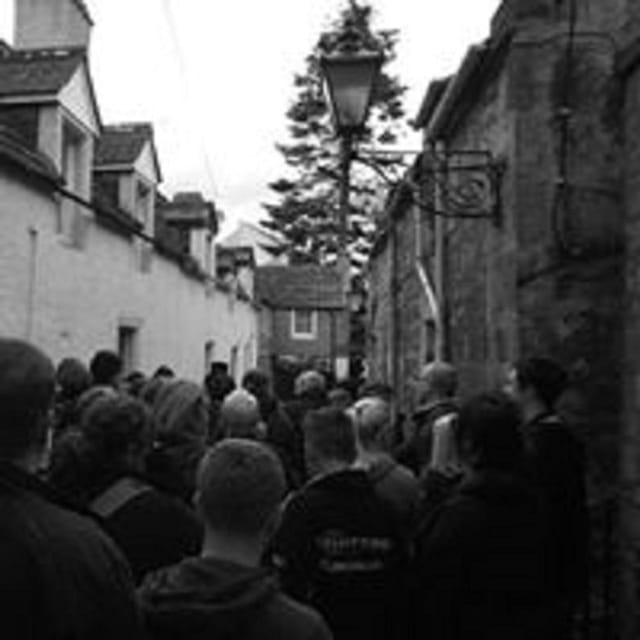
The tour points out Elgin’s only surviving street tap and explains the work involved in collecting water. A street tap may sound like a small feature, but it represents a major part of everyday life. Someone had to carry water back to the household, often more than once. The task affected cooking, cleaning, washing, and the care of children or animals.
You will also hear how people managed livestock in a tight urban setting. Without supermarkets, families needed ways to keep animals close to home. The discussion of urban livestock helps explain why old closes were practical working spaces, not just residential lanes.
This is where I see good value in the tour. The price is not buying access to a grand monument or a large collection. It is buying interpretation of details you could easily walk past. A street feature, doorway, or cramped passage can seem ordinary until someone explains how it fitted into household survival.
The tradeoff is that the tour depends heavily on listening. The closes themselves may not provide many polished visitor facilities. Wear shoes that can handle uneven surfaces, and bring clothing for changing weather. Elgin’s narrow lanes can feel very different from the open High Street, but the weather remains the weather.
Epidemics in crowded passageways
Disease becomes more understandable when you picture people living close together with limited water and sanitation. The tour covers historical plagues and the bilious fever outbreak of the 1840s, along with the ways Elgin tried to respond.
The important point is not simply naming an epidemic. You learn about the difficulty of managing illness when households were crowded together and modern ideas of public health were limited. Separating sick people, keeping spaces clean, and controlling contact would have been difficult in narrow closes where neighbors shared access routes and essential resources.
This section gives the walk some weight. You are not hearing a tidy story in which the town faces a problem and solves it. You are hearing about uncertainty, limited tools, and the strain placed on families. That makes the past feel less distant and more human.
I would especially recommend this tour if you enjoy social history rather than military or architectural history alone. The buildings provide the setting, but the real subject is how people responded when their surroundings offered little privacy and few safeguards.
The epidemic material may not suit young children or anyone looking for a cheerful afternoon activity. The description includes plagues, illness, poverty, and difficult social rules. The guide’s approach will shape the mood, but you should expect serious subjects.
A different kind of day out entirely:
- Edinburgh: Glenfinnan Viaduct, Glencoe & Fort William
★ 4.8 · 3,366 reviews - Loch Ness: Urquhart Castle Round-Trip Cruise
★ 4.4 · 3,070 reviews - Edinburgh: Loch Ness, Glencoe, Coos & the Highlands Day Tour
★ 4.6 · 2,539 reviews - From Edinburgh: 3-Day Isle of Skye and The Highlands Tour
★ 4.8 · 2,405 reviews
Women, widows, and the rules of respectable life
The tour gives unusual attention to women in the closes. That is one of its best features. Instead of treating women as background figures in household scenes, it asks how they earned money, raised families, followed religious rules, and handled social pressure.
Widows receive particular attention. In the 17th and 18th centuries, women could face barriers to formal employment, yet a widow still had to provide for herself and her children. The walk explains the less visible ways women found income and kept households going. The phrase underground economies describes these practical routes to survival, not necessarily criminal activity.
You also hear about the life of a housewife and the expectations placed on her. The tour covers penalties for disobedience to a husband, strict religious shame around natural cycles, and social condemnation connected with reading or speaking. These details show how control worked in ordinary life. It was not limited to courts or prisons. It could appear through neighbors, religious rules, public embarrassment, and household authority.
The discussion of the Scold’s Bridle is especially stark. This device and other public humiliations were used against women judged to have spoken out of turn. The point is not shock for its own sake. It helps you see how the community tried to silence behavior that challenged accepted roles.
I appreciate that the tour does not present the past as quaint. Old stonework and narrow lanes can look attractive, but the people who lived there faced real limits on money, movement, education, and personal choice. The women’s stories give the walk a sharper moral edge.
Original details from the 1600s
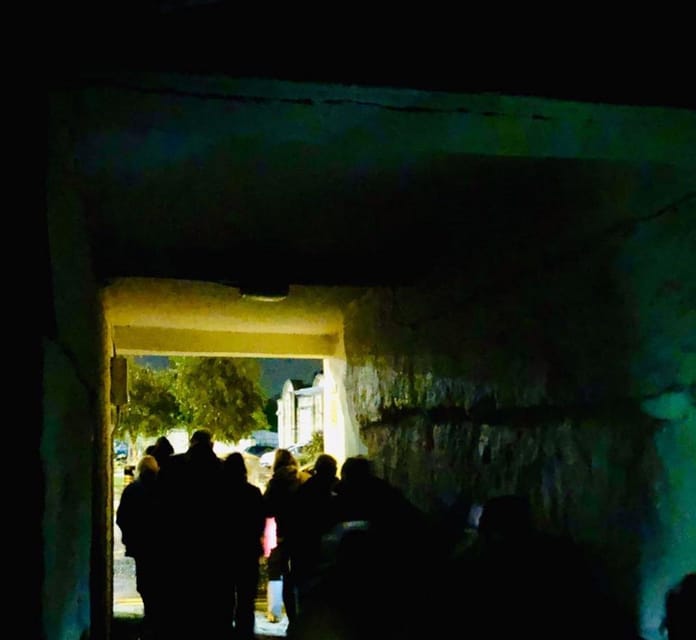
The close architecture is not just scenery between talking points. You will see original details from the 1600s, giving the guide a chance to connect stone, layout, and use.
Do not expect every feature to be preserved as a complete period room. This is an outdoor walk through historic areas, not a furnished house museum. The value comes from looking carefully at what remains and imagining how several generations adapted it.
A doorway or passage can tell you about security, privacy, and access. A narrow route can suggest how closely households depended on one another. The tour also covers family life and housing, so the architectural details support a wider explanation rather than becoming isolated curiosities.
The closes are most rewarding when you slow down enough to notice scale. Compare the width of the passage with the number of people who once used it. Think about carrying water, moving animals, or bringing supplies through the same space. Those simple comparisons make the history tangible without requiring a large display.
Because the setting is historic, surfaces may be uneven. Wheelchair access is listed, but the practical experience can still depend on the exact section of close and the conditions on the day. If mobility is a major concern, contact the provider before booking and ask about the route. That is sensible planning, not unnecessary caution.
How the two-hour walk fits your day
At $21 per person, this is a reasonable choice for a focused introduction to Elgin’s local past. You are paying for a live guide, a structured route, and interpretation of places that may not explain themselves. For many people, that is better value than spending the same amount on a broad attraction with little connection to the town around it.
The tour does not include meals, drinks, transport to the meeting point, or personal expenses. You need to make your own way to the stone pillar and benches, and you should have water with you if the weather is warm. Since the walk lasts about two hours, eat beforehand if you prefer not to tour hungry.
The short length is an advantage for a day in Moray. You can fit it around other plans without surrendering an entire afternoon. It also makes the tour suitable for someone who wants local context but does not want a full-day historical program.
On the other hand, two hours can only cover selected stories. You will not receive every chapter of Elgin’s past, and the tour is not designed as a complete guide to Moray. Think of it as a close look at urban life, social rules, and public health in a particular part of town.
Free cancellation up to 24 hours before the tour gives you some protection if the weather or your schedule changes. You can also reserve and pay later, which helps if you are arranging several activities in Scotland. Pets are not allowed, although assistance dogs are permitted.
Who will enjoy this Elgin walk most
I would choose this tour if you like local stories, old buildings, and the practical side of history. It suits visitors who want to know how ordinary people lived, not just who ruled the town or which battles took place nearby.
It is also a good fit for anyone interested in women’s history. The material on widows, housewives, social expectations, and public punishment is more specific than the usual general account of historic town life.
Families with older children may find the close setting and unusual details memorable, but the difficult subjects deserve consideration. Very young children may have limited patience for a two-hour guided walk, especially if the weather is poor.
This is less suitable if you want a relaxed photo walk, a supernatural tour built mainly around scares, or a route with little walking. Despite the provider’s name, the strongest material here is social history and local life. The tone may include dark subjects, but the main interest is how people endured them.
Practical advice for a better visit
Wear supportive walking shoes. Historic closeways can be uneven, and comfort matters more than appearance on a two-hour route.
Dress for changing weather. Narrow lanes do not remove the need for a waterproof layer, and you may spend the full tour outdoors.
Arrive at the stone pillar early enough to identify the two benches and confirm that you are in the right place. Keep the booking details available in case you need to check the exact start time.
Listen for the small details. The street tap, household arrangements, animal keeping, and rules imposed on women are the parts that give the tour its character. If you focus only on dates and building ages, you will miss the point.
If you use a wheelchair, note both facts provided for the tour: it is wheelchair accessible, and it includes uneven historic surfaces. Ask about the route in advance so you know what to expect on the day.
Should you book In and Out the Dusty Closes?
Book it if you want a compact, serious look at Elgin from the inside out. At $21, the tour offers good value for its guide-led stories, surviving 1600s details, and attention to water, illness, work, family life, and women’s choices.
Skip it if you dislike uneven walking, difficult historical subjects, or tours that rely mainly on spoken explanation. For everyone else, this is a useful way to see Elgin beyond the main street. The closes reveal a town built not only from stone, but from daily effort, strict rules, and remarkable persistence.
FAQ
How long does the Elgin Dusty Closes tour last?
The tour is scheduled for two hours. The activity information also describes the duration as one to two hours, so check the available start time and plan for a full two-hour visit.
What is the price?
The listed price is $21 per person.
Where is the meeting point?
Meet at a stone pillar with a few steps at its base and two benches nearby.
Which languages are available?
The live guide is available in English and Spanish.
Is the tour wheelchair accessible?
Yes, the tour is listed as wheelchair accessible. It also passes through historic areas with uneven surfaces, so ask about the route in advance if accessibility is important to you.
What should I wear?
Wear comfortable walking shoes and prepare for changing weather conditions.
Are pets allowed?
Pets are not allowed. Assistance dogs are permitted.
Just added in Scotland
- From Edinburgh: Best of Scotland Small-Group Day Tour★ 4.7 · 61 reviews
- Stornoway: Private Tour Isle of Lewis★ 5.0 · 2 reviews
- Stirling: Private Old Town & Castle Walking Tour★ 4.9 · 17 reviews
- Stirling: Daily Guided Walking Tour (11am & 2pm)★ 4.7 · 66 reviews
- Edinburgh: Stirling, Whisky & St Andrews Tour in Italian★ 3.9 · 14 reviews
- Stirling: Historical Walking Tour in Spanish★ 4.4 · 4 reviews
- Stirling Castle: Skip-the-Line Guided Tour in Spanish★ 4.8 · 19 reviews
- From Glasgow: Standing Stones, Castles & Highlands Tour★ 4.8 · 44 reviews
Scotland Tours, compared.

Loch Ness, Glencoe & the Scottish Highlands Tour
Read our review →
Isle of Skye and Eilean Donan Castle Day Trip
Read our review →


‘Firth of Forth’ Three Bridges Sightseeing Cruise
Read our review →