
REVIEW · WALKING TOURS
Elgin: The Royal West End Walking Tour
Dark stories suit Elgin surprisingly well. This two-hour walk brings together Macbeth’s real history, the ruined site of Elgin Castle, secret smuggling routes, and the city’s old religious landmarks. I like the way the tour looks beyond the famous cathedral and gives you a feel for Elgin as a royal, religious, and sometimes grim town.
I also like the strong local detail: a holy well, 17th-century shop signage, rescued stonework, and the statue of the Wolf of Badenoch. The main consideration is simple: this is a substantial walking tour, so comfortable shoes and weatherproof clothing matter. Much of the appeal comes from being outdoors and moving between several historic spots.
In This Review
- Key points to know before you go
- Why Elgin’s West End deserves a closer look
- Meeting at the old hospital driveway
- Macbeth’s Moray, beyond the stage play
- Lady Hill and the original castle site
- The Royal Hunting Lodge and a town without its castle
- The Wolf of Badenoch and the burning of the cathedral
- The holy well and the cathedral’s sacred water
- Executions, a frightened hangman, and public justice
- Jessie Kesson, old closes, and illegal alcohol
- Rescued stonework and 17th-century shop signs
- What the $21 price really gets you
- Who should book this walk?
- Final verdict: a strong way to read Elgin
- FAQ
- How long does the Elgin Royal West End Walking Tour last?
- How much does the tour cost?
- Where does the tour meet?
- Is the tour guided?
- Which languages are available?
- Does the tour include the site of Elgin Castle?
- Will the tour discuss Macbeth and King Duncan?
- Does the tour visit an execution site?
- Are food, drinks, and attraction entrance fees included?
- What should I bring?
Key points to know before you go
- Macbeth without Shakespeare: Hear about the real 11th-century king, his conflict with Duncan, and his connection to Moray.
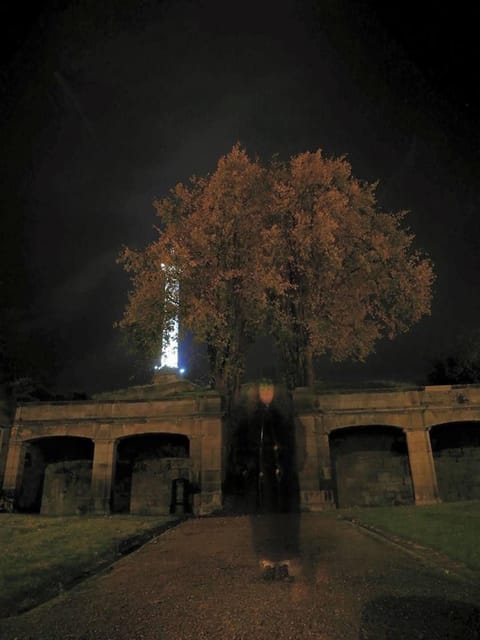
- Lady Hill and Elgin Castle: Visit the original castle site and see the 80-foot Duke of Gordon Monument.
- A darker side of town: Learn about executions, a threatened hangman, and alcohol smuggling through old closes and tunnels.
- Small details with a big payoff: Look for the holy well, old merchant signage, and carved stone rescued from lost buildings.
- Two hours for $21: The price is reasonable if you value a guide who connects scattered sites into one story.
- English or Spanish guiding: You can join the walk with a live guide in either language.
Why Elgin’s West End deserves a closer look
Elgin is often treated as a stopping point for its cathedral. That is a mistake. The Royal West End walk gives you a broader picture of the town, showing how royal power, church authority, trade, crime, and punishment shaped daily life.
You do not simply move from one grand building to the next. The route uses ordinary streets, alleyways, old pends, and overlooked corners. That is useful because Elgin’s past is not confined to a single preserved monument. It survives in fragments.
I especially like this kind of walking tour when a guide points out details you would otherwise pass without noticing. A piece of old shop signage can tell you about commerce. A narrow close can suggest how people moved goods, hid alcohol, or avoided public notice. A well can connect a modern street to the religious world of medieval Elgin.
The tour is guided in English or Spanish, and it lasts two hours. That is long enough to build a proper story without taking up an entire day. At $21 per person, it offers good value for visitors who want context rather than a quick photo stop.
More Walking Tours in Scotland
- Inverness: Guided Walking Tour with a Local
★ 4.7 · 430 reviews - Edinburgh: Loch Ness, Scenic Walk, Glencoe & Whisky Day Tour
★ 4.9 · 393 reviews - St Andrews: Top Sights Guided Walking Tour
★ 4.7 · 223 reviews
Meeting at the old hospital driveway
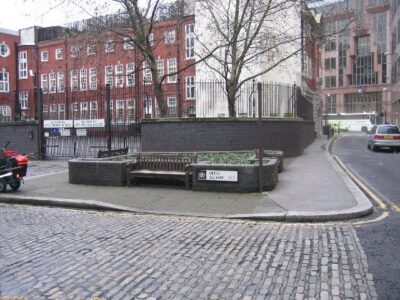
The meeting point is on a gravelled area at the bottom of the old driveway for the hospital. Look for some benches and a very old dry fountain.
This is not a grand city-square meeting point, so give yourself enough time to identify it. The benches and fountain are the useful markers. Since the tour begins outside, check the forecast before leaving your accommodation.
The walk requires a significant amount of walking. You should wear shoes that can handle several streets and historic paths. Bring a camera, but keep your attention on the guide too. Some of the most interesting details are small, and they may not look important until you hear the story attached to them.
Macbeth’s Moray, beyond the stage play
The Macbeth section is one of the tour’s strongest draws, especially if your knowledge of the king comes mainly from Shakespeare.
The real Macbeth was an 11th-century ruler connected with Moray. The story presented here links him to nearby Pitgaveny, where he mortally wounded King Duncan in 1040. Macbeth later brought his rival back to Elgin to recover, a decision with major consequences for Scottish history.
That detail gives the Macbeth story a local setting. Instead of treating him as a distant figure from a medieval drama, the tour places him in the streets and territory around Elgin. You get a clearer sense of why Moray mattered and why control of the area carried political weight.
The guide also presents Macbeth as a powerful Mormaer who ruled a prosperous and peaceful kingdom for 17 years. That is a useful counterweight to the familiar image of a murderous tyrant. The walk separates historical material from later legend, which makes this part worthwhile even if you have already read about Macbeth.
I appreciate that the tour does not rely only on a famous name. Macbeth is the doorway into a larger discussion of royal authority, rivalry, and the development of Elgin as an important centre.
Lady Hill and the original castle site
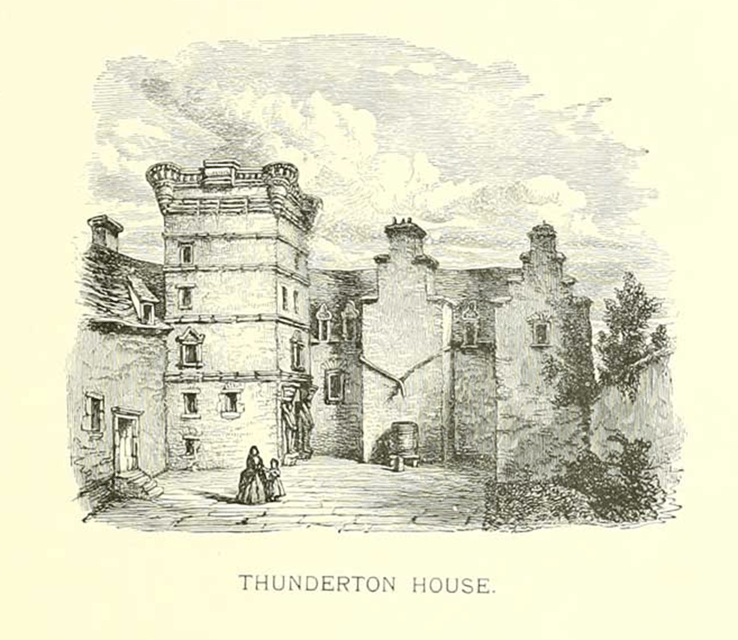
Lady Hill provides one of the tour’s most atmospheric stops. It is the site of the original Elgin Castle, and it offers a strong sense of the town’s defensive and royal past.
The castle was a 12th-century stronghold. It was later destroyed during the Wars of Independence in the 1300s. You should not expect a complete castle interior or a fully preserved fortress. The value is in the site itself and in understanding what once occupied this high ground.
The hill is also home to the 80-foot Duke of Gordon Monument. This tall Tuscan column honours the Duke of Gordon, known as the Cock o’ the North. The monument gives Lady Hill a later layer of history, so the stop is not limited to medieval Scotland.
I like the contrast here. One feature recalls a lost royal castle, while another commemorates a powerful later figure. The result is a compact lesson in how historic places are reused and reinterpreted over time.
The climb and walking distance are worth keeping in mind. The tour description calls for comfortable shoes and warns of significant walking. If you prefer a short, flat stroll with little exertion, this may not be your ideal Elgin activity.
A different kind of day out entirely:
- Edinburgh: Loch Ness, Glencoe & the Scottish Highlands Tour
★ 4.6 · 17,446 reviews - From Edinburgh: Loch Ness, Glencoe & Scottish Highlands Tour
★ 4.7 · 11,381 reviews - Inverness: Isle of Skye and Eilean Donan Castle Day Trip
★ 4.8 · 4,136 reviews - Edinburgh: Glenfinnan Viaduct, Glencoe & Fort William
★ 4.8 · 3,366 reviews
The Royal Hunting Lodge and a town without its castle
After the original castle was destroyed, the Royal Hunting Lodge took on the role of a makeshift castle for the city. That change helps explain how Elgin adapted after losing one of its main symbols of authority.
The lodge is an important stop because it keeps the story from ending with destruction. Elgin’s royal presence did not vanish in a single moment. Buildings and civic spaces changed function, and the town continued to carry traces of its earlier importance.
A guide can make this kind of stop meaningful by explaining what the building replaced and why it mattered. Without that context, a hunting lodge might seem like just another old structure. With the story attached, it becomes evidence of Elgin’s changing fortunes.
The stop also fits the general character of the tour. You are not only looking at famous ruins. You are following the practical ways people used buildings after political and military events altered the town.
The Wolf of Badenoch and the burning of the cathedral
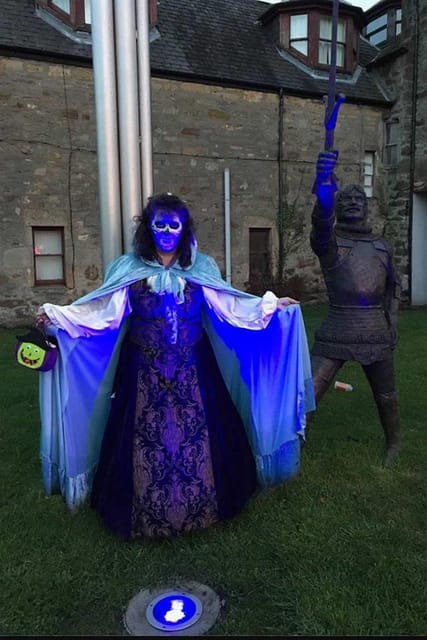
The statue of the Wolf of Badenoch introduces one of Elgin’s most dramatic episodes. The Wolf was involved in a major feud with the Bishop of Moray, and the conflict ended with the burning of Elgin Cathedral.
The cathedral was known as the Lantern of the North. The story of its destruction adds a darker edge to the religious history of Elgin, but it also shows how closely church and political power were tied together.
You may already know Elgin Cathedral as a beautiful ruin. This stop gives you a different way to read it. Rather than seeing only elegant stonework and empty arches, you hear about the disputes and violence that damaged the building.
The Wolf of Badenoch statue also gives the tale a physical focus. It is easier to remember a complicated political feud when the story is tied to a figure you can actually see along the route.
The holy well and the cathedral’s sacred water
The holy well is one of the tour’s quieter stops. This is where sacred water was collected for Elgin Cathedral and the Chapel of Our Lady Mary.
Compared with royal conflict and public executions, a well can seem modest. That is exactly why I value it. It shows the ordinary systems behind medieval religious life. A cathedral needed people, supplies, rituals, and sources of water. The well connects grand church history with practical daily activity.
This is also the sort of detail that is easy to miss without a guide. You may walk past it and see little more than an old feature in the street. Once you know its purpose, the place gains meaning.
Do not expect an elaborate attraction with an entrance hall or modern display. The interest comes from the explanation and the connection to the cathedral and chapel. Entrance fees to attractions not specifically included are not covered, so the walk should be understood mainly as an outdoor guided experience.
Executions, a frightened hangman, and public justice
The tour visits one of Elgin’s execution sites. It is a sobering stop, but it reveals how justice was once made public.
You hear the story of a hangman who narrowly escaped a lynch mob after a vengeful crowd turned against him. The episode shows how unstable public punishment could become. The person appointed to carry out a sentence could quickly become the target of public anger.
This section will appeal to anyone who likes social history rather than only royal biographies. Executions tell you about law, fear, reputation, and crowd behaviour. They also remind you that historic towns were not always as orderly as their streets appear today.
The subject is grim, and the tour is openly built around dark secrets and difficult stories. If you prefer a gentle architecture walk, this may feel too heavy. If you enjoy the less polished side of local history, it adds substance and variety.
Jessie Kesson, old closes, and illegal alcohol
The route also follows the same cobbles associated with author Jessie Kesson. Her connection gives the walk a literary note and broadens the story beyond kings, bishops, and criminals.
You will also hear about alcohol smuggling during prohibition. Elgin’s hidden tunnels and closes provided places where illegal alcohol could be moved and concealed. The story brings the town into a more recent period and shows how old spaces found new uses.
This is one of the tour’s best features. The history does not stop in the Middle Ages. You move from Macbeth and medieval religion to merchant trade, writers, prohibition, and local crime.
The old closes are especially useful for understanding the town’s layout. Narrow passages can look decorative now, but they once served practical purposes. They connected homes, shops, storage areas, and routes through the town. The guide’s job is to help you read those spaces.
Rescued stonework and 17th-century shop signs
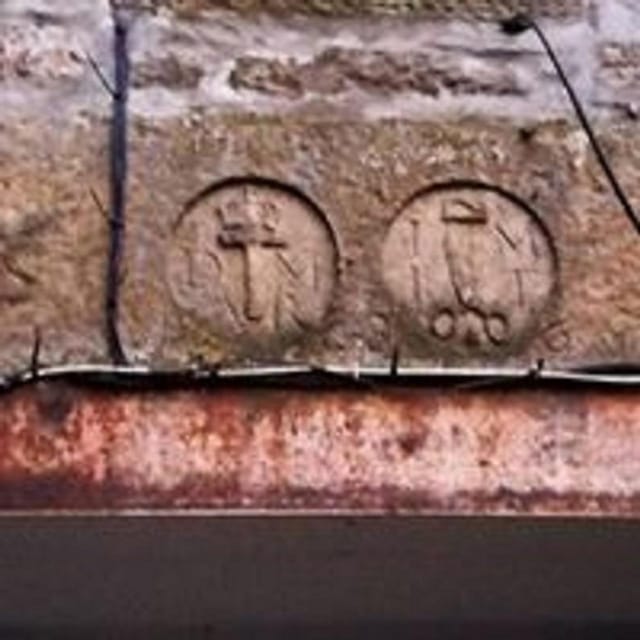
The rescued stonework offers another close look at buildings that no longer survive in full. Intricate carvings were saved from historic structures lost to time and placed where you can still see them.
This is a reminder that preservation is often partial. A building may disappear, but a doorway, carved panel, or decorative fragment can survive. The pieces are valuable because they retain evidence of craftsmanship and taste from earlier periods.
The old shop signage from the 1600s adds a commercial angle. It points to Elgin’s past as a merchant town and helps you picture a street where signs carried more information than modern branding does.
I like these stops because they reward slow observation. They are not the biggest sights on the route, but they may be the details you remember later. Take a moment to look closely rather than treating them as quick items on a checklist.
What the $21 price really gets you
At $21 per person, this tour is priced fairly for a two-hour guided walk. You are paying for local interpretation, not admission to a major museum or a private room inside a castle.
The value comes from the number of subjects packed into the route. You get royal history, Macbeth, Elgin Castle, the Duke of Gordon Monument, the Wolf of Badenoch, the cathedral’s holy well, an execution site, smuggling stories, Jessie Kesson, rescued carvings, old signs, and the Royal Hunting Lodge.
That is a lot for two hours, so the pace may feel active. The tour cannot spend long at every stop. If one subject fascinates you, you may want to return later and explore it at your own speed.
Food, drinks, personal expenses, and entrance fees to attractions not mentioned are not included. Plan on the tour itself being the main purchase, with separate costs if you choose to visit other attractions afterward.
Free cancellation is available up to 24 hours before the start time, and you can reserve now and pay later. Those terms are useful if your Moray plans are still changing.
Who should book this walk?
I would recommend the Royal West End Walking Tour to anyone who enjoys local stories, old streets, and history with a darker edge. It is especially suitable if you want to understand Elgin beyond the cathedral and prefer a guide to connect scattered remains.
History enthusiasts will enjoy the Macbeth material, the Wars of Independence, the Bishop of Moray feud, and the later Duke of Gordon connection. Writers and culture-minded visitors may appreciate the Jessie Kesson reference and the merchant signs.
The walk also suits curious visitors who do not consider themselves history experts. The subjects are varied, and the guide’s storytelling gives you a reason to care about small features.
I would think twice if you want a relaxed, mostly seated activity. The route involves significant walking, and the weather may affect your comfort. Bring suitable clothing, wear good shoes, and expect the focus to be on outdoor sites rather than formal attraction interiors.
Final verdict: a strong way to read Elgin
Book this tour if you want Elgin explained through people, scandals, ruins, and overlooked details. The best parts are the real Macbeth story, Lady Hill, the execution site, the holy well, and the old closes where smuggling once took place.
At $21, it gives you a solid two-hour introduction with more character than a simple sightseeing loop. Choose it early in your stay if possible, then return to the cathedral or other sites with a better understanding of what you are seeing.
FAQ
How long does the Elgin Royal West End Walking Tour last?
The tour lasts two hours.
How much does the tour cost?
The listed price is $21 per person.
Where does the tour meet?
The meeting point is on a gravelled area at the bottom of the old driveway for the hospital. Look for benches and a very old dry fountain.
Is the tour guided?
Yes. It is led by a live guide.
Which languages are available?
The tour is available in English and Spanish.
Does the tour include the site of Elgin Castle?
Yes. The route visits the site of Elgin Castle on Lady Hill and explains the castle’s destruction during the Wars of Independence in the 1300s.
Will the tour discuss Macbeth and King Duncan?
Yes. The guide explains Macbeth’s connection with Moray, his conflict with King Duncan, and the events linked to nearby Pitgaveny in 1040.
Does the tour visit an execution site?
Yes. You will view one of Elgin’s execution sites and hear the story of a hangman who escaped a hostile crowd.
Are food, drinks, and attraction entrance fees included?
No. Food, drinks, personal expenses, and entrance fees to attractions not mentioned are not included.
What should I bring?
Bring comfortable walking shoes, a camera, and clothing suitable for the weather. The tour involves significant walking.
Just added in Scotland
- From Edinburgh: Best of Scotland Small-Group Day Tour★ 4.7 · 61 reviews
- Stornoway: Private Tour Isle of Lewis★ 5.0 · 2 reviews
- Stirling: Daily Guided Walking Tour (11am & 2pm)★ 4.7 · 66 reviews
- Stirling: Private Old Town & Castle Walking Tour★ 4.9 · 17 reviews
- Edinburgh: Stirling, Whisky & St Andrews Tour in Italian★ 3.9 · 14 reviews
- Stirling: Historical Walking Tour in Spanish★ 4.4 · 4 reviews
- Stirling Castle: Skip-the-Line Guided Tour in Spanish★ 4.8 · 19 reviews
- From Glasgow: Standing Stones, Castles & Highlands Tour★ 4.8 · 44 reviews
Walking Tours, compared.

Magical London: Harry Potter Guided Walking Tour
Read our review →
University and City Walking Tour with Alumni Guide
Read our review →
Harry Potter Movies Walking Tour (Kids Go Free)
Read our review →
The Great British Rock and Roll Music Walking Tour
Read our review →
Jack the Ripper Walking Tour – Ripper Vision Tours
Read our review →
Other lists this tour turns up in