
REVIEW · CITY TOURS
Hidden Gems Tour of the City of London
London’s oldest streets still have plenty of surprises. This 140-minute walking tour brings together St Paul’s Cathedral, the Monument to the Great Fire, the Bank of England, Leadenhall Market, and the Tower of London, while also adding lesser-known historic sites and a high-level city view. I like the way the route connects famous sights with the stories between them, and I like that the tour includes entry to either the London Mithraeum or Guildhall, plus the viewing platform at 120 The Garden.
The main drawback is simple: this is a brisk tour with many major landmarks packed into just over two hours. You will see and learn about a lot, but you should not expect long visits inside every sight. The tour is conducted in English, and although it is wheelchair accessible, the amount of walking and the density of information may not suit every pace.
In This Review
- Key points to know before booking
- Why this corner of London matters
- Starting with St Paul’s Cathedral
- The Monument and the Great Fire of London
- The Bank of England and the City’s working identity
- Leadenhall Market, colour and old street life
- The Tower of London and the edge of the old City
- The London Mithraeum or Guildhall inclusion
- The view from 120 The Garden
- How the 140-minute pace works
- Price, accessibility, and booking flexibility
- Who should book this City of London walk?
- Should you book it?
- FAQ
- How long does the Hidden Gems Tour of the City of London last?
- How much does the tour cost?
- Which language is the tour conducted in?
- Is the tour wheelchair accessible?
- What landmarks are included on the route?
- Is admission to any attractions included?
- Can I cancel the booking?
- Can I reserve the tour and pay later?
- Who is the tour not suitable for?
Key points to know before booking

- Roman London and modern London meet: The route links ancient remains, medieval institutions, famous churches, financial landmarks, and modern architecture.
- The price is modest for a guided city walk: At $24 per person, the included entry to the London Mithraeum or Guildhall and 120 The Garden adds useful value.
- Guide Nick receives especially warm praise: One October participant, Iris from Germany, found herself alone on the tour and still described Nick as excellent, enthusiastic, and full of information.
- The tour keeps you guessing: Clare from New Zealand praised its informative style and the way it makes you think rather than simply pointing out buildings.
- You get a broad City of London introduction: St Paul’s, the Tower of London, the Bank of England, Leadenhall Market, and the Great Fire monument all appear along the route.
- Flexible booking helps: You can cancel up to 24 hours before the tour for a full refund and reserve without paying immediately.
Why this corner of London matters

The City of London is not the same as Greater London. It is the small historic and financial district at the centre of the wider city, with roots reaching back to Roman times. Its streets hold Roman remains, medieval buildings, churches rebuilt after the Great Fire, grand financial offices, and modern towers that rise above the old lanes.
That mix makes this a good area for a guided walk. If you explore alone, you can easily pass an ancient site without knowing what lies below your feet. A guide can explain how old and new London sit side by side, often within a few steps of one another.
I especially like tours that help you understand how the pieces fit together. St Paul’s is not just a famous dome. The Monument is not just a tall column. Leadenhall Market is not simply a photogenic shopping arcade. Each stop opens a different part of the city’s story.
A few more options to weigh up in London
- London: The London Eye Entry Ticket
★ 4.6 · 35,875 reviews - From London: Harry Potter Warner Bros Studio Tour
★ 4.7 · 26,588 reviews - London: Westminster to Greenwich River Thames Cruise
★ 4.5 · 22,836 reviews
Starting with St Paul’s Cathedral
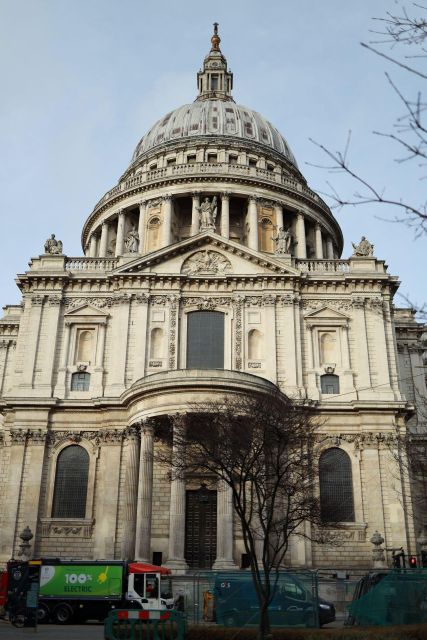
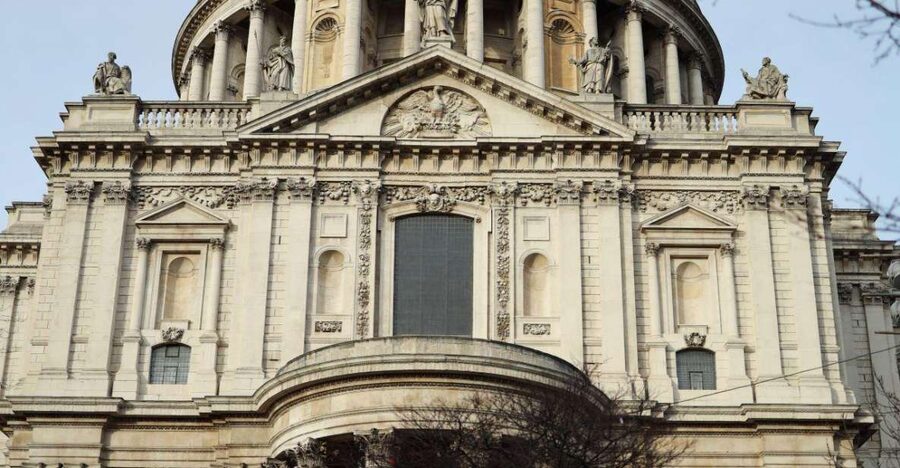
St Paul’s Cathedral is one of London’s clearest visual markers. Its dome dominates the central City skyline and gives the tour an immediate sense of scale. Even if you have seen photographs of the cathedral, approaching it as part of a walk through the City helps place it within the surrounding streets.
The tour highlights the cathedral rather than promising a full interior visit. That distinction matters. You should expect commentary and an exterior look, not enough time to explore every chapel, gallery, and memorial inside.
The cathedral also gives your guide a useful way to explain London’s repeated rebuilding. The present building belongs to the city that rose after the Great Fire, yet it occupies a site with a much older religious past. You get a quick lesson in how London replaces itself without fully losing its earlier layers.
For photography, the scale of the dome can be tricky from street level. Your guide’s explanations are likely to be more useful than simply stopping for a quick picture. If St Paul’s is your main priority, plan a separate visit so you can give the interior the time it deserves.
The Monument and the Great Fire of London

The Monument to the Great Fire of London is one of the route’s most important history stops. This tall column commemorates the fire of 1666, which destroyed much of the City. Its position near the original fire zone gives the story a strong sense of place.
A short stop here can explain far more than the date alone. The Great Fire changed the shape of London, its building practices, and the way the city thought about risk. The Monument also shows how public memorials can serve several purposes at once: remembrance, civic pride, and a statement about rebuilding.
The tour does not list entry to the Monument itself, so expect to see and discuss it from the outside. That is still worthwhile, especially because the guide can connect it with nearby streets and buildings. You will get more from the stop if you listen for the links between the fire, St Paul’s, and the City’s later development.
This is also a good place to remember that historic London is not frozen in one period. The fire is nearly four centuries old, but its effect still shapes the streets you are walking through.
The Bank of England and the City’s working identity
The Bank of England brings the tour into the modern financial City. Its presence can seem very different from the cathedral and medieval markets, but that contrast is the point. London’s oldest district is also one of the world’s major financial centres.
The stop offers context for the City’s continuing role in business and government. You may not get a technical lesson about banking, and that is probably a relief during a walking tour. Instead, the building helps explain why this small district remains so important.
I find this kind of stop useful because it prevents the walk from becoming a parade of old buildings. The City is not only a museum. People work here, money moves through here, and new buildings continue to change the view above the historic streets.
The tradeoff is that financial architecture can be less immediately engaging than a cathedral or market. A good guide makes the connection clear. Nick’s enthusiasm is an asset here, since Iris specifically praised his love for the tour and the amount she learned.
A different kind of day out entirely:
- Magical London: Harry Potter Guided Walking Tour
★ 4.7 · 22,044 reviews - London: Madame Tussauds London
★ 4.6 · 20,915 reviews - London: Warner Bros. Studio Tour with Transfers
★ 4.7 · 17,586 reviews - London: Tower Bridge Entry Ticket
★ 4.7 · 15,560 reviews
Leadenhall Market, colour and old street life
Leadenhall Market is likely to be one of the most visually appealing stops. Its covered arcades and decorative structure give you a sense of London’s old market culture, while the surrounding City keeps the setting firmly modern.
The market is valuable as more than a photo stop. It helps you picture how commerce shaped the City long before today’s office towers and financial institutions. The route gives you a chance to compare a traditional public market setting with the formal architecture of the Bank of England and nearby corporate buildings.
You should allow yourself a moment to look upward. Covered markets often reward visitors who notice the roof, ironwork, colour, and repeating details rather than focusing only on the shops at ground level.
The tour’s schedule may limit how long you can linger. If you want time for food, shopping, or careful photography, return on your own after the walk. The guided visit is best treated as an introduction that helps you know why the market matters.
The Tower of London and the edge of the old City
The Tower of London gives the route a powerful final landmark. Its walls, royal connections, and long association with imprisonment and power make it one of London’s most recognisable historic sites.
The tour highlights the Tower, but the supplied details do not promise admission. You should therefore expect an external visit and explanation rather than a full tour of the fortress, Crown Jewels, towers, and grounds.
That is not a weakness if you are using this walk as a first look. The Tower can easily take several hours by itself. Seeing it during a wider tour helps you understand its position in relation to the City, the river, and London’s changing centre of power.
It also broadens the tour beyond churches and financial buildings. You move from Roman London and medieval commerce to royal authority and national memory. The route’s strength is this variety, though the pace means each subject receives only a compact introduction.
The London Mithraeum or Guildhall inclusion

One of the most useful parts of the experience is entry to either the London Mithraeum or Guildhall. The exact option may depend on the tour arrangements, so check what is available when you book.
The London Mithraeum is associated with Roman London, making it a natural fit for a walk that begins with the city’s oldest layers. Guildhall represents the civic side of the City and its long institutional life. Either choice adds substance beyond exterior sightseeing.
This inclusion also improves the value of the $24 price. Many city walks charge for guiding alone, while major indoor attractions cost extra. Here, you receive a guided route plus access to one significant historic location.
Do not assume the inclusion means you will have unlimited time inside the chosen site. The total tour lasts 140 minutes, so the visit must fit within a carefully managed schedule.
The view from 120 The Garden
Entry to the viewing platform at 120 The Garden adds a modern finish to the experience. From above, you can see the City as a whole rather than studying one building at a time.
This perspective is useful after walking among older streets. You may notice how St Paul’s, financial buildings, markets, and historic sites relate to the newer towers around them. It is a chance to understand the City’s shape instead of collecting isolated facts.
The viewing platform also gives the tour a welcome change of pace. After streets and monuments, you can look outward and upward. The information provided does not specify how long you spend there or exactly what views are available, so treat it as a scheduled viewpoint rather than a long sightseeing session.
For many people, this will be one of the tour’s best practical features. A high view helps you make sense of London quickly, especially if this is your first visit.
How the 140-minute pace works
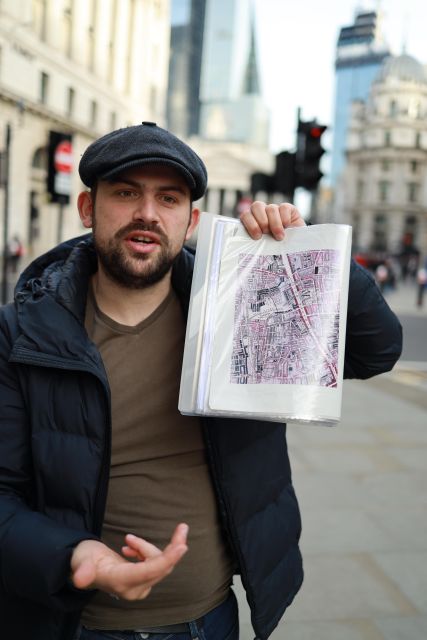
Two hours and 20 minutes is enough for a strong introduction, but not enough for a slow, detailed exploration of every stop. You will need to stay with the group and listen while walking between locations.
I would choose this tour if you want a clear framework for the City of London. It is particularly useful early in a London visit, when you are still learning which districts and landmarks belong together.
I would not choose it as your only plan if you want long interior visits, extensive photography, or time for lunch at Leadenhall Market. Think of it as a guided orientation with several valuable inclusions, not a full-day historical expedition.
The available feedback suggests that the guide’s energy matters greatly. Iris was the only participant on her tour and still had a positive experience, which points to a flexible and personal guiding style from Nick. Clare found the tour informative, interesting, and designed to keep you thinking. Those are strong signs for anyone who prefers stories and questions over a simple list of dates.
Price, accessibility, and booking flexibility
At $24 per person, the tour offers good value if the included entry to the London Mithraeum or Guildhall and the 120 The Garden platform are available as described. You are paying for a live English-language guide, a structured route through several major sights, and access to additional locations.
The value is less clear if you already plan to visit every stop independently and prefer to set your own timing. Still, the guide can provide connections that are difficult to gather from signs and guidebooks alone.
The tour is wheelchair accessible, which makes it a practical choice for many visitors. The supplied information does not give details about every surface, restroom, or step along the route, so you may want to confirm specific mobility needs before booking.
You can cancel up to 24 hours in advance for a full refund. You can also reserve now and pay later, useful if your London schedule is still shifting. The tour is not suitable for babies under one year or people over 95 years old, according to the stated restrictions.
Who should book this City of London walk?
I would recommend it to first-time London visitors who want to understand the City beyond the usual postcard sights. It suits you if you enjoy history, architecture, civic stories, and a guide who keeps the pace moving.
It is also a good choice for solo visitors. Iris’s experience with Nick shows that a small group, even a one-person group, can still receive an attentive tour rather than an awkward cancellation or rushed walk.
Families with older children may appreciate the variety, but very young children may struggle with the walking and concentration required. Babies under one year are specifically excluded.
You should consider another option if your main goal is entry to the Tower of London or St Paul’s Cathedral. Neither is listed as a full interior visit, so you would need separate admission and extra time.
Should you book it?
Book this tour if you want a compact, well-priced introduction to London’s oldest district, with famous landmarks, Roman and civic history, and a modern viewpoint folded into one route. The strongest reason to go is the range: you move from St Paul’s to the Great Fire, the Bank of England, Leadenhall Market, the Tower, and an included historic site without spending a full day.
Skip it if you dislike brisk walks or prefer to explore each landmark at length. For most visitors, though, $24 is a sensible price for a guided start, especially with flexible cancellation and pay-later booking. If Nick leads your tour, you may also get the enthusiasm that helped make Iris’s solo outing so memorable.
FAQ
How long does the Hidden Gems Tour of the City of London last?
The tour lasts 140 minutes, or two hours and 20 minutes.
How much does the tour cost?
The listed price is $24 per person.
Which language is the tour conducted in?
The live tour guide conducts the experience in English.
Is the tour wheelchair accessible?
Yes, the activity is listed as wheelchair accessible.
What landmarks are included on the route?
The route highlights St Paul’s Cathedral, the Monument to the Great Fire of London, the Bank of England, Leadenhall Market, and the Tower of London.
Is admission to any attractions included?
Yes. The experience includes entry to either the London Mithraeum or Guildhall, as well as entry to the viewing platform at 120 The Garden.
Can I cancel the booking?
Yes. You can cancel up to 24 hours in advance for a full refund.
Can I reserve the tour and pay later?
Yes. You can reserve your place and pay nothing at the time of booking.
Who is the tour not suitable for?
The tour is not suitable for babies under one year or people over 95 years old.
Just added in London
- The Best of British Cooking Class & Dining Experience★ 5.0 · 1 review
- London: Live Comedy Show at Big Belly Bar and Comedy Club★ 4.5 · 80 reviews
- London: British Museum Highlights Guided Small Group Tour★ 4.9 · 113 reviews
- The Beatles London Walking Tour★ 4.2 · 147 reviews
- The Best Highlights of London Walking Tour & Boat Cruise★ 5.0 · 1 review
- The Authentic Walking Tour with Indian Tasting Meal★ 4.8 · 4 reviews
- Iconic London: Bard, Beatles, Bond & Baker Street★ 4.9 · 15 reviews
- London: Tate Britain Official Discovery Tour★ 4.7 · 7 reviews
City Tours, compared.

City & Beatles Tour with Live Guide & Live Music
Read our review →
University and City Walking Tour with Alumni Guide
Read our review →
Etihad Stadium: The Manchester City Stadium Tour
Read our review →
City and University Tour, including college entry
Read our review →
City Walking Tour with Optional Roman Baths Entry
Read our review →
Go City Explorer Pass® – Tickets for 2-7 Attractions
Read our review →
Other lists this tour turns up in