
REVIEW · JACK THE RIPPER TOURS
Jack the Ripper and Victorian London: Beyond the Shadows
Some London walks leave a chill behind. This one uses the Jack the Ripper story as a doorway into Victorian East End life, not just a parade of grisly details. I like the focus on the women whose lives were cut short, and I like the effort to separate known facts from later myths. The main consideration is the subject matter: even with a measured guide, murder and poverty are central to the evening.
At $24 per person, the 140-minute walk offers solid value if you want history with your true crime. Guide Nick receives especially warm praise for his humor, acting skills, local knowledge, and clear storytelling. The route is wheelchair accessible, but you should still expect a long outdoor walk through central East London.
In This Review
- Key points at a glance
- Why this is more than a standard Ripper walk
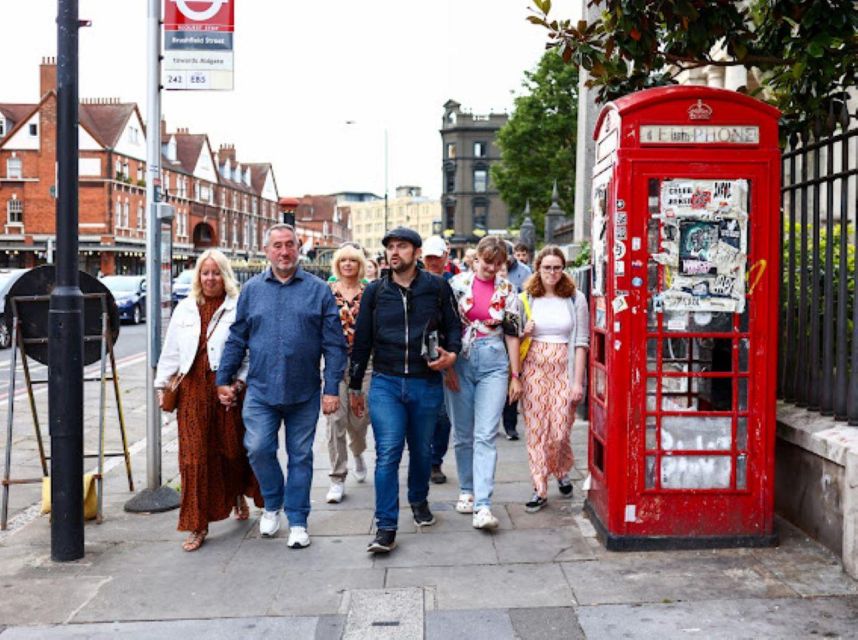
- Starting at Braham Street
- Brick Lane and the changing East End
- Hanbury Street and the human cost
- Old Spitalfields Market and Victorian daily life
- Goulston Street and the problem of evidence
- Mitre Square and the famous case
- London Fruit & Wool Exchange and the city around it
- Finishing at Spitalfields Market
- Nick’s guiding style
- Is $24 a fair price?
- Who should book this walk?
- Practical advice before you go
- Final verdict: should you book it?
- FAQ
- How long does the Jack the Ripper and Victorian London tour last?
- How much does the tour cost?
- Where does the tour begin?
- Where does the tour finish?
- Which locations are included?
- Is the tour wheelchair accessible?
- What language is the tour conducted in?
Key points at a glance
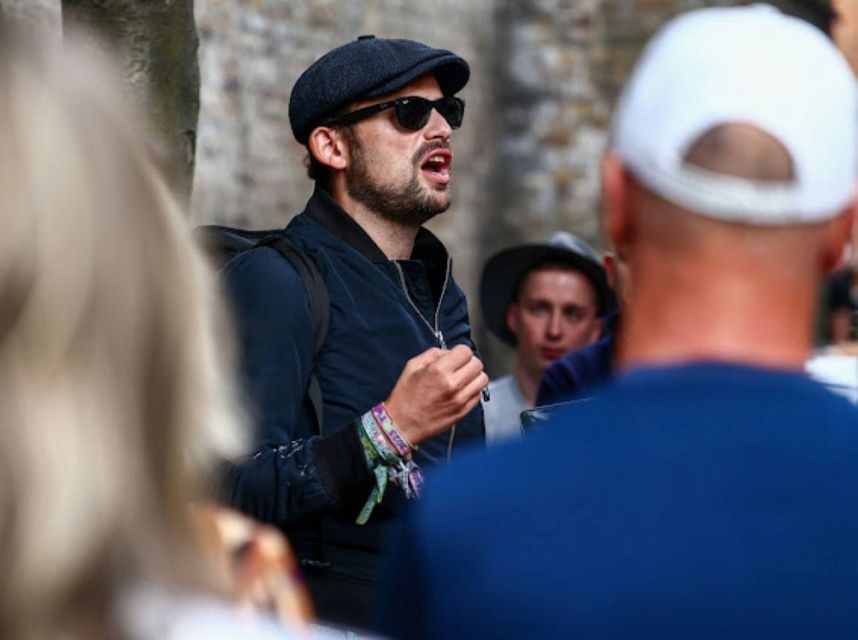
- Nick’s lively storytelling: His background in musical theatre helps turn a walking tour into a small street performance, without reducing the subject to cheap scares.
- Victims receive proper attention: The tour looks at the women involved and challenges common misunderstandings about their lives.
- Seven East London locations: The route links Brick Lane, Hanbury Street, Spitalfields, Goulston Street, Mitre Square, and the London Fruit & Wool Exchange area.
- History beyond the murders: You learn about poverty, social divisions, working life, and the cultural forces that shaped Victorian Whitechapel.
- A useful length: Two hours and 20 minutes gives the guide time to explain context rather than rush from one crime scene to another.
- A flexible booking choice: You can cancel up to 24 hours ahead for a full refund, and you can reserve now while paying later.
Why this is more than a standard Ripper walk
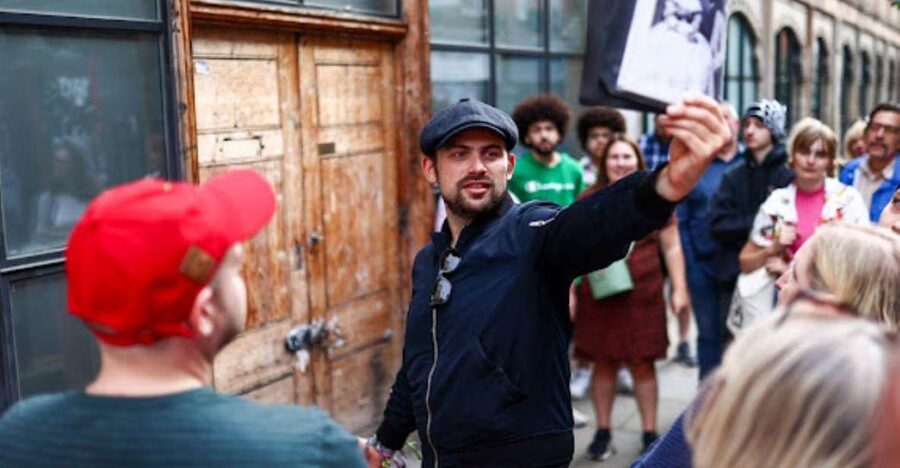
Many Jack the Ripper tours are built around suspense. Dark lanes, police reports, theories, and a final list of suspects. This experience takes a broader route. It still follows the murders, but it also asks what life was like for the people living in the East End when the crimes occurred.
That shift matters. The victims were not simply names in a case file, and Victorian London was not just a backdrop of fog and gaslight. The tour aims to show the pressures of the period, including poverty, class divisions, and the ways newspapers shaped public fear.
I appreciate that balance. You can enjoy the mystery without treating real suffering as entertainment. The supplied description makes clear that the guide addresses misunderstandings about the women involved and encourages you to think critically about the reports that survive.
Nick appears to be particularly good at this tone. Several comments describe him as funny, direct, and highly informed, while also careful not to pile on needless gore. One person compared his delivery to a performance, which fits his reported musical theatre background. That may sound like a small detail, but it helps explain why the tour seems to work for people who want strong storytelling rather than a lecture.
More Jack the Ripper walks:
- London: The Original Jack the Ripper Walking Tour
★ 4.7 · 7,833 reviews - London: Jack the Ripper Small Group Tour
★ 4.7 · 3,159 reviews - German Language : Original Jack the Ripper Tour
★ 4.6 · 1,805 reviews
Starting at Braham Street
The walk begins on Braham Street, a practical starting point for entering the East End story. From here, the guide sets up the period before leading you toward the better-known locations.
The opening matters because the Ripper crimes make more sense when placed inside the wider city. You are not simply asked to memorize dates or names. You are introduced to the social and economic conditions that shaped daily life in Victorian London.
I would pay close attention at this stage. The later stops are easier to understand once you know how the East End was viewed by the rest of the city, and how life differed between poor neighborhoods and areas of wealth and power.
The route is conducted in English, with a live guide. Since the experience lasts 140 minutes, wear shoes you can comfortably walk in and dress for London weather. One participant enjoyed the tour despite heavy rain, but that is a reminder to bring a coat rather than rely on the atmosphere to provide the only chill.
Brick Lane and the changing East End
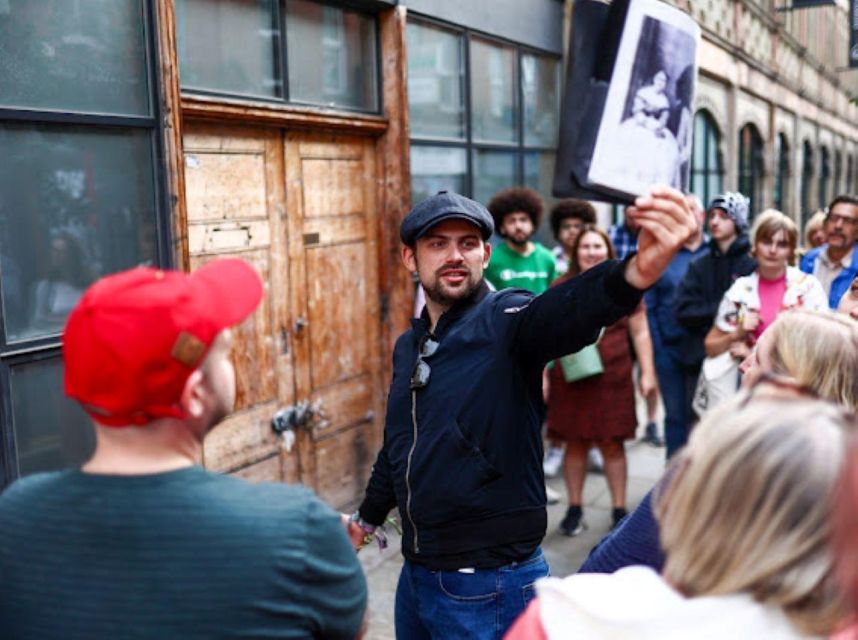
Brick Lane is the first major stop. Today, it is one of East London’s best-known streets, but on this walk it helps connect the present-day neighborhood with its Victorian past.
The guide uses Brick Lane to explain the people and pressures that shaped the district. The point is not to pretend that the street looks exactly as it did in the late 19th century. It does not. Instead, you get a sense of how the area functioned as part of the East End and why it became linked with poverty, migration, work, and social change.
This is one of the tour’s useful features. You are walking through a living part of London, not a preserved crime scene. Modern shops, food stalls, and street life exist alongside old names and historic traces. That contrast can help you understand how much the city has changed.
You might find the present-day setting less visually eerie than expected. That is not a weakness, though it means the guide’s words do much of the work. Nick’s reported ability to use humor and performance becomes especially valuable in places where the Victorian streetscape has been altered.
Hanbury Street and the human cost
Hanbury Street brings the story closer to the women connected with the crimes. Here, the tour focuses on what can be established about their lives rather than reducing them to victims in a famous unsolved case.
That distinction is one of the strongest reasons to book this walk. The women are treated as people with circumstances, relationships, and difficult lives, not as props in a murder mystery. The experience also addresses the many misunderstandings surrounding them.
I would expect this section to be serious, but not deliberately graphic. The goal is to understand the people and the setting. The guide’s role is important here, since a careless presentation could easily turn a tragic story into spectacle.
The route is a walk, not a museum visit, so you will hear the material while standing outdoors. If you need frequent seating or find lengthy periods on your feet difficult, consider that before booking. The activity is described as wheelchair accessible, but the full route still takes more than two hours.
A few more options to weigh up in London
- London: The London Eye Entry Ticket
★ 4.6 · 35,875 reviews - From London: Harry Potter Warner Bros Studio Tour
★ 4.7 · 26,588 reviews - London: Westminster to Greenwich River Thames Cruise
★ 4.5 · 22,836 reviews - Magical London: Harry Potter Guided Walking Tour
★ 4.7 · 22,044 reviews
Old Spitalfields Market and Victorian daily life
Old Spitalfields Market adds a different note. It is one of the route’s places where trade, work, and ordinary city life come into view.
The market helps broaden the story beyond police work and murder. Victorian London was a working city, and markets were part of how people bought, sold, and earned money. The guide uses the area to show how the East End connected commerce with poverty and social change.
This stop also gives the tour a helpful physical rhythm. You move from narrower streets and crime-related locations into a more open public setting, then continue toward Goulston Street and Mitre Square. The walking itself links the stops, helping you picture how people moved through the neighborhood.
Because Spitalfields is still an active part of London, you may encounter modern activity around you. That can make it harder to concentrate at busy moments, but it also keeps the tour grounded in a real neighborhood rather than a staged attraction.
Goulston Street and the problem of evidence
Goulston Street is important for the way the tour handles evidence and uncertainty. The Ripper story has attracted theories for more than a century, and not every popular claim rests on equally strong evidence.
A good guide needs to explain what is documented, what is disputed, and what was added later by newspapers, storytellers, and investigators. That critical approach appears to be central to this experience. One especially positive response praised Nick for showing what we actually know and encouraging the group to put the pieces together rather than simply accepting a list of facts.
That makes Goulston Street more than another stop on a crime map. It becomes a lesson in how history is built. You learn to ask who recorded an event, why it was recorded, and how later generations may have changed its meaning.
I like this approach because it gives you something useful beyond the tour itself. You become less likely to accept every dramatic claim about Jack the Ripper at face value.
Mitre Square and the famous case
Mitre Square is one of the most important locations on the walk. It is closely associated with one of the murders and gives the guide a chance to explain the case in a specific setting.
The modern city has changed the surroundings, so do not expect a perfectly preserved Victorian scene. Instead, the location works through explanation. The guide reconstructs the sequence, discusses the people involved, and connects the event to the wider fear that spread through London.
This is also where the tour’s tone matters most. The material is disturbing, but the strongest approach is one that avoids needless gore. The experience is designed to be atmospheric and serious without trying to frighten you at every turn.
The route asks you to walk and listen at the same time. If you enjoy active history, that is a strength. You are not sitting in a dark room watching a film. You are moving through the district and using the streets to picture the events.
London Fruit & Wool Exchange and the city around it
The London Fruit & Wool Exchange area provides another chance to see how trade and urban development shaped East London. The tour connects this setting with the working life of the district and the social divisions of the Victorian period.
This is valuable because the Ripper story can make the East End seem like a place defined only by crime. It was also a place of work, commerce, families, faith communities, and constant change. The exchange helps restore that broader picture.
You may notice that the route does not end with a theatrical reveal or a definite solution. Jack the Ripper was never identified with certainty, and a responsible tour should preserve that uncertainty. The experience appears to treat the unanswered questions as part of the subject, not as an excuse to invent certainty.
Finishing at Spitalfields Market
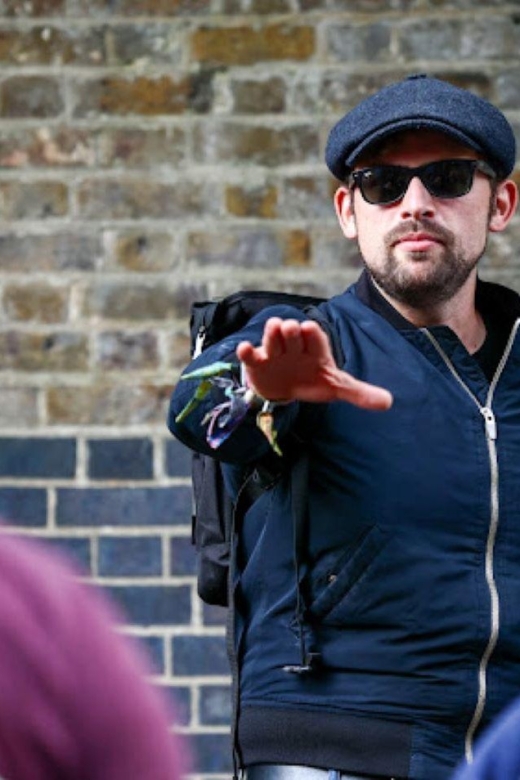
The walk ends at Spitalfields Market, which is convenient for continuing your evening in East London. You finish in a lively public area rather than being left at an isolated street corner.
This is a useful place to pause and process the tour. You might browse the market, find food, or simply compare the modern neighborhood with the world described during the walk. The ending also keeps the experience from becoming too heavy. The tour deals with a grim subject, but you return to ordinary London life.
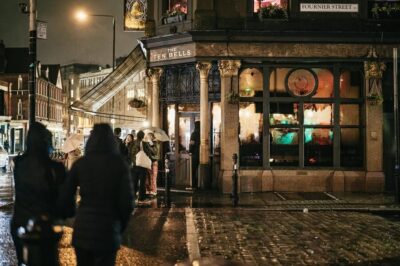
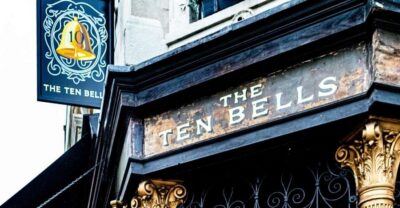
The Ten Bells Pub is listed among the highlights, although the detailed route places the finish at Spitalfields Market. Treat the pub as an important nearby reference point rather than assuming the tour includes a full pub stop or drink. One participant did describe an impromptu beer tasting during heavy rain, but that was a special response to the conditions, not a stated part of the standard package.
Nick’s guiding style
Nick is the clearest strength of this experience. The comments about him are unusually consistent: funny, engaging, direct, helpful, and well informed. He is also praised for answering questions and adjusting his approach to the people in the group.
His background in musicals seems to give the walk a sense of timing and character. That can make a major difference when you are standing outdoors for more than two hours. A flat delivery would make the material feel long. A theatrical guide can keep the story moving, provided the performance does not overpower the facts.
Here, the available comments suggest a good balance. Nick uses humor to lighten a tragic subject, but he does not soften the difficult parts or turn the women’s lives into jokes. He also brings a local point of view, including familiarity with the area and practical suggestions for people new to London.
One participant even planned to return for one of his football tours. That is a useful clue: Nick seems to offer more than a rehearsed script. You are likely to get a sense of the person behind the guiding, along with local conversation and answers to questions.
Is $24 a fair price?
At $24, this is reasonably priced for a live, 140-minute walking tour in central London. The value comes less from the number of stops than from the time available to explain them.
A shorter walk might point out Mitre Square and a few other locations, then hurry you toward a final theory. This tour gives the guide room to discuss Victorian society, the victims, media myths, and the East End itself. If that wider context matters to you, the price is strong.
The value is less clear if you only want a fast list of suspects and crime details. You are paying for interpretation and historical context, not just a greatest hits version of the Ripper case.
Free cancellation up to 24 hours before the start gives you useful flexibility, and the reserve-now, pay-later option can help when you are still arranging a London schedule. Check the available start times before booking, since the tour lasts into the evening depending on departure.
Who should book this walk?
I would recommend it to:
- People interested in Victorian social history as well as true crime
- Visitors who prefer a live storyteller to a museum audio guide
- Families with older teenagers and adults who can handle serious subject matter
- Repeat London visitors who want to explore East London on foot
- Anyone who likes comparing evidence, theories, and historical sources
- Visitors who want a guide with humor and personality
I would be more cautious if you want a very frightening experience. This tour is atmospheric, but its stated aim is not to shock you with graphic stories. It is also not ideal if you dislike long walks or outdoor tours in poor weather.
The age information says it is not suitable for people over 95. The subject matter may also be too grim for young children, although no specific minimum age is provided. For families, use your own judgment based on how comfortably everyone handles murder, poverty, and historical suffering.
Practical advice before you go
Wear comfortable shoes. The route includes several walks between stops, and 140 minutes is long enough for poor footwear to become a problem.
Bring rain protection and an extra layer. London weather can change quickly, and the tour runs outdoors. A bad-weather experience may still be enjoyable, but it will demand more preparation.
Arrive ready to listen rather than simply photograph locations. The modern streets will not always look dramatic, and the detail comes from the guide’s explanation. I would also keep your schedule afterward fairly open, since the walk finishes at Spitalfields Market and gives you a good base for food or further exploring.
The tour is in English only. If you are comfortable following detailed spoken English, you should get much more from the discussion about evidence, social conditions, and disputed reports than from a basic translation-based experience.
Final verdict: should you book it?
Book this tour if you want a thoughtful Jack the Ripper walk with strong Victorian context, especially if Nick is leading your departure. His humor, theatrical delivery, local perspective, and careful handling of the victims are the qualities most likely to make the experience memorable.
Skip it if you want only sensational crime stories, a short route, or a fully preserved Victorian setting. The streets have changed, and the tour depends on spoken storytelling more than visual spectacle.
For $24, the combination of seven East London locations, two hours and 20 minutes of guiding, and a serious look at the people behind the headlines makes this a good-value choice. You leave with more than a theory about an unknown killer. You get a clearer picture of the city and the people who lived through its hardest streets.
FAQ
How long does the Jack the Ripper and Victorian London tour last?
The tour lasts 140 minutes, or two hours and 20 minutes.
How much does the tour cost?
The listed price is $24 per person.
Where does the tour begin?
The tour starts on Braham Street.
Where does the tour finish?
The tour finishes at Spitalfields Market.
Which locations are included?
The route includes Brick Lane, Hanbury Street, Old Spitalfields Market, Goulston Street, Mitre Square, the London Fruit & Wool Exchange area, and Spitalfields Market. The Ten Bells Pub is also listed among the highlights.
Is the tour wheelchair accessible?
Yes. The activity is described as wheelchair accessible.
What language is the tour conducted in?
The live guided tour is conducted in English.
Just added in London
- The Best of British Cooking Class & Dining Experience★ 5.0 · 1 review
- London: Live Comedy Show at Big Belly Bar and Comedy Club★ 4.5 · 80 reviews
- London: British Museum Highlights Guided Small Group Tour★ 4.9 · 113 reviews
- The Beatles London Walking Tour★ 4.2 · 147 reviews
- The Best Highlights of London Walking Tour & Boat Cruise★ 5.0 · 1 review
- The Authentic Walking Tour with Indian Tasting Meal★ 4.8 · 4 reviews
- Iconic London: Bard, Beatles, Bond & Baker Street★ 4.9 · 15 reviews
- London: Tate Britain Official Discovery Tour★ 4.7 · 7 reviews
Jack the Ripper Tours, compared.
Jack the Ripper Walking Tour – Ripper Vision Tours
Read our review →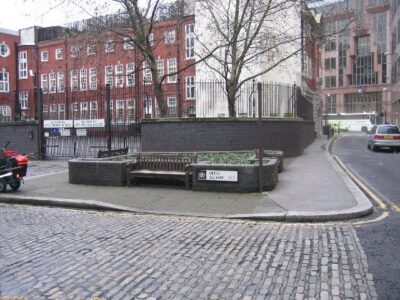
French Language : Original Jack the Ripper Tour
Read our review →
Other lists this tour turns up in