
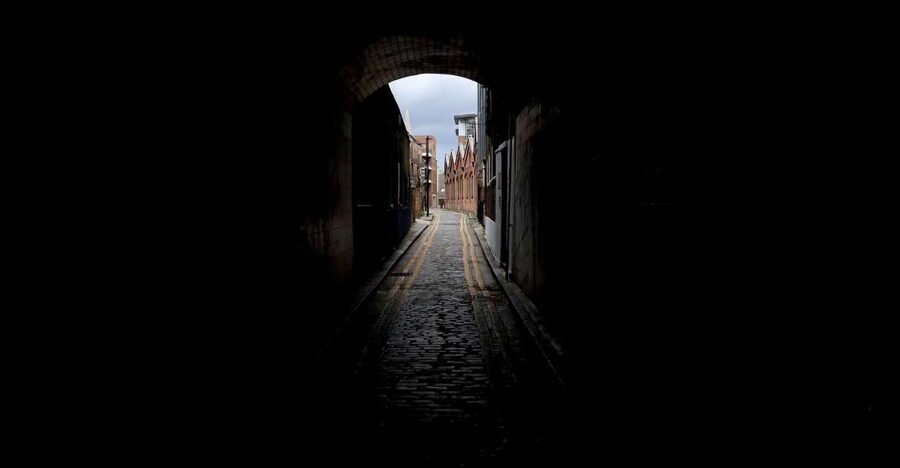
REVIEW · JACK THE RIPPER TOURS
London: Jack the Ripper tour in Spanish (RLA Winner)
The old streets still hold hard questions. This two-hour walk through Whitechapel follows the locations tied to the Jack the Ripper murders, with Spanish-speaking historian José Oranto explaining the evidence, the people, and the Victorian setting behind the famous case. I especially like the guide’s academic approach and the chance to ask questions throughout the walk. The main consideration is simple: this is a serious crime-history tour, so it may not suit you if you prefer lighter sightseeing.
I also like that the route uses documented locations rather than treating the case as a spooky stage show. Oranto has written Jack el Destripador y las crónicas de Whitechapel, received the Robert Linford Award in 2023, and was named by Ripperologist magazine as one of the field’s three leading investigators in 2024. Bring weatherproof clothing, and remember that video recording is not allowed.
In This Review
- Key points at a glance
- Why José Oranto changes the tone of Whitechapel
- Starting beside St Mary’s Whitechapel Church
- Brick Lane and the first street-level clues
- Gunthorpe Street and the human side of the case
- Flower and Dean Walk, then Banglatown Arch
- Hanbury Street and the case’s most important locations
- Passing The Ten Bells in Spitalfields
- Mitre Square Garden and the shape of the investigation
- Goulston Street and the danger of easy answers
- White’s Row and the final chapter
- What $21 gets you in practical terms
- Who will enjoy this Spanish Whitechapel walk
- Booking details worth knowing before you go
- Should you book the Jack the Ripper tour in Spanish?
- FAQ
- How long does the Jack the Ripper tour last?
- What language is the tour conducted in?
- Who leads the tour?
- Where does the tour begin?
- Which locations are included?
- Can I ask the guide questions?
- Is the tour wheelchair accessible?
- Can I cancel for a refund?
- Is video recording allowed?
Key points at a glance
- Spanish-language expertise: José Oranto leads the walk and brings research from his books and specialist work.
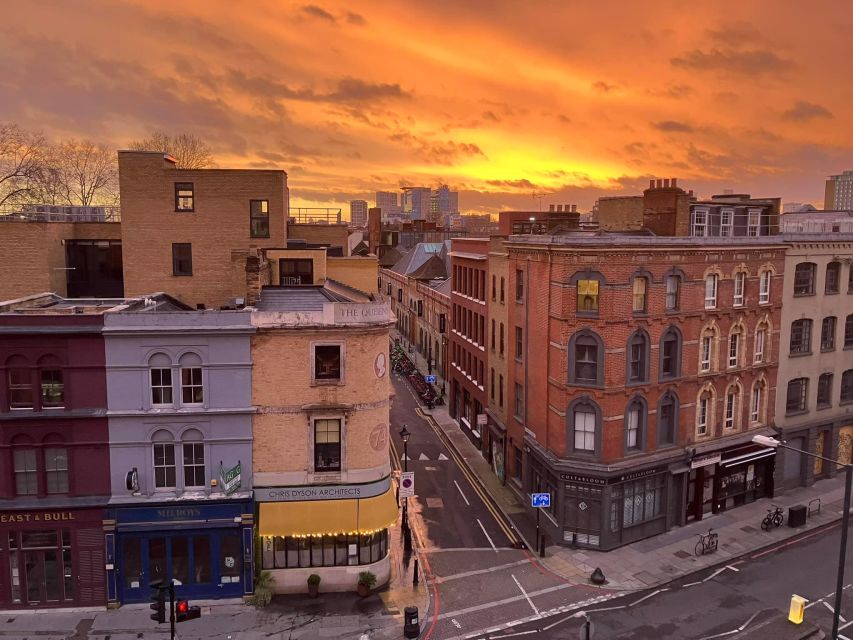
- Ten meaningful locations: The route includes murder sites, streets linked to victims, old buildings, and key places in the investigation.
- Evidence over legend: Images and documented material help separate known facts from later myth.
- Open discussion: You can ask questions, debate theories, and get help with wider London tips such as the Underground.
- Manageable walking time: The tour lasts two hours, and the route is described as not requiring excessive walking.
- Strong value at $21: For a live guide, a focused route, and two hours of history in central East London, the price is reasonable.
Why José Oranto changes the tone of Whitechapel
Jack the Ripper tours can easily slip into cheap thrills. This one aims for something more careful. José Oranto is presented as a historian and specialist in the Whitechapel murders, and his work gives the walk a research-led foundation rather than a collection of ghost stories and dramatic guesses.
That matters because the case is full of gaps. Some details are firmly recorded. Others come from press reports, police files, later speculation, or stories repeated so often that they begin to sound like fact. A good guide needs to tell you where the evidence ends. Oranto’s role is especially useful here because his work focuses on the historical investigation itself.
You can expect a detailed presentation, supported by photographs and other visual material. One of the strongest features is the way these images connect the modern streets to the period being discussed. You are not simply told that a place mattered. You get help picturing how it functioned and why it entered the story.
The guide also keeps the format conversational. Questions are welcome, and the walk encourages discussion rather than asking you to silently follow from one stop to the next. If you have a theory about the killer’s identity or the police investigation, you can bring it up and test it against the known facts.
Oranto’s friendliness is another practical advantage. He has been praised for his patience, his passion, and his willingness to help with questions beyond the tour, including London transport and other points of interest. That makes the experience useful even if you arrive with only a casual interest in the case.
More Jack the Ripper walks:
- London: The Original Jack the Ripper Walking Tour
★ 4.7 · 7,833 reviews - London: Jack the Ripper Small Group Tour
★ 4.7 · 3,159 reviews - German Language : Original Jack the Ripper Tour
★ 4.6 · 1,805 reviews
Starting beside St Mary’s Whitechapel Church
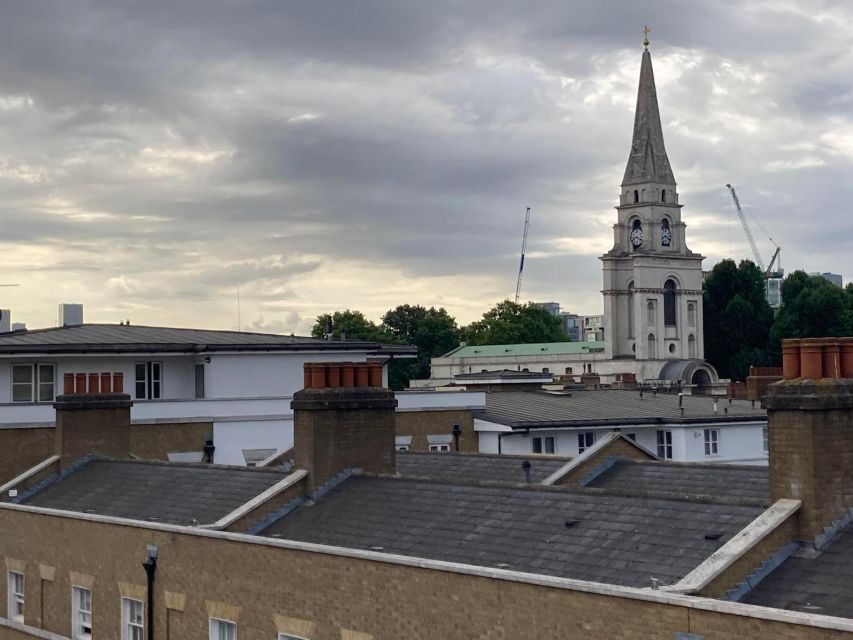
The walk begins at the St Mary’s Whitechapel Church Memorial. This is a fitting meeting point because it places you directly in the East End setting rather than starting with a generic introduction somewhere far from the story.
Expect the opening section to establish the wider Victorian setting. The murders did not happen in an empty film set. They took place among streets, homes, businesses, religious buildings, and working communities. Looking at the area through that everyday lens helps correct the usual image of Whitechapel as nothing more than a dark backdrop.
This opening also prepares you for the tour’s main strength: location. You will be walking through streets where people lived their ordinary lives, not simply visiting a museum display. The modern neighborhood has changed, but the route lets you compare today’s buildings and street pattern with the setting described in historical accounts.
Because this is a walking tour, arrive dressed for London weather. The information specifically advises weather-appropriate clothing, and that is sensible advice for any outdoor experience in East London. Rain or cold can make a careful two-hour explanation feel much longer.
Brick Lane and the first street-level clues
The next stop is 1 Brick Lane. Today, Brick Lane is famous for food, street art, shops, and its strong Bangladeshi cultural identity. On this walk, you see it through another layer of London’s past.
The value of this stop is not only the address itself. It helps show how the case sits within a changing neighborhood. You can look at the surrounding architecture and think about how streets develop, disappear, and take on new meanings. The guide’s job here is to connect the physical place to the historical record without pretending that the modern street looks exactly as it did in the 1880s.
This is also where the walk begins to feel less like a string of famous names and more like a study of a real district. If you enjoy urban history, you will appreciate that balance. If you want a fast list of sensational facts, the pace may feel more measured.
Gunthorpe Street and the human side of the case
At 16 Gunthorpe Street, the emphasis remains on place and people. The route is designed to explore streets where victims lived their daily lives, not just locations selected for their connection to a violent event.
That human focus is important. The Ripper story is often told as a puzzle about an unknown criminal, while the women involved become secondary characters. A historically minded walk should push back against that habit by restoring some sense of ordinary life, work, and community.
You can expect Oranto to add context about the buildings and the streets around the address. The supplied information does not promise access inside private buildings, so you should think of this as an exterior walking visit. That is normal for a city tour, and the guide’s explanation is what gives the street its meaning.
A few more options to weigh up in London
- London: The London Eye Entry Ticket
★ 4.6 · 35,875 reviews - From London: Harry Potter Warner Bros Studio Tour
★ 4.7 · 26,588 reviews - London: Westminster to Greenwich River Thames Cruise
★ 4.5 · 22,836 reviews - Magical London: Harry Potter Guided Walking Tour
★ 4.7 · 22,044 reviews
Flower and Dean Walk, then Banglatown Arch
The group passes by 49 Flower and Dean Walk before visiting Banglatown Arch. These two points help widen the story beyond individual murder locations.
Flower and Dean Walk is connected to the dense East End environment of the period. Passing by rather than stopping for a long lecture helps keep the two-hour route moving. It also gives you a chance to observe the neighborhood while listening, instead of treating every address as a staged presentation.
Banglatown Arch brings the modern identity of the district into view. The area’s present-day cultural character is part of the story too. London is not frozen in the Victorian era, and a good city walk lets you see the layers together.
This portion may be especially rewarding if you like architecture and social history. You are encouraged to notice old buildings and the stories attached to them, while also seeing how later communities have shaped the streets. The subject is grim, but the setting is a living part of London.
Hanbury Street and the case’s most important locations
The route visits 29 Hanbury Street, one of the key addresses connected with the murders. This is likely to be one of the most serious moments of the walk because the address is treated as an actual historical location, not just a name in a book.
The guide’s visual material should help you understand the setting and the evidence linked to it. Photographs are useful here because they give the discussion a concrete reference point. You can compare the present street with historical images and better grasp why the location mattered.
There is also a drawback to visiting places tied to violent crimes: the modern street can look ordinary. That contrast can feel strange. The address may not deliver a dramatic visual reveal, and much of the experience depends on the explanation. If you want a theatrical atmosphere, this approach may feel restrained. If you want careful history, that restraint is a benefit.
Passing The Ten Bells in Spitalfields
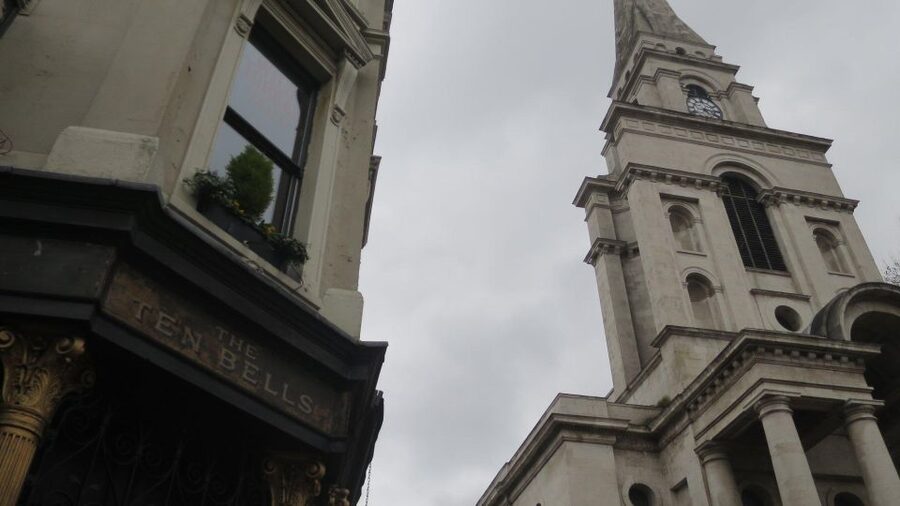
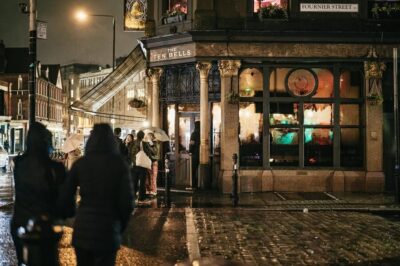
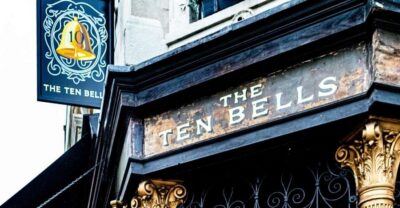
The walk passes The Ten Bells in Spitalfields. The pub is closely associated with the Whitechapel story and is one of the best-known names on the route.
Since the itinerary lists this as a pass-by rather than a full visit, do not expect an extended indoor stop. The point is to place the pub within the wider network of streets and stories connected to the case. You get the context without losing time that is needed for the murder sites and investigative locations ahead.
This is a useful reminder that the tour is not a pub crawl. Its subject is the historical case and the Victorian neighborhood, not drinking or entertainment. You should also not expect every famous Ripper location to look untouched. Modern London has been rebuilt, renamed, and reused many times.
Mitre Square Garden and the shape of the investigation
Mitre Square Garden is another major visit on the route. The square gives the guide room to discuss the setting of one of the central crime scenes and the practical challenges faced by investigators.
Open spaces often make historical explanation easier because you can see the relationship between entrances, nearby streets, and the surrounding buildings. Even when the original structures have changed, the layout can help you understand why police accounts and later theories focused on particular details.
This stop should appeal to people who enjoy examining evidence rather than simply hearing a conclusion. You can ask how a theory fits the known facts, what remains uncertain, and why some claims have lasted longer than others.
The tone is likely to remain serious. The walk does not treat the murders as a harmless mystery game. That is one of its better qualities, but it also means you should consider your own comfort with true crime before booking.
Goulston Street and the danger of easy answers
At 46 Goulston Street, the route turns toward another location central to the investigation. This is the kind of address where small details can take on huge importance in the public imagination.
A careful guide can show you how evidence was collected, interpreted, and sometimes distorted. That is where Oranto’s specialist background becomes valuable. Rather than presenting one neat answer, he can explain competing interpretations and invite you to question the accepted story.
You will likely get the most from this section if you listen for the difference between a recorded fact and a later theory. The tour’s open format gives you room to ask exactly that. It is a good setting for a debate, provided you are comfortable with uncertainty.
White’s Row and the final chapter
The final listed stop is 6 White’s Row. Ending here gives the tour one more chance to connect the physical streets with the larger investigation.
By this point, you will have walked through several addresses associated with the victims, the crime scenes, and the surrounding community. The route does not simply repeat the same point. Each location adds another piece of geography and context.
A two-hour tour has to make choices. You will not receive every detail about every person connected to the case, and the guide cannot recreate the whole of Victorian London in one afternoon. Still, the ten-location route gives the subject enough room to feel substantial rather than rushed.
The conclusion is also a chance to raise remaining questions. If you have followed a particular theory through the walk, this is a sensible time to discuss it directly with the guide.
What $21 gets you in practical terms
At $21 per person, the price is fair for a two-hour, live guided walk in Spanish led by a specialist. You are paying for interpretation, not admission to a building or a collection of exhibits. The value rests heavily on the guide, and José Oranto’s research background makes that a strong part of the package.
The price also covers a focused route through several meaningful locations. You do not need to organize the addresses yourself or spend time reading brief plaques without context. The guide creates a clear thread from one stop to the next.
I would see this as particularly good value if Spanish is your preferred language. Complex historical explanations are easier to follow when you can discuss them naturally, especially in a subject filled with names, dates, conflicting accounts, and uncertain conclusions.
The walk has received a five-star rating from 69 reviews, with repeated praise for Oranto’s preparation, warmth, detailed explanations, and patience. That praise matches the main benefit of the experience: you get a guide who appears happy to keep the conversation going instead of delivering a fixed speech and sending you on your way.
Who will enjoy this Spanish Whitechapel walk
I would recommend this tour to you if you:
- Want the Jack the Ripper story treated as history rather than pure entertainment.
- Prefer Spanish explanations and the chance to ask follow-up questions.
- Like visiting real streets and addresses connected with famous events.
- Enjoy photographs, documents, competing theories, and evidence-based discussion.
- Want a guide who can also offer general London help during the walk.
- Prefer a two-hour experience that does not demand a very long trek.
You may want to skip it if you dislike true crime, violent historical subjects, or discussions about murder scenes. You should also choose another activity if you want indoor shelter, a theatrical performance, or a tour built mainly around ghost stories.
The walk is listed as wheelchair accessible, which is useful for planning. Specific information about the exact surface conditions, restroom access, or group size is not provided, so you may wish to confirm those details before booking if they matter to you.
Booking details worth knowing before you go
The tour runs for two hours, with starting times shown according to availability. It is conducted in Spanish by a live guide.
You can cancel up to 24 hours before the experience for a full refund. The reserve-now, pay-later option also gives you some flexibility if your London plans are still shifting.
Wear clothing suited to the weather. You will be outdoors for the full walking route, and London can change from pleasant to wet with little warning.
Video recording is not allowed. You can still take in the streets, listen closely, ask questions, and use the guide’s visual material during the presentation.
Should you book the Jack the Ripper tour in Spanish?
Book it if you want a serious, location-based look at the Whitechapel murders, especially if you prefer Spanish and value direct conversation with an expert guide. José Oranto’s awards, books, research, and highly praised personal manner give the experience more substance than a standard crime-themed walk.
The best reason to choose it is the combination of real addresses, documented material, and open discussion. The main warning is the subject itself. This is a tour about murder, uncertainty, and the lives of real people, not a light London attraction.
At $21 for two hours, I consider it a solid choice for history-minded visitors who want to understand how the myth grew around the evidence. Bring a coat, leave your camera video mode unused, and arrive ready to ask difficult questions.
FAQ
How long does the Jack the Ripper tour last?
The walking tour lasts two hours.
What language is the tour conducted in?
The tour is conducted in Spanish with a live Spanish-speaking guide.
Who leads the tour?
José Oranto leads the experience. He is a historian and author of Jack el Destripador y las crónicas de Whitechapel.
Where does the tour begin?
The meeting point is the St Mary’s Whitechapel Church Memorial.
Which locations are included?
The route includes 1 Brick Lane, 16 Gunthorpe Street, Banglatown Arch, 29 Hanbury Street, Mitre Square Garden, 46 Goulston Street, and 6 White’s Row. It passes by 49 Flower and Dean Walk and The Ten Bells Spitalfields.
Can I ask the guide questions?
Yes. Questions, discussion, and debate are welcomed during the tour.
Is the tour wheelchair accessible?
Yes, the activity is listed as wheelchair accessible.
Can I cancel for a refund?
Yes. You can cancel up to 24 hours in advance for a full refund.
Is video recording allowed?
No. Video recording is not allowed during the experience.
Just added in London
- The Best of British Cooking Class & Dining Experience★ 5.0 · 1 review
- London: Live Comedy Show at Big Belly Bar and Comedy Club★ 4.5 · 80 reviews
- London: British Museum Highlights Guided Small Group Tour★ 4.9 · 113 reviews
- The Beatles London Walking Tour★ 4.2 · 147 reviews
- The Best Highlights of London Walking Tour & Boat Cruise★ 5.0 · 1 review
- The Authentic Walking Tour with Indian Tasting Meal★ 4.8 · 4 reviews
- Iconic London: Bard, Beatles, Bond & Baker Street★ 4.9 · 15 reviews
- London: Tate Britain Official Discovery Tour★ 4.7 · 7 reviews
Jack the Ripper Tours, compared.
Jack the Ripper Walking Tour – Ripper Vision Tours
Read our review →
French Language : Original Jack the Ripper Tour
Read our review →
Other lists this tour turns up in