

REVIEW · CASTLE TOURS
Perth: The Black Watch Castle and Museum Guided Tour
History comes alive behind castle walls. This one-hour tour makes Scotland’s military past easier to understand through uniforms, medals, personal objects, and stories tied to The Black Watch, Scotland’s oldest regiment. I like the expert-led storytelling, especially because a good guide can connect a display to the people who carried it. I also like that your ticket covers the guided gallery tour, permanent exhibits, and temporary displays.
The main limitation is the short running time. One hour is enough for a focused introduction, but not enough to study every object or read every label at leisure. At $29 per person, the price is fair if you value a live guide, though independent museum visitors may prefer more time on their own.
In This Review
- Key points to know before you go
- Why The Black Watch matters in Scottish history
- Entering the castle and meeting your guide
- The early 18th-century origins of The Black Watch
- From the Napoleonic Wars to global conflict
- Victoria Cross medals and stories of courage
- Personal objects, uniforms, and everyday service
- Why the one-hour format works, and where it falls short
- What the $29 price includes
- Practical rules and accessibility
- Who should book this Perth experience?
- Should you book The Black Watch Castle and Museum?
- FAQ
- How long does the guided tour last?
- What language is the tour conducted in?
- What does the $29 ticket include?
- Where do I meet the guide?
- Is the museum wheelchair accessible?
- Can I cancel the booking?
Key points to know before you go
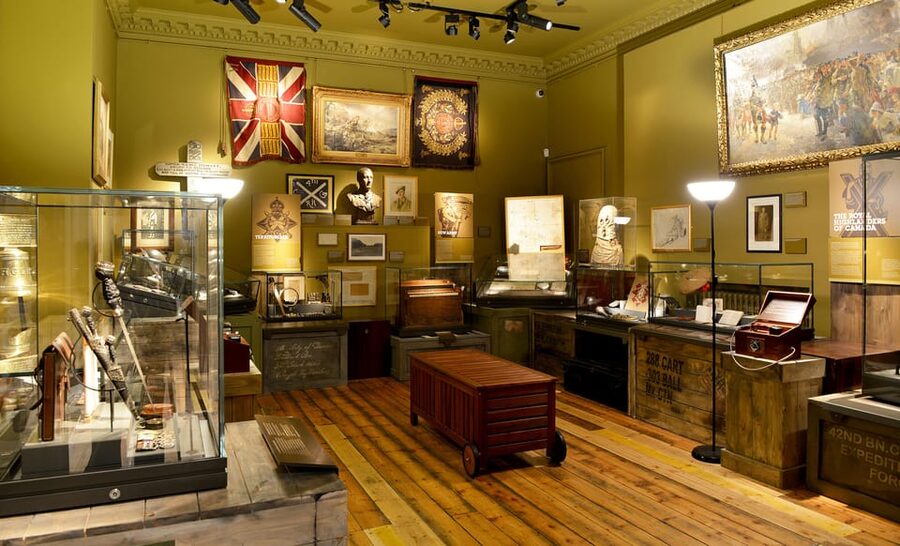
- Three centuries of military history: Follow The Black Watch from its early 18th-century beginnings through the Napoleonic Wars, both World Wars, and modern conflicts.
- Personal stories behind the uniforms: Artefacts, service records, and displays help move the story beyond dates and battle names.
- Victoria Cross medals on display: These rare awards add a powerful human focus to the regiment’s record of bravery.
- A guide-led visit in a castle setting: The historic building gives the museum a strong sense of place, while the live commentary adds context.
- Useful practical value: Your admission includes permanent and temporary exhibits, free Wi-Fi, and free parking.
- A focused one-hour format: The tour suits a short Perth visit, but you may want extra time afterward for the galleries.
Why The Black Watch matters in Scottish history
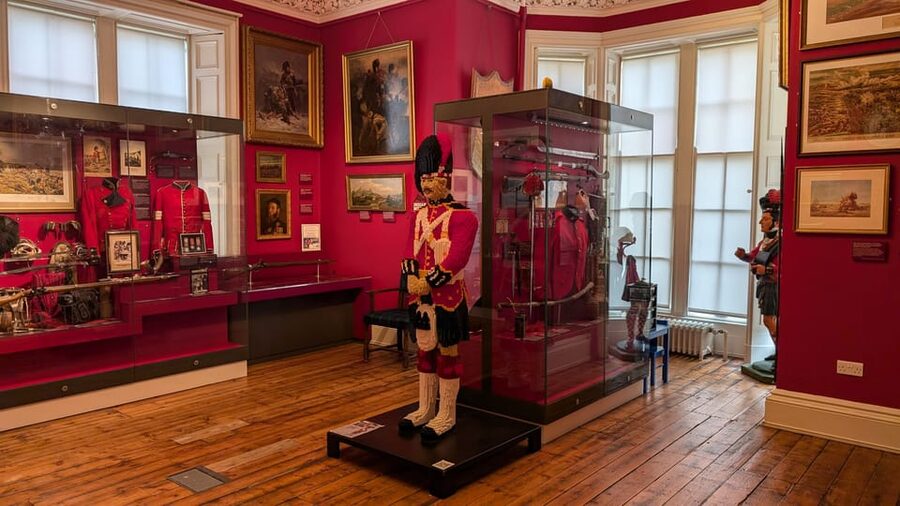
The Black Watch is not simply a collection of uniforms in glass cases. The regiment has served for more than 300 years, and its story is tied closely to Scotland’s changing place within Britain and the wider world.
The tour begins with the regiment’s origins in the early 18th century. That starting point gives you a useful frame for the rest of the visit. Instead of meeting the regiment halfway through its story, you see how it developed over time and how its duties changed.
You will hear about major campaigns, but the best museum moments often come from the smaller objects. A uniform can show rank, status, and changing military practice. A personal item can suggest what service felt like away from the battlefield. These details help you picture individual soldiers rather than treating the regiment as one large, faceless institution.
That human scale is one of the tour’s strongest features. The guide does not only explain what happened. The guide also helps you understand who was involved and what military service meant across different generations.
More Castle Tours in Scotland
- Inverness: Isle of Skye and Eilean Donan Castle Day Trip
★ 4.8 · 4,136 reviews - Loch Ness: Urquhart Castle Round-Trip Cruise
★ 4.4 · 3,070 reviews - From Inverness: Loch Ness Cruise and Urquhart Castle
★ 4.7 · 2,241 reviews
Entering the castle and meeting your guide
You meet at the Gift Shop Ticket Desk inside The Black Watch Castle and Museum. This matters because you do not need to search around the building for a separate tour office. Arrive ready to check in there before the scheduled start time.
The tour lasts one hour and is conducted in English. It is led by a live guide, not an audio recording, so you can ask questions as the visit develops. That small difference can have a large effect in a museum filled with military terms, dates, and unfamiliar names.
A strong guide helps you sort the important material from the background detail. The best approach is to listen for the connections between objects, battles, and individual lives. You will get more from the hour if you treat it as a guided story rather than a quick walk past cases.
Jim is one guide associated with the experience, and his clear command of the subject has earned particular praise. If he is leading your visit, you can expect a guide who takes questions seriously and adds plenty of historical explanation.
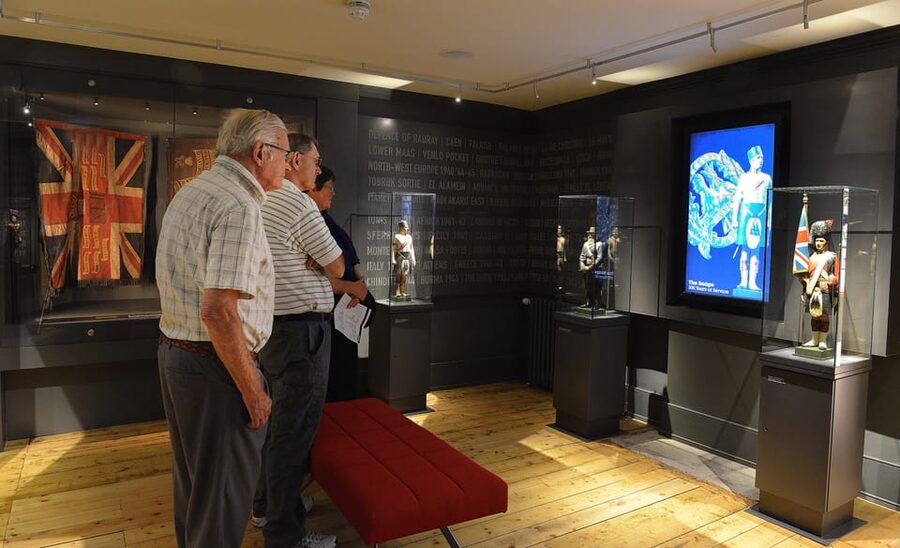
The castle setting also changes the mood. You are not entering a modern exhibition hall designed only for efficiency. The museum occupies a historic building, and that setting gives the displays a stronger connection to Scotland’s past.
The early 18th-century origins of The Black Watch
The opening section introduces The Black Watch in the early 18th century. This is an important first stop because it explains where the regiment came from before moving into its later campaigns.
You can expect the guide to place the regiment’s formation within the wider story of Scotland’s military past. The point is not simply to memorize a founding date. It is to understand how the regiment became part of Scotland’s identity and how its role developed over the centuries.
Uniforms and early artefacts help make this section concrete. Military clothing can look decorative at first glance, but it also tells you about discipline, rank, and the public image of a regiment. Listen closely when the guide explains why particular items mattered. A display can seem straightforward until someone points out the practical or symbolic meaning behind it.
This part of the visit is especially useful if you know little about The Black Watch. You do not need a detailed military background to follow the story. The guide provides the basic structure, then builds outward toward the regiment’s major campaigns.
From the Napoleonic Wars to global conflict
The tour then moves through some of the major moments in the regiment’s service, including the Napoleonic Wars and both World Wars. These sections connect The Black Watch to events that shaped Scotland, Britain, Europe, and the wider world.
The value of a guide becomes clear here. A museum label can tell you the name of a campaign and the year it happened. A live explanation can show how the regiment’s role changed from one conflict to the next, and how military life differed across generations.
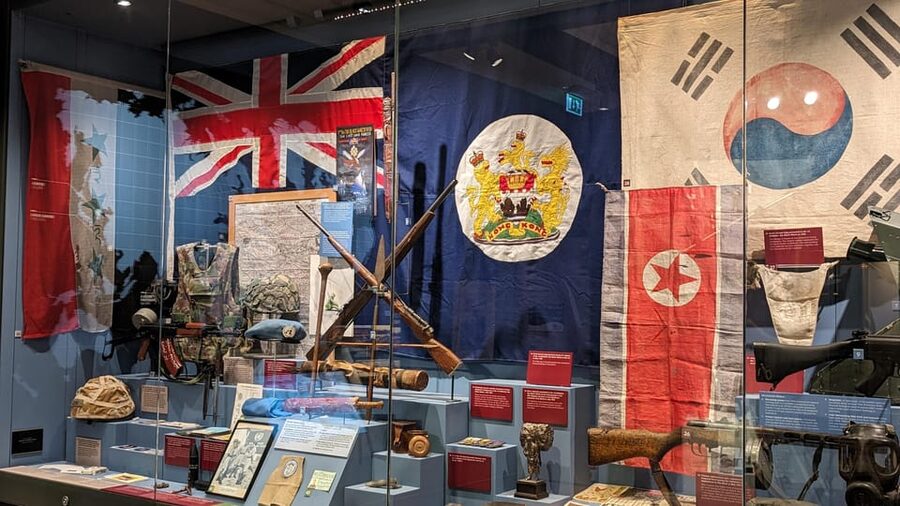
You will see artefacts, uniforms, and displays linked to these periods. The material gives you a visual way to follow change. Equipment, clothing, and presentation shift over time, and those changes reflect new forms of warfare and new expectations placed on soldiers.
The guide also brings out the personal side of service. Battles are often taught as large events with clear dates and outcomes. The museum’s personal stories remind you that each campaign involved ordinary people dealing with fear, duty, separation, and loss.
That balance is important. The tour honours the regiment’s achievements, but it also points toward the sacrifices behind them. You should come away with more than admiration for military tradition. You should also have a clearer sense of the human cost of service.
A different kind of day out entirely:
- Edinburgh: Loch Ness, Glencoe & the Scottish Highlands Tour
★ 4.6 · 17,446 reviews - From Edinburgh: Loch Ness, Glencoe & Scottish Highlands Tour
★ 4.7 · 11,381 reviews - Edinburgh: Glenfinnan Viaduct, Glencoe & Fort William
★ 4.8 · 3,366 reviews - Edinburgh: Loch Ness, Glencoe, Coos & the Highlands Day Tour
★ 4.6 · 2,539 reviews
Victoria Cross medals and stories of courage
The Victoria Cross medals are among the most striking displays in the museum. These awards are linked to exceptional acts of bravery, and seeing them in person gives the military story a direct, physical focus.
Medals can be easy to skim past in a crowded museum. Here, you should pause and listen to the story connected to each one. The decoration itself is small, but the circumstances behind it can reveal the pressure and danger faced by the person who received it.
This is another place where the guide’s role matters. A medal needs context. Without it, you may notice its appearance and move on. With an explanation of the battle, the action, and the soldier involved, the object becomes much more meaningful.
The Victoria Cross displays also show how the museum handles remembrance. The emphasis is not only on victory or regimental pride. It is on individual courage and the people whose actions were considered extraordinary.
If you have children or teenagers with you, these displays may provide an accessible way into the larger story. They offer a clear human question: what happened, who acted, and why was that act remembered?
Personal objects, uniforms, and everyday service
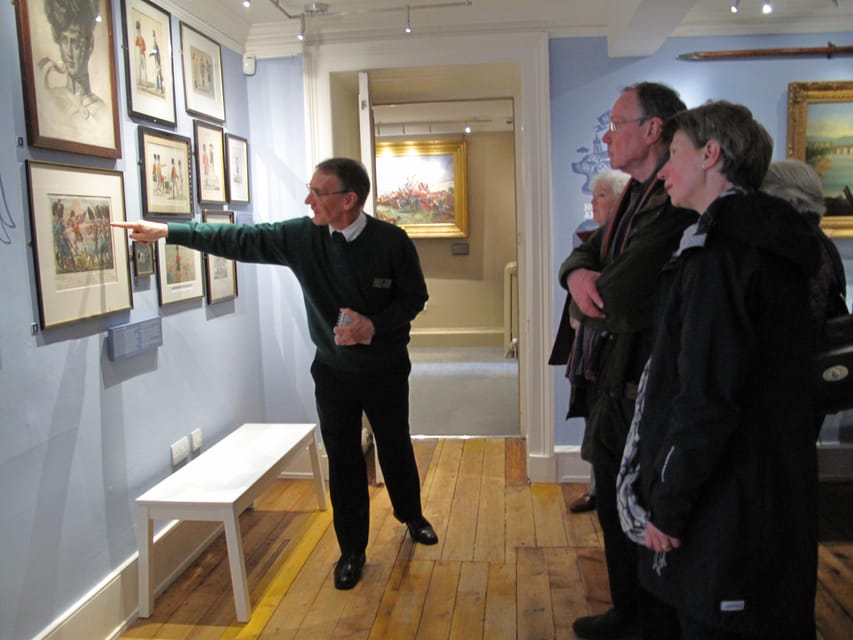
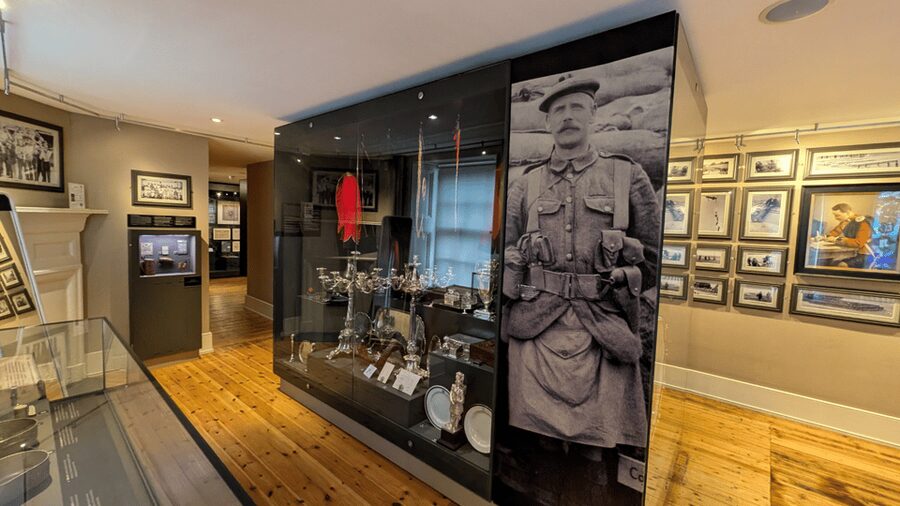
The museum’s artefacts help fill in the spaces between major battles. Uniforms tell you about appearance and rank, while personal possessions can suggest daily life and private experience.
I find this kind of material particularly useful because it keeps the tour grounded. Military history can become abstract when it is reduced to campaigns and commanders. A personal object brings the story back to one person, one family, or one moment.
Your guide may point out details that you would otherwise miss. Pay attention to the way objects are grouped and explained. The museum is not only showing old things. It is using those things to build a story about identity, duty, and change.
The displays also show how The Black Watch evolved over time. The regiment did not remain frozen in its early form. Its role, equipment, and relationship with the armed forces changed as the world changed.
You should not expect every object to receive a long explanation during the one-hour tour. The guide has to keep moving, and the museum contains more material than can be covered in a single visit. If you want to read every label, plan to return to the galleries after the guided hour.
Why the one-hour format works, and where it falls short
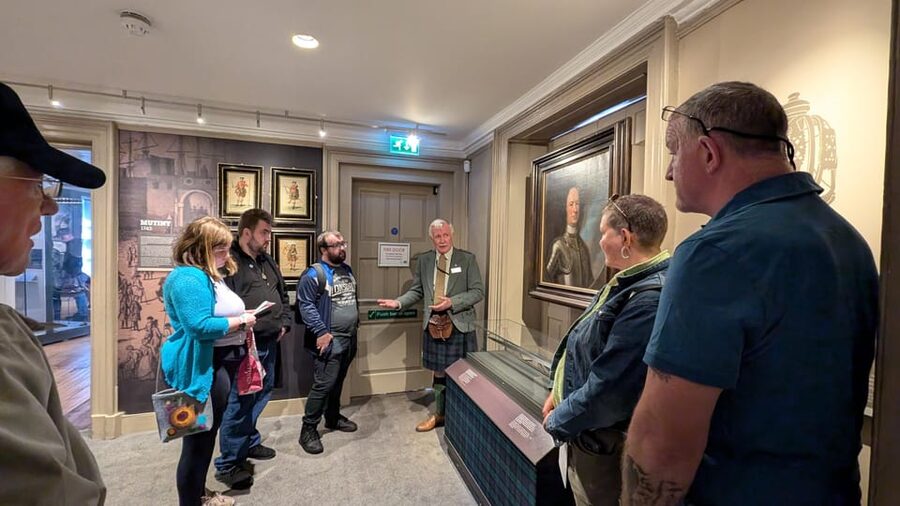
One hour is a sensible length for a guided introduction. It gives you a clear route through the museum without turning the visit into an all-day commitment. That makes the experience easy to fit into a day exploring Perth and Kinross.
The short format is also helpful if you are not sure how much military history you want. You get a structured overview, a historic setting, and the chance to ask questions. You are not left alone to work out which galleries matter most.
Still, one hour has limits. The Black Watch has more than 300 years of material to cover, so the guide must choose what to emphasize. You may leave with a solid understanding of the main story but still want more time with the objects.
I would treat the guided tour as the backbone of your visit. Afterward, use any remaining time to revisit the displays that caught your attention. The guided hour gives you the context. A slower second look lets you absorb the details.
The tour is also a good choice for mixed-interest groups. A serious history fan gets expert commentary and rare objects. Someone with only a passing interest gets a clear, manageable introduction rather than a long and confusing lecture.
What the $29 price includes
At $29 per person, this is not the cheapest museum stop in Scotland. The price makes more sense when you count what is included: a live guided tour, entry to the permanent museum, and access to temporary exhibits.
You also receive free Wi-Fi throughout the museum and use of the free car park. Those are practical extras rather than headline attractions, but they reduce the cost and hassle of a visit, especially if you are driving.
The main value comes from the guide. You are paying for interpretation, not just entry. If you enjoy asking questions and prefer a clear explanation of what you are seeing, the extra cost is easier to justify.
If you mainly want to browse quietly and spend as long as you like with individual displays, the guided format may feel less flexible. You can still make use of the museum galleries, but the tour itself follows a fixed one-hour structure.
The ability to reserve now and pay later also helps if your Perth plans are still changing. You can cancel up to 24 hours before the tour for a full refund, which gives you some protection when arranging a larger Scotland itinerary.
Practical rules and accessibility
The museum is wheelchair accessible, making the experience suitable for visitors who need step-free access. The available information does not give further details about particular galleries or facilities, so contact the museum directly if you need specific access arrangements.
Several restrictions keep the galleries safe and orderly. Do not bring weapons, sharp objects, large bags, luggage, food, or drinks into the experience. Smoking and vaping are not allowed, and assistance dogs are permitted while other pets are not.
You also cannot touch the exhibits or use flash photography. These rules are easy to follow, but they matter in a museum where many objects are fragile and irreplaceable.
Unaccompanied minors are not allowed, and intoxication is prohibited. Sprays and aerosols are also restricted. Pack light, leave bulky items elsewhere, and bring a phone or camera with flash turned off if you want to record a few memories.
Food and drinks are not included. The museum has a Bistro, but you will need to pay separately. Souvenirs from the Castle Gift Shop also cost extra, so include those in your budget if you like to browse museum shops.
Who should book this Perth experience?
I would recommend this tour to anyone interested in Scottish military history, regimental traditions, historic buildings, or personal stories from wartime. It is also a practical choice if you have only a short time in Perth and want one focused cultural stop.
Families with older children may enjoy the medals, uniforms, and stories of individual soldiers. The live guide can also answer questions in a way that a display label cannot.
You do not need to be a military expert. The guide-led format gives you enough background to follow the story, and the objects make the subject easier to approach.
You may want to skip the guided tour if you dislike fixed schedules, prefer silence, or need several hours to inspect every case. In that situation, museum admission and independent browsing may suit you better, if that option is available for your chosen date.
Should you book The Black Watch Castle and Museum?
Book it if you want a focused, human account of Scotland’s military past rather than a quick collection of old uniforms. The one-hour guide-led visit gives you a clear route through 300 years of service, with Victoria Cross medals, personal artefacts, major battles, and the changing role of The Black Watch.
At $29, the strongest value is the live explanation. Arrive with questions, listen for the stories behind the objects, and stay afterward if you want a closer look at the galleries. If Jim is leading your tour, you can expect a particularly well-informed presentation based on the strong praise attached to his guiding.
The short duration is the only real concern. You will not cover every detail in an hour. For most people, though, that is the point: you get a focused introduction without giving up half a day.
FAQ
How long does the guided tour last?
The guided tour lasts one hour.
What language is the tour conducted in?
The live tour guide speaks English.
What does the $29 ticket include?
The price includes the guided tour of The Black Watch Castle and Museum galleries, entry to the permanent and temporary exhibits, free Wi-Fi, and free parking.
Where do I meet the guide?
Meet at the Gift Shop Ticket Desk inside The Black Watch Castle and Museum for check-in.
Is the museum wheelchair accessible?
Yes, the activity is wheelchair accessible.
Can I cancel the booking?
Yes. You can cancel up to 24 hours in advance for a full refund. You can also reserve your place and pay later, which keeps your plans flexible.
More Museum Tours in Scotland
- Perth: The Black Watch Castle and Museum Entry Ticket
★ 4.8 · 5 reviews - Liverpool: Liverpool Football Club Museum and Stadium Tour
★ 4.8 · 10,764 reviews - London: Chelsea Football Club Stadium and Museum Tour
★ 4.8 · 4,576 reviews - London Transport Museum Entrance Ticket
★ 4.5 · 1,323 reviews
Just added in Scotland
- From Edinburgh: Best of Scotland Small-Group Day Tour★ 4.7 · 61 reviews
- Stornoway: Private Tour Isle of Lewis★ 5.0 · 2 reviews
- Stirling: Private Old Town & Castle Walking Tour★ 4.9 · 17 reviews
- Stirling: Daily Guided Walking Tour (11am & 2pm)★ 4.7 · 66 reviews
- Edinburgh: Stirling, Whisky & St Andrews Tour in Italian★ 3.9 · 14 reviews
- Stirling: Historical Walking Tour in Spanish★ 4.4 · 4 reviews
- Stirling Castle: Skip-the-Line Guided Tour in Spanish★ 4.8 · 19 reviews
- From Glasgow: Standing Stones, Castles & Highlands Tour★ 4.8 · 44 reviews
Castle Tours, compared.

Isle of Skye and Eilean Donan Castle Day Trip
Read our review →
Windsor Castle, Stonehenge & Bath Full-Day Tour
Read our review →



Loch Lomond, Trossachs & Stirling Castle Tour
Read our review →
Other lists this tour turns up in