

REVIEW · PORTSMOUTH TOURS
The Mary Rose: Day Admission Ticket
A shipwreck can tell remarkably personal stories. The Mary Rose Museum lets you see Henry VIII’s 16th-century warship, the surviving hull, and thousands of objects recovered from the seabed. I especially like the original Tudor belongings and the way the displays explain ordinary shipboard life, not just kings and battles. The 4D film adds a lively account of the ship’s recovery, too. The main drawback is price: at about $43.10 per person, this is not a quick stop, so you need to allow enough time to make it worthwhile.
The museum is atmospheric, with low lighting used to protect the collection and create the feeling of entering a wreck site. It is also more of a self-guided museum than a guided tour, so you control the pace. That suits independent visitors, but anyone expecting a guide to lead a group from room to room should know what they are booking.
In This Review
- Key points to know before you go
- Arriving at Portsmouth Historic Dockyard
- The opening story of a ship lost in 1545
- Seeing the Mary Rose hull upright
- Tudor objects that make the ship feel human
- The 1545 final-moments experience
- The included 4D film about the 1982 recovery
- How long to spend inside
- Is $43.10 good value?
- Accessibility, atmosphere, and practical comfort
- Who will enjoy the Mary Rose most?
- Should you book The Mary Rose?
- FAQ
- Where is The Mary Rose Museum?
- How long should I spend at The Mary Rose?
- What time does the museum open?
- Is the 4D film included?
- Is The Mary Rose Museum wheelchair accessible?
- Can I bring a large bag or luggage?
- Is there an audio guide?
- Can I cancel my ticket?
Key points to know before you go
- A genuine 500-year-old warship: The Mary Rose is the only 16th-century warship open to visitors anywhere in the world.
- Around 9,000 Tudor objects: Weapons, tools, personal possessions, and work equipment help recreate life aboard the ship.
- The hull is the star: The preserved structure is displayed upright inside the purpose-built museum.
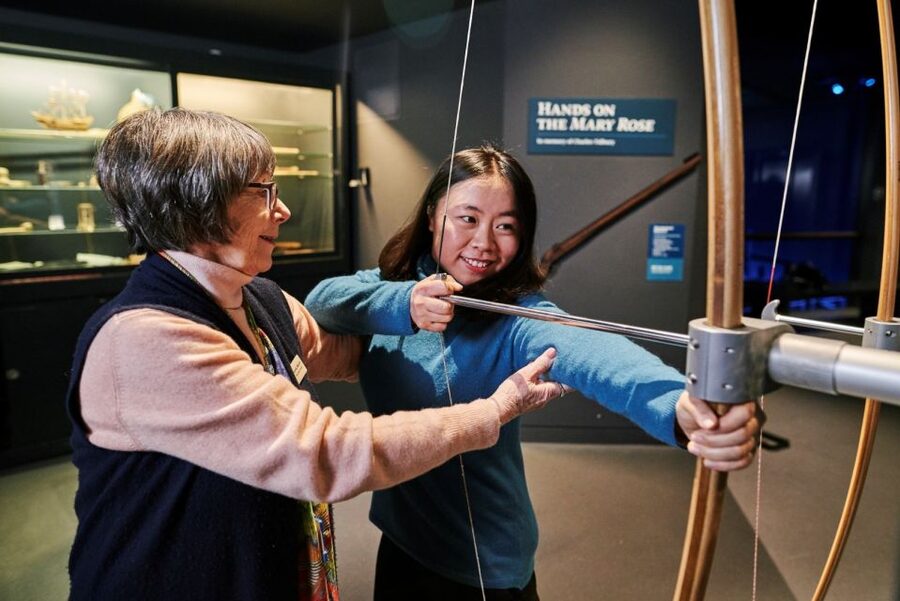
- Touch real Tudor objects: Selected artifacts and interactive displays give you a more direct connection to the past.
- A 4D recovery film is included: The cinematic presentation follows the wreck’s discovery and raising in 1982.
- Allow at least 1.5 to 2 hours: Many people will want longer, especially if they read the panels carefully or combine the visit with the wider dockyard.
Arriving at Portsmouth Historic Dockyard
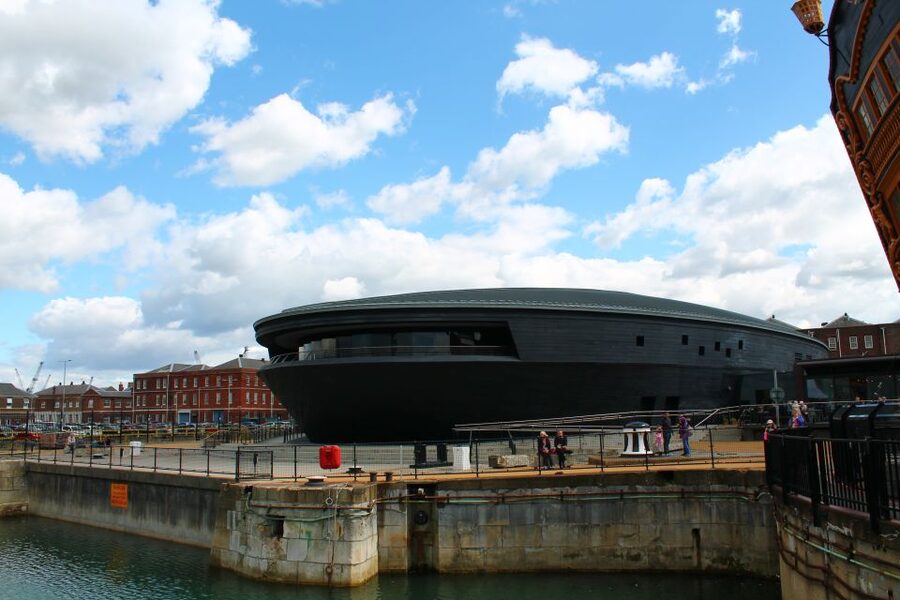
The Mary Rose Museum sits inside Portsmouth Historic Dockyard at Main Road, Portsmouth, PO1 3PY. Once you reach the dockyard, follow the Mary Rose entrance. From there, it is about a five-minute walk to the museum itself.
The location is handy if you arrive by train, with Portsmouth Harbour station close to the dockyard and other naval attractions nearby. You will find plenty to see in this part of Portsmouth, so it makes sense to treat the museum as part of a wider historic dockyard visit rather than a stand-alone stop squeezed into a busy afternoon.
Take a little care with parking and directions. The museum information does not provide parking directly at the entrance, and one practical concern is that signs from the car park may not be prominent enough for every visitor. If you have mobility concerns, allow extra time for the walk from parking areas.
At the entrance, expect a 100 percent bag search policy. Large bags and luggage are not allowed, and you must keep bags, buggies, and scooters with you. This is worth knowing before you arrive, especially if you are visiting with children or carrying equipment for a full day around Portsmouth.
A few more options to weigh up in Britain
- Portsmouth: Historic Dockyard Ultimate Explorer Ticket
★ 4.8 · 1,052 reviews - Portsmouth: Spinnaker Tower Ticket
★ 4.6 · 437 reviews - Portsmouth: HMS Victory Admission Ticket
★ 4.6 · 223 reviews
The opening story of a ship lost in 1545
The visit works best when you begin with the story of the Mary Rose itself. Built for Henry VIII, the ship sank during the Battle of the Solent on 19 July 1545. The wreck remained beneath the sea for centuries before being raised in 1982.
The museum opened in its current award-winning form in 2013, built around the preserved ship. That design matters. Instead of seeing a few timbers behind glass, you get a sense of the vessel as a large working machine, with its decks, hull, and equipment presented as part of one connected story.
The opening displays set the scene for Tudor warfare and seafaring. You learn about the ship’s role, the people aboard, and the final battle. The museum does not limit itself to royal history. Its strongest material concerns the crew and officers whose possessions survived with the wreck.
That human focus is what gives the visit its force. A ship is easier to understand when you see the things people carried, used, repaired, and stored. Personal items can say more about daily life than a long account of naval policy.
Seeing the Mary Rose hull upright
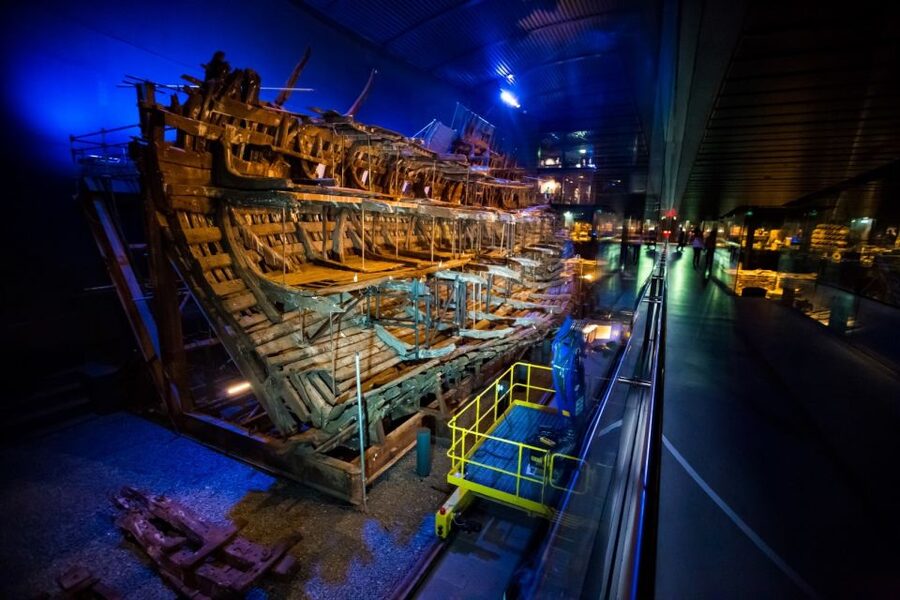
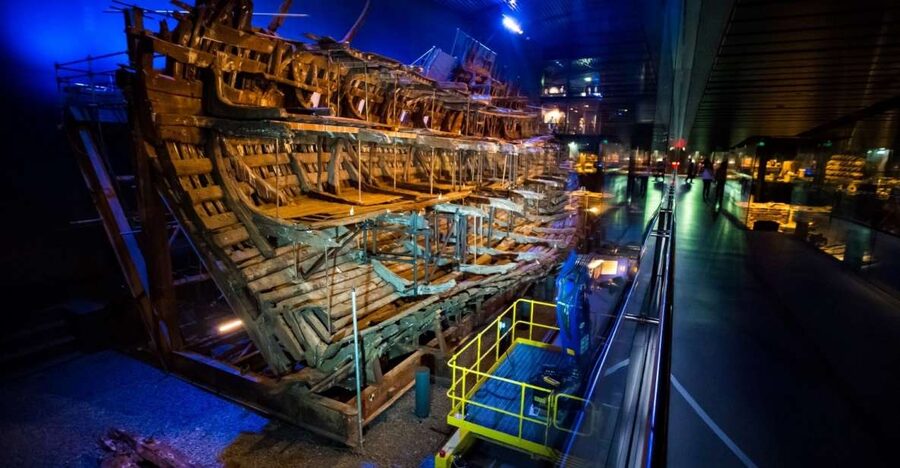
The preserved hull is the central sight. The Mary Rose was raised from the seabed in 1982, an enormous operation that became one of Britain’s most famous archaeological events. Inside the museum, the ship is presented upright, allowing you to study its structure as a vessel rather than as a scattered wreck.
The low light creates an unusual mood. It helps protect the collection, but it also makes the ship feel removed from ordinary museum space. You are looking at an object that spent hundreds of years underwater, now carefully preserved and displayed for close study.
Do not rush this part. Look at the shape of the hull, the layers of construction, and the way the museum frames the ship from different levels. The hull may be the image that brings you through the door, but the surrounding evidence is what explains how the ship worked.
The museum is fully accessible across all three levels, with lifts available. That is useful because the ship and displays are arranged vertically. You can move between floors without needing to use stairs, although the low lighting may require a little extra care.
Tudor objects that make the ship feel human
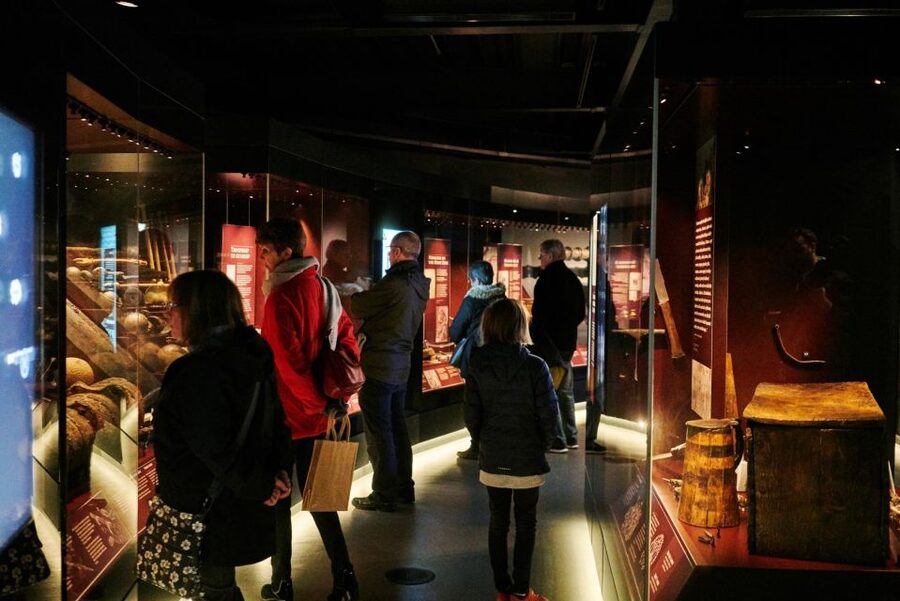
The collection includes about 9,000 objects rescued from the seabed and reunited with the ship. This is where the Mary Rose becomes more than a naval monument.
You might see equipment linked to work, food, weapons, clothing, and personal routines. The exact object groupings help explain the different roles aboard the ship, from officers to ordinary crew members. The collection includes longbows, arrows, tools, and personal possessions, giving you clues about both fighting and everyday tasks.
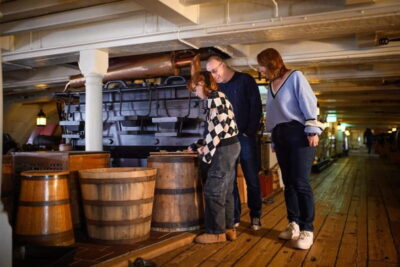
Some exhibits allow you to touch genuine Tudor artifacts. That is a small but memorable feature. In an age when many museum displays keep you firmly behind glass, handling an authentic object can make the past feel less remote.
The staff can also point out which items are original and which parts of an interactive display are modern. That distinction is helpful, especially for families. Children can engage with the hands-on material without losing sight of the fact that the real objects are centuries old.
The personal belongings are among the most effective displays. They help you picture the people who sailed on the Mary Rose as individuals, not anonymous figures in a textbook. Even small possessions can suggest habits, jobs, status, and the practical problems of living aboard a warship.
The museum also introduces individual stories, including Hatch the dog. Details like this add warmth to a difficult event and remind you that the ship carried a working community, not just soldiers and weapons.
A different kind of day out entirely:
- London: The London Eye Entry Ticket
★ 4.6 · 35,875 reviews - From London: Harry Potter Warner Bros Studio Tour
★ 4.7 · 26,588 reviews - London: Westminster to Greenwich River Thames Cruise
★ 4.5 · 22,836 reviews - Magical London: Harry Potter Guided Walking Tour
★ 4.7 · 22,044 reviews
The 1545 final-moments experience
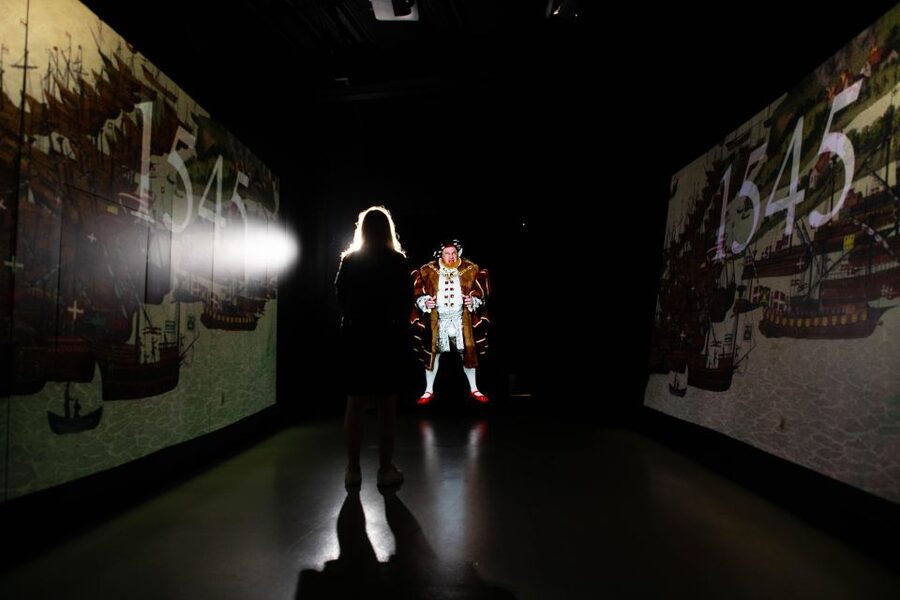
One section, titled 1545: When Their World Ended, takes you back to 19 July 1545. It presents the last moments aboard the Mary Rose as the ship sank during the Battle of the Solent.
This is the most dramatic part of the visit. You hear from King Henry VIII and members of the crew, bringing the final event closer to the people who experienced it. The presentation is designed to help you imagine the noise, confusion, and urgency of a ship in trouble.
The historical setting gives the display weight. You are not simply watching a disaster recreated for effect. You already know the ship and its people through the objects in the earlier galleries, so the final sequence has more meaning.
The theatrical approach may not suit visitors who prefer a quiet, object-led museum. Still, it gives younger visitors and anyone less familiar with Tudor naval history a clear way into the story. I would treat it as a useful part of the visit, not a substitute for studying the artifacts.
The included 4D film about the 1982 recovery
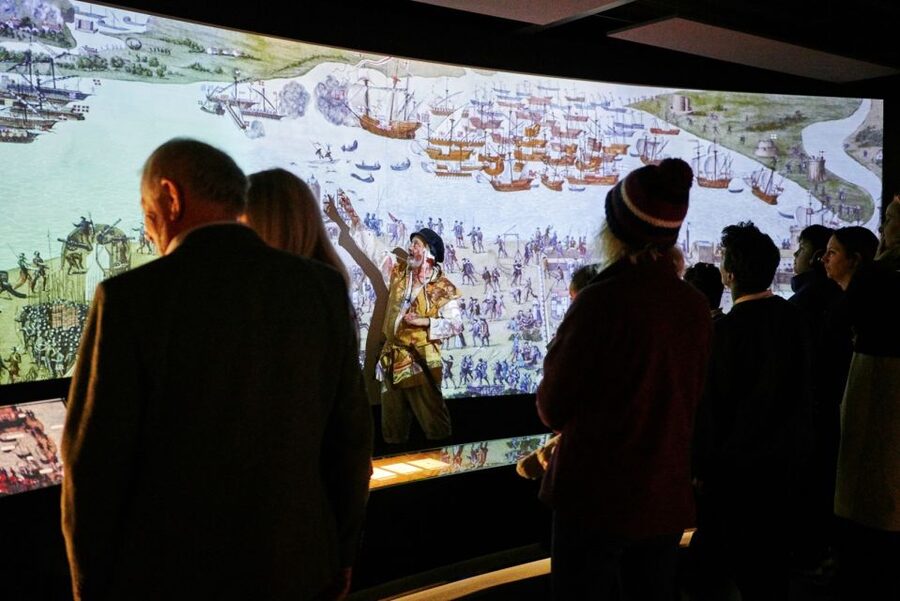
The newer 4D film is included with admission. It tells the story of the wreck site and the effort to raise the Mary Rose in 1982, with the divers’ experiences at the center.
This presentation shifts the focus from Tudor sailors to the modern people who found and recovered the ship. That makes it a good companion to the main galleries. First you learn how the vessel sank and what it carried. Then you see the technical and human challenge of bringing it back to the surface.
The film is cinematic and designed for all ages. It adds movement and sound to a visit that otherwise involves a good deal of reading and close observation. Families will likely appreciate the change of pace, while adults who remember the television coverage of the recovery may find it especially rewarding.
The film won the Museums and Heritage Best Use of Technology in Heritage award in 2024. You do not need specialist knowledge to follow it, and it helps explain why preserving the ship was such a major achievement.
Bring headphones if you plan to use the free multilingual audio guide through the Mary Rose app. The included guide is useful if you want more detail while moving around the displays, though the museum also provides plenty of written interpretation.
How long to spend inside
The recommended visit time is 1.5 to 2 hours. That is enough for a sensible first visit if you move steadily, watch the film, and read selected displays.
I would allow longer if the Mary Rose is a major reason for your trip. The collection rewards slow looking, and there is much more to read than you can absorb in a quick circuit. Some people may spend four hours or more when taking in the full exhibition at an unhurried pace.
The ticket is valid throughout the day, and you may visit at any time after opening at 10:00. Last admission is 45 minutes before closing, so do not arrive near the end of the day expecting to see everything.
A full day is sensible if you plan to visit other parts of Portsmouth Historic Dockyard. The Mary Rose, HMS Victory, and other attractions can easily fill a day, especially if you stop for lunch. Food and drinks are not included with this ticket, so plan a break outside the museum or within the wider dockyard area.
There is an important ticketing point here. If you also buy an HMS Victory or wider Portsmouth Historic Dockyard ticket, check exactly what it includes before paying for a separate Mary Rose admission. Some dockyard tickets are valid for the whole site, and buying twice would be a needless expense.
Is $43.10 good value?
At approximately $43.10 per person, this is a fairly costly museum admission. The value depends on how you visit.
For a short look at the hull alone, the price may feel high. The ticket becomes easier to justify when you spend two or more hours with the artifact collection, interactive displays, 1545 presentation, and included 4D film.
The sheer number of objects is a major part of the value. You are not paying only to see a famous ship. You are seeing a large body of material recovered from the same wreck and arranged to explain the people who used it.
Families may also find the ticket worthwhile because the museum offers several ways to engage: touchable artifacts, interactive displays, dramatic storytelling, and the film. Visitors who do not usually enjoy museums may prefer the mixture of visual exhibits and historical presentation to a building made up only of text panels.
Still, compare the cost with any combined dockyard admission before booking. The best deal may be a wider ticket if you want to see HMS Victory and other attractions too.
Accessibility, atmosphere, and practical comfort
The museum is wheelchair accessible across all three levels, with lifts available. Baby changing facilities are provided, which makes a family visit easier.
Low lighting is used throughout the building. It protects the collection and gives the museum its distinctive atmosphere, but it can be tiring if you are reading a lot of text. I would move slowly and avoid trying to absorb every panel in one pass.
The museum is English-speaking, with a free multilingual audio guide available through the Mary Rose app. Bring headphones for the app. A host or greeter is available in English, but this is not a guided tour where someone leads you through the whole museum.
The no-pets rule, no-smoking rule, and bag restrictions are straightforward. The bag search can slow entry at busy times, so arrive with only what you need.
Who will enjoy the Mary Rose most?
This is an excellent choice if you like Tudor England, Henry VIII, naval battles, archaeology, or the stories of ordinary people. You do not need to be a serious history fan, though. The interactive features and film make the subject accessible.
It suits families, couples, older visitors, and repeat visitors who enjoy examining objects in detail. The museum has changed and improved since it first opened, and the upright hull gives returning visitors a different way to view the ship.
It may be less suitable if you want a fast attraction with little reading or if you expect a live guide to accompany you. The museum is self-guided, and its best sections reward patience.
Should you book The Mary Rose?
I would book it if you want a serious look at one of Britain’s most important shipwrecks, especially if you can give it at least two hours. The combination of the original hull, Tudor objects, personal stories, dramatic final-moments presentation, and recovery film gives you far more than a single historic artifact.
I would first compare the $43.10 admission with any Portsmouth Historic Dockyard combination ticket. If you are also visiting HMS Victory, avoid paying twice for access that may already be included.
For a first-time visitor to Portsmouth, the Mary Rose is a strong choice. Go slowly, bring headphones, keep your bag small, and leave enough time for the objects around the hull. That is where this museum earns its price.
FAQ
Where is The Mary Rose Museum?
The museum is at Main Road, Portsmouth, PO1 3PY, inside Portsmouth Historic Dockyard. After entering through the Mary Rose entrance, it is about a five-minute walk to the museum.
How long should I spend at The Mary Rose?
The recommended visit takes 1.5 to 2 hours. You may want longer if you read the displays carefully, watch the film, or plan to revisit sections of the exhibition.
What time does the museum open?
The museum opens at 10:00. You can visit at any time throughout the day with your ticket, and last admission is 45 minutes before closing.
Is the 4D film included?
Yes. The 4D film about exploring the wreck and raising the Mary Rose in 1982 is included with museum admission.
Is The Mary Rose Museum wheelchair accessible?
Yes. All three levels are accessible, and lifts are available.
Can I bring a large bag or luggage?
No. Luggage and large bags are not allowed. All bags, buggies, and scooters must stay with you, and the museum operates a 100 percent bag search policy.
Is there an audio guide?
Yes. A free multilingual audio guide is available through the Mary Rose app. You should bring headphones to use it.
Can I cancel my ticket?
Yes. You can cancel up to 24 hours in advance for a full refund. You can also reserve now and pay later, keeping your plans flexible.
Just added in Britain
- Chester: The Dead Good Ghost Walking Tour★ 4.3 · 9 reviews
- The Best of British Cooking Class & Dining Experience★ 5.0 · 1 review
- London: Live Comedy Show at Big Belly Bar and Comedy Club★ 4.5 · 80 reviews
- London: British Museum Highlights Guided Small Group Tour★ 4.9 · 113 reviews
- The Beatles London Walking Tour★ 4.2 · 147 reviews
- The Best Highlights of London Walking Tour & Boat Cruise★ 5.0 · 1 review
- From Edinburgh: Best of Scotland Small-Group Day Tour★ 4.7 · 61 reviews
- The Authentic Walking Tour with Indian Tasting Meal★ 4.8 · 4 reviews
Portsmouth Tours, compared.




Other lists this tour turns up in