
REVIEW · MUSEUMS
Hadrian’s Wall: Chesters Roman Fort and Museum Entry Ticket
Roman life feels close here. Chesters Roman Fort gives you Britain’s most complete Roman cavalry fort, a beautifully preserved bathhouse, and a compact museum packed with objects found along Hadrian’s Wall. I especially like the digital room reconstructions and the e-reader, which help you make sense of low stone walls and ruined rooms. The riverside setting also gives the site a calm, memorable feel.
I also like that the bathhouse is not an afterthought. It is the star attraction, with hot, cold, and steam-bathing rooms where cavalrymen from northern Spain once rested. The main drawback is value: at about $13 per person, the ticket is reasonable for history fans, but one dated booking comment found the admission and parking cost hard to justify after a very quick visit.
In This Review
- Chesters Roman Fort at a glance
- Why Chesters is different from other Hadrian’s Wall sites
- The Clayton Museum puts names and objects to the ruins
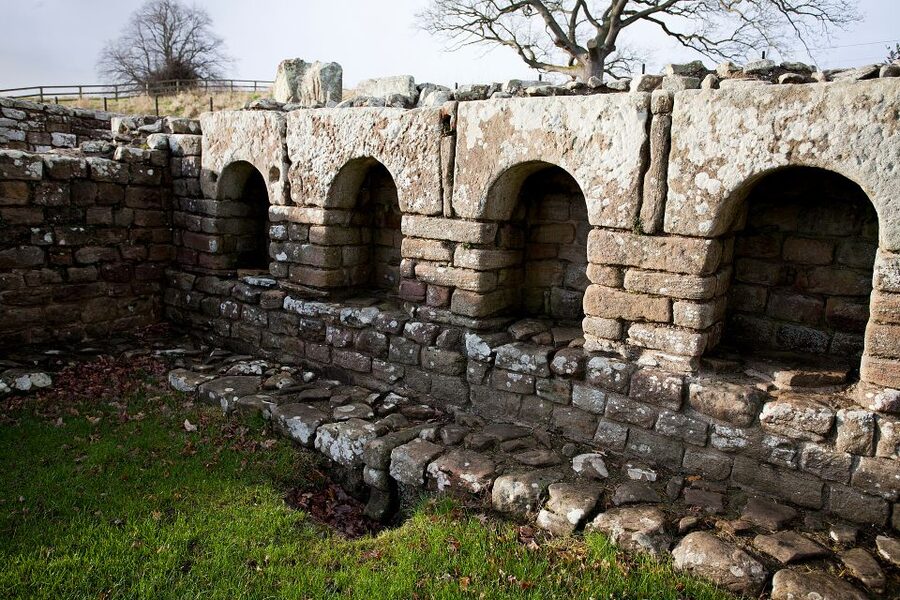
- The bathhouse beside the North Tyne
- Walking through the cavalry fort
- How much time should you allow?
- Food, access, and practical comfort
- Is the $13 ticket good value?
- Who will enjoy Chesters most?
- Should you book Chesters Roman Fort?
- FAQ
- Where is Chesters Roman Fort?
- What does the entry ticket include?
- How long is the ticket valid?
- What is the last entry time in summer?
- What is the last entry time in winter?
- Is Chesters Roman Fort wheelchair accessible?
- What should I bring?
Chesters Roman Fort at a glance
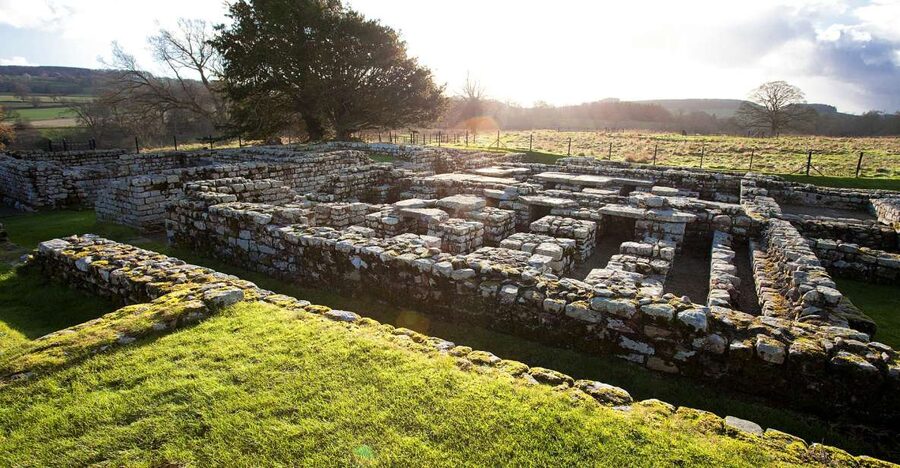
- Britain’s most complete Roman cavalry fort: See the headquarters, barracks, shrine, commandant’s house, and other key buildings.
- A remarkable military bathhouse: Explore hot, cold, and steam rooms beside the North Tyne.
- Cavalrymen shared space with horses: Digital reconstructions show how barrack blocks may have been arranged.
- Clayton Museum adds context: View Roman objects and inscriptions from Chesters and other parts of Hadrian’s Wall.
- A useful base for more Roman sites: The fort can work well as one stop in a wider Hadrian’s Wall day.
- Practical visit details: Allow up to a day, wear sturdy shoes, and arrive before the seasonal last-entry time.
Why Chesters is different from other Hadrian’s Wall sites
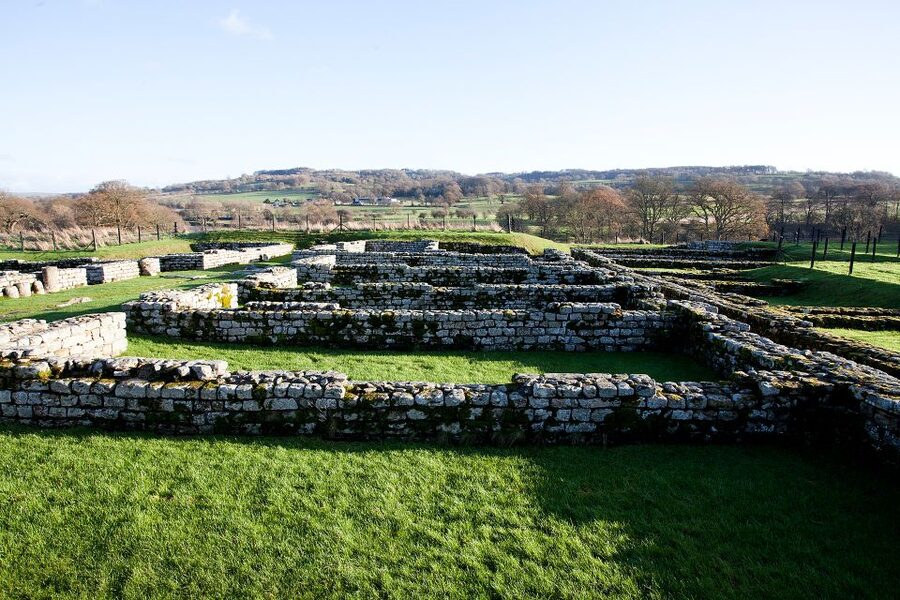
Hadrian’s Wall is not one single attraction. It is a long chain of forts, milecastles, museums, and stretches of surviving wall. Chesters gives you a particularly clear look at the Roman army’s working life because the fort was built for cavalry.
That matters. A standard infantry fort can leave you picturing rows of soldiers and barracks. At Chesters, you can think about mounted troops, horses, officers, administrative buildings, and the daily care required to keep a cavalry unit ready.
The ruins do not rise high above you. As with many Roman sites, much of the fort survives as foundations and lower walls. You need to use the information available rather than expect a complete Roman town. The e-reader and digital reconstructions help bridge that gap.
I find this kind of site most rewarding when you pause at each building and ask what happened there. The headquarters was a place of command and administration. The regimental shrine connected military routine with Roman religion. The commandant’s house shows that senior officers lived with more comfort than ordinary soldiers.
A takeover trail sheet is available from the admissions team. This adds a more active way to explore the ruins, particularly if you are visiting with children or want a simple route through the fort.
More Museum Tours in Newcastle:
- Liverpool: Liverpool Football Club Museum and Stadium Tour
★ 4.8 · 10,764 reviews - London: Chelsea Football Club Stadium and Museum Tour
★ 4.8 · 4,576 reviews - London Transport Museum Entrance Ticket
★ 4.5 · 1,323 reviews
The Clayton Museum puts names and objects to the ruins
Start with the Clayton Museum before walking far around the fort. It gives you a useful introduction to the site and displays Roman objects and inscriptions found at Chesters and along Hadrian’s Wall.
The e-reader is one of the most practical features. You can pick it up and keep facts close as you move through the museum and fort. That is helpful because Roman ruins can otherwise feel like a puzzle made of disconnected stones.
The museum also tells the story of John Clayton, the Victorian lawyer known as the Savior of the Wall. His work helped protect and preserve parts of Hadrian’s Wall. That adds a second layer to the visit: you are not only looking at Roman remains, but also at the long effort to keep them available for the public.
The museum opened in 1896 on behalf of the Trustees of the Clayton Collection. Many original Edwardian display cabinets remain, giving the room a period feel that fits the subject. I like details such as this because they show how the study and protection of Roman Britain developed over time.
Do not rush through the objects. Inscriptions can seem plain at first, yet they often provide the clearest link to individual people, units, duties, and beliefs. The museum helps turn Chesters from a scenic ruin into a place connected to real military lives.
The bathhouse beside the North Tyne
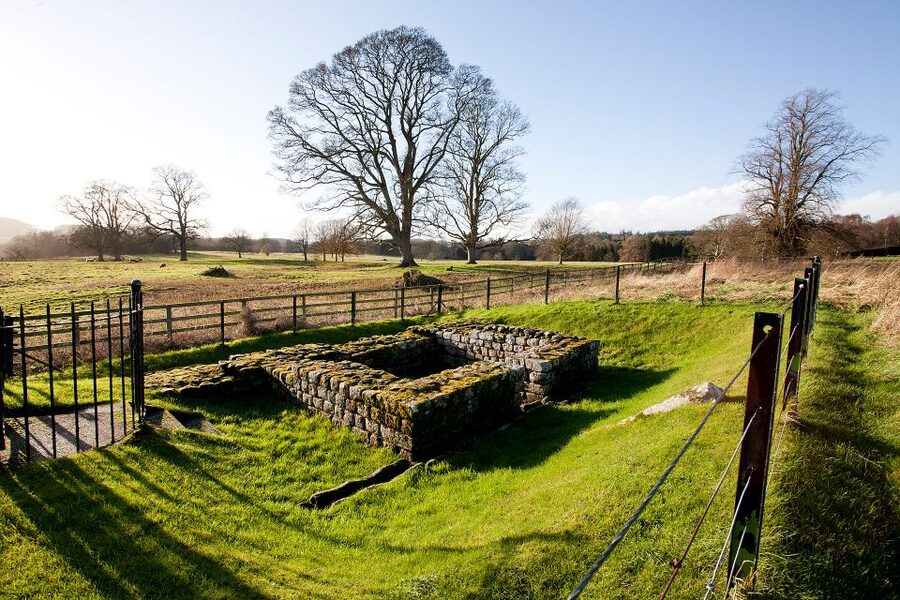
The bathhouse is the strongest reason to visit Chesters. It is described as Britain’s best-preserved military bathhouse, and the remains make it easier to picture the sequence of rooms than at many Roman sites.
The building sits beside the North Tyne, giving it a quiet riverside setting. Roman soldiers could come here after demanding duties and use hot, cold, and steam baths. The baths were not simply about comfort. They were part of Roman military culture, a place for washing, recovery, and social time.
Look for the arrangement of the rooms rather than expecting intact tiled floors or working furnaces. The walls and layout show how the bathing complex was organized. You can picture soldiers moving through different temperatures, with the steam room offering a Roman version of a spa visit.
The detail about the soldiers’ origin is especially interesting. The cavalrymen who used the bathhouse were originally from northern Spain. That small fact changes the way you see the site. Hadrian’s Wall was not only a boundary at the edge of Britain. It was staffed by people moved across a vast empire.
The riverside location is also a welcome contrast to the military purpose of the fort. After seeing defensive and administrative buildings, the bathhouse reminds you that soldiers had ordinary needs. They ate, rested, washed, worshipped, and lived together far from home.
Walking through the cavalry fort
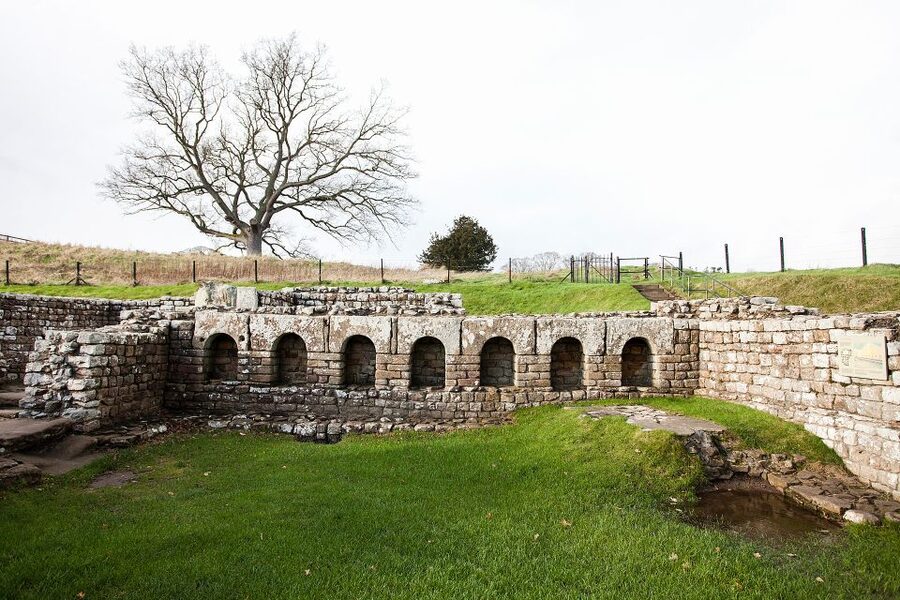
After the museum and bathhouse, follow the ruins through the main parts of Chesters Roman Fort. The headquarters building and courtyard are central to understanding how the fort was run.
The headquarters was connected with command and official business. The courtyard helps you read the building as more than a rectangle of stones. It was a working center for the unit, where military administration took place.
The hall and regimental shrine add another side of Roman service. A shrine was a place tied to the unit’s religious life and identity. When you see it after the museum’s inscriptions and objects, you get a better idea of how Roman military duty mixed practical work with ceremony and belief.
The barrack block is worth extra attention. Cavalrymen shared their living quarters with their horses, so the building served both people and animals. Digital reconstructions show how the rooms may have worked, making this one of the easiest parts of the fort to explain to children and first-time Roman-site visitors.
Then look for the commandant’s house. Its remains suggest a more elaborate and luxurious home than the standard barracks. The contrast is important. Roman forts were not socially equal spaces. Rank shaped housing, comfort, and access to better rooms.
I recommend walking slowly enough to connect the buildings. The appeal of Chesters is not one grand monument. It is the way the bathhouse, barracks, headquarters, shrine, and commandant’s house fit into one military community.
A few more options to weigh up in Newcastle
- Hadrian’s Wall & Roman Britain 1-Day Tour from Edinburgh
★ 4.7 · 615 reviews - Best of Newcastle Highlights Walking Tour
★ 4.8 · 51 reviews - Northumberland: Full-Day Tour of Vera Filming Locations
★ 4.7 · 49 reviews - Hadrian’s Wall: 2-Hour Guided Tour
★ 5.0 · 47 reviews
How much time should you allow?
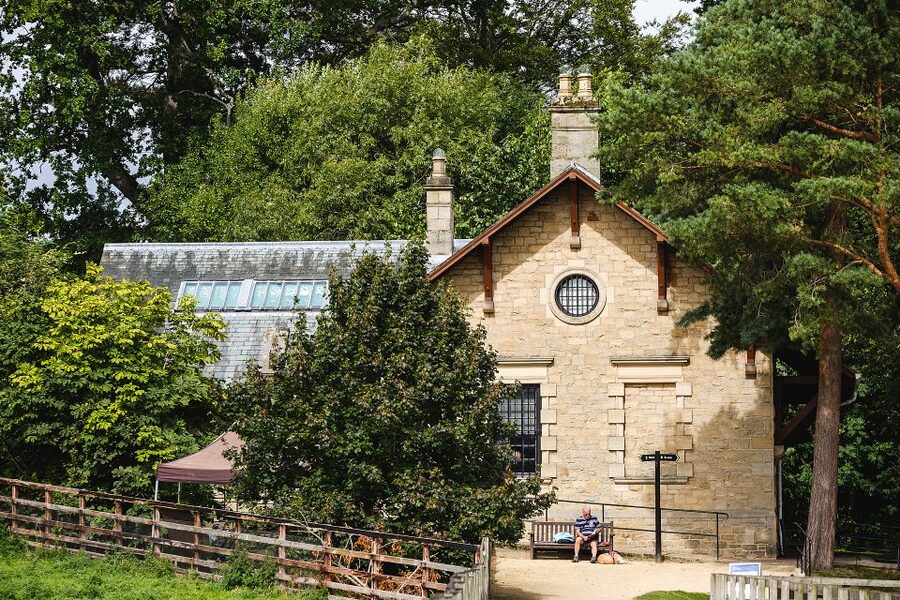
The ticket is valid for one day, and you can use the site as a short stop or give it a larger part of your schedule. The supplied activity information does not set a fixed visit length, so your timing depends on how carefully you use the museum, e-reader, trail sheet, and fort ruins.
A quick visit may focus on the bathhouse and main ruins. That could suit you if Chesters is one of several Hadrian’s Wall stops. A slower visit gives you time to study the museum displays, follow the takeover trail, compare the digital reconstructions with the actual foundations, and sit down for food afterward.
One dated comment described the fort as a good launching place for visiting other Hadrian’s Wall sites. I agree with that use of Chesters. It gives you a solid introduction to the army’s organization before you move on to other remains.
The fort is open with seasonal last-entry times. From April 1 through October 29, the last entry is at 4:00 PM. From October 30 through March 31, last entry is at 3:00 PM. These cutoffs matter in winter, when a late arrival could leave too little time for the museum and fort.
Wear comfortable shoes and bring clothing suited to the weather. Much of the experience takes place outside, and the ruins will be less pleasant if you are cold, wet, or trying to manage the ground in unsuitable footwear.
Food, access, and practical comfort

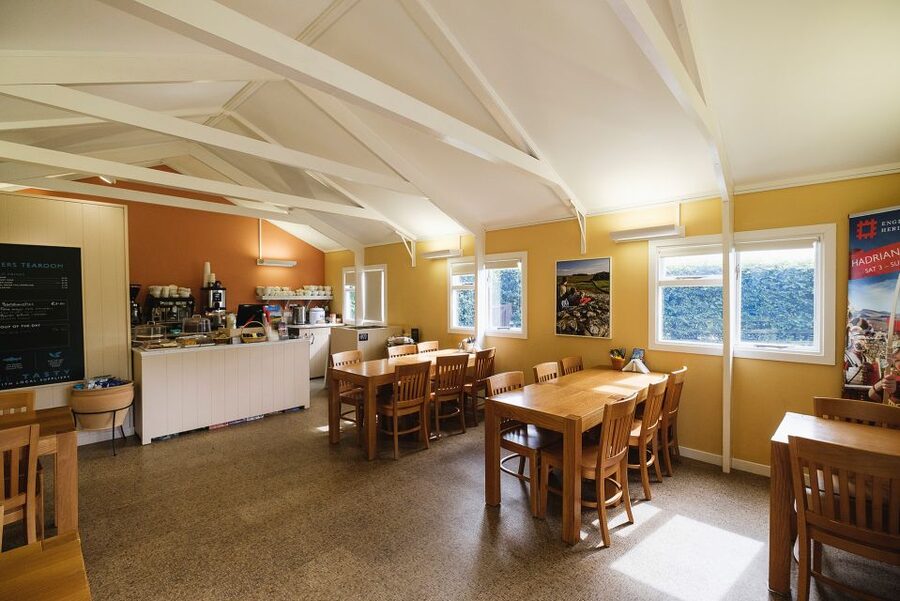
The Chesters tearooms offer light lunches, sweet treats, and hot and cold drinks. The food uses locally sourced ingredients, and you can try a traditional Northumbrian stottie cake if you want a local specialty.
That makes the tearoom useful rather than merely decorative. You can plan a pause after the ruins instead of treating the fort as a quick photo stop. A stottie cake also gives the visit a regional touch that you will not get from a generic snack.
The site is wheelchair accessible. Still, an ancient fort has ruins and outdoor areas, so you should consider the nature of the attraction when planning your visit. The available information confirms access, but it does not describe every surface or route in detail.
Small-group availability is listed, though this is primarily an entry visit rather than a guided tour with a named guide. You should not expect a guide-led performance unless your booking specifically includes one.
Is the $13 ticket good value?
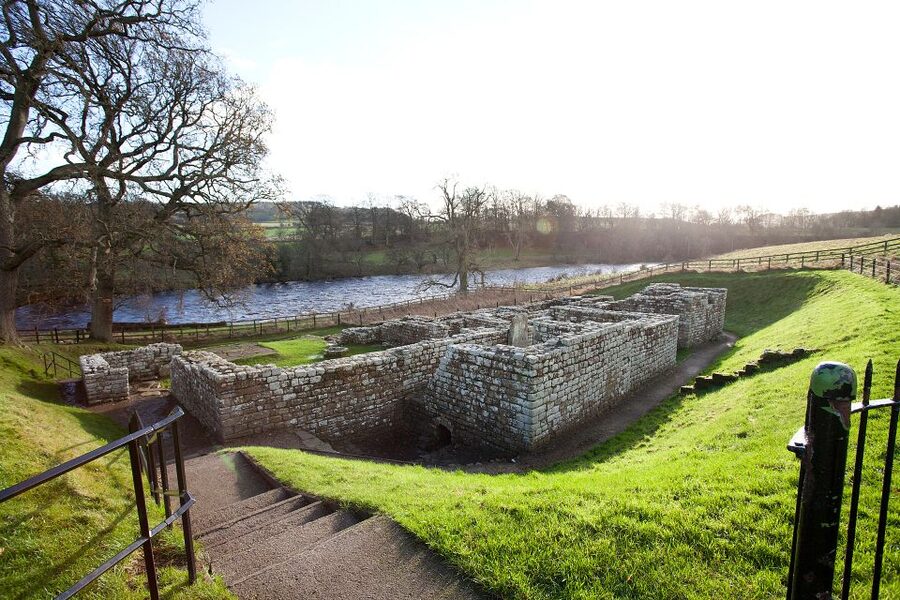
At the advertised price of $13 per person, Chesters offers a fair deal if you care about Roman Britain. You receive access to the fort and museum for a full day, with the bathhouse, e-reader, digital reconstructions, trail sheet, and museum displays all supporting the visit.
The value is strongest when you take your time. If you only want to walk around for a few minutes, the low walls may not seem enough. One United Kingdom booking comment put the cost at £23 for two people plus £4 parking and felt the visit was not worthwhile after arriving and wanting to leave quickly.
That criticism is useful, even though it is only one experience. Chesters is not a theme park or a large reconstructed settlement. You are paying for protected remains, interpretation, and the chance to read a Roman fort in its original setting.
The price also makes more sense if Chesters is part of a larger Hadrian’s Wall day. One United States booking comment found it a good starting point for other sites. You can use the museum to learn the basics, then compare Chesters with other forts and wall sections.
The published rating is 4.2 out of 5 from 13 ratings. The strongest praise centers on the ruins themselves, with one short description calling the site a stunning ruin and another praising the walk around the fort. The positive response makes sense if you enjoy archaeology and can give the place enough time.
Who will enjoy Chesters most?
I would recommend Chesters to you if you enjoy Roman military history, archaeological sites, or quiet outdoor places with a clear story. The cavalry focus gives the fort a distinct identity, while the bathhouse provides a memorable centerpiece.
Families can also get a lot from the visit. The trail sheet gives children something specific to do, and the digital reconstructions make the barracks and horse arrangements easier to understand. The bathhouse can also spark good questions about how Roman soldiers lived.
You should be more cautious if you need large standing buildings, constant activity, or a tightly guided tour. The fort is made up of ruins, and you will need to use the museum material and your imagination to complete the picture.
It suits independent exploration. You can move between the museum, bathhouse, and fort at your own pace, then stop at the tearooms. The e-reader means you can carry explanations with you instead of relying only on signs.
Should you book Chesters Roman Fort?
Book it if the bathhouse, cavalry life, and the wider story of Hadrian’s Wall appeal to you. The museum and digital reconstructions give the ruins useful context, and the riverside Roman baths are the site’s clear highlight.
I would treat Chesters as a carefully paced historical stop, not a quick roadside attraction. Arrive early enough to beat the seasonal last-entry time, wear good shoes, and allow time for the museum before you explore the fort.
If you are already planning several Hadrian’s Wall sites, Chesters is especially worthwhile as an opening stop. If you have little interest in Roman ruins and intend to stay only a few minutes, the admission and any parking cost may feel less convincing.
FAQ
Where is Chesters Roman Fort?
Chesters Roman Fort is in Northumberland, United Kingdom, on Hadrian’s Wall.
What does the entry ticket include?
The ticket includes entry to Chesters Roman Fort and Museum.
How long is the ticket valid?
The ticket is valid for one day.
What is the last entry time in summer?
From April 1 through October 29, the last entry time is 4:00 PM.
What is the last entry time in winter?
From October 30 through March 31, the last entry time is 3:00 PM.
Is Chesters Roman Fort wheelchair accessible?
Yes, the activity information lists the site as wheelchair accessible.
What should I bring?
Bring weather-appropriate clothing and comfortable shoes, since the visit includes outdoor exploration of the fort and bathhouse.
Just added in Newcastle
- Newcastle: True Crime Guided Tour★ 4.6 · 40 reviews
- Newcastle: Junkyard Golf Tickets for 9 or 18 Holes★ 4.3 · 42 reviews
- Newcastle: Walking Custom Tour with a Local Guide★ 4.7 · 9 reviews
- Hexham: Hadrian’s Wall and The Romans Full Day Guided Tour★ 5.0 · 3 reviews
- Hadrian’s Wall: 4.5-Hour Guided Tour★ 4.9 · 17 reviews
- Hadrian’s Wall: Birdoswald Roman Fort Entry Ticket★ 4.2 · 20 reviews
- Hadrian’s Wall: Housesteads Roman Fort Entry Ticket★ 4.7 · 44 reviews
- Hadrian’s Wall: 2-Hour Guided Tour★ 5.0 · 47 reviews
Museums, compared.

Liverpool Football Club Museum and Stadium Tour
Read our review →
Chelsea Football Club Stadium and Museum Tour
Read our review →


Other lists this tour turns up in