
REVIEW · MUSEUMS
London: Florence Nightingale Museum Ticket
A small museum tells a big story. The Florence Nightingale Museum gives you a close look at the nurse behind the famous lamp, with authentic objects, medical displays, and personal details from her childhood, family life, and work. I especially like the chance to see Nightingale’s actual lamp and her pet owl, Athena. I also like how the museum connects her Crimean War work with her wider campaign for better healthcare.
The main drawback is scale. This is a focused museum, not a full-day attraction, so you should not expect a large complex or a guided tour packed with activities. Still, for $16, it offers a useful and personal stop near the London Eye and Houses of Parliament.
In This Review
- Key points to know before you go
- Finding the museum at St Thomas’ Hospital
- A focused look at Florence Nightingale’s early life
- The Crimean War and The Lady with the Lamp
- Personal objects that make the story human
- Nursing as reform, not just bedside care
- How long to allow for the visit
- Is $16 good value?
- Small-group details and accessibility
- Who will enjoy this museum most?
- Practical booking advice
- Should you book the Florence Nightingale Museum?
- FAQ
- Where is the Florence Nightingale Museum?
- How much does the museum ticket cost?
- How long is the ticket valid?
- Can I enter at any time during the day?
- What are the museum’s opening hours?
- Does the museum open late?
- Is the Florence Nightingale Museum wheelchair accessible?
- Are food and drinks allowed inside?
- What can I see at the museum?
- Can I cancel my booking?
Key points to know before you go
- See Florence Nightingale’s famous lamp: The object linked to her nickname, The Lady with the Lamp, is part of the collection.
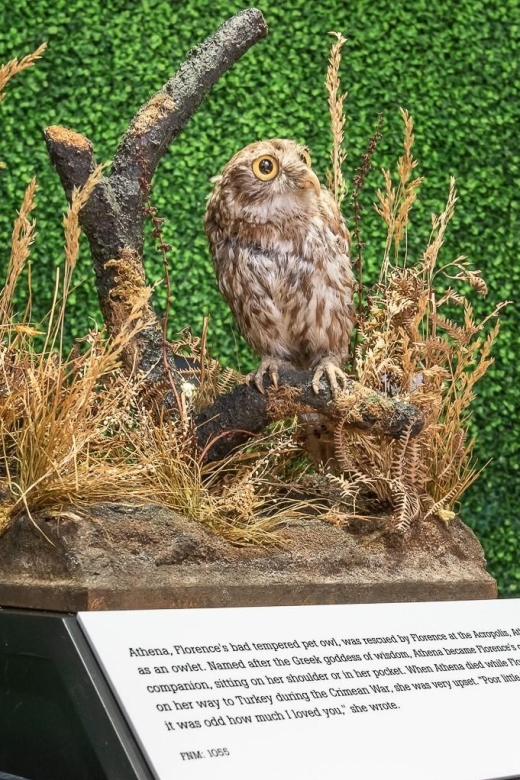
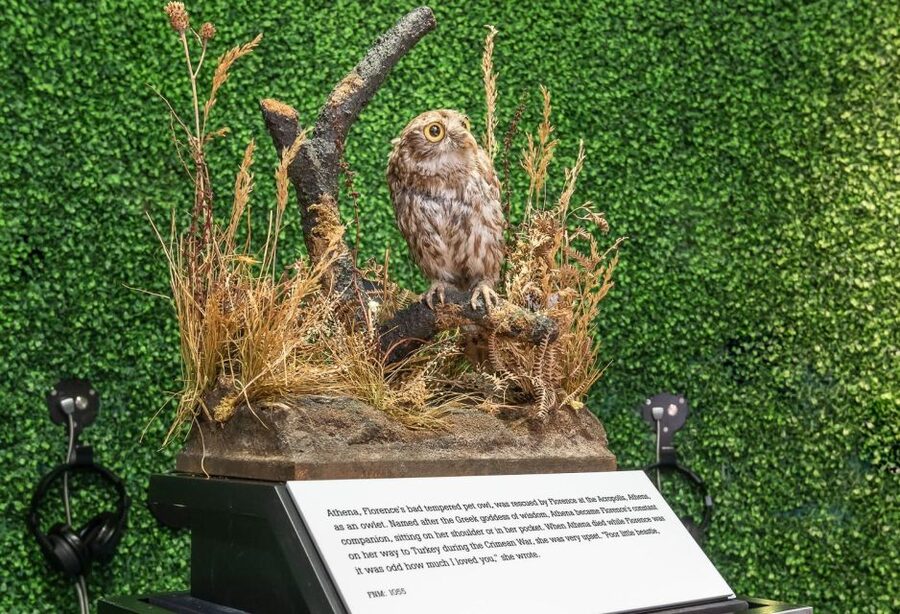
- Meet Athena the owl: Nightingale’s pet owl adds an unexpectedly personal touch to the story.
- Follow her life beyond the Crimean War: Displays cover her affluent childhood, family tensions, nursing career, and healthcare campaigns.
- Expect strong medical content: The museum gives real attention to nursing practice and medical information, not just biography.
- Use the central location well: The museum is on the grounds of St Thomas’ Hospital, a short walk from the London Eye and Parliament.
- Plan around opening hours: It is open Tuesday through Sunday, from 10:00 AM to 5:00 PM, with last entry at 4:30 PM.
Finding the museum at St Thomas’ Hospital
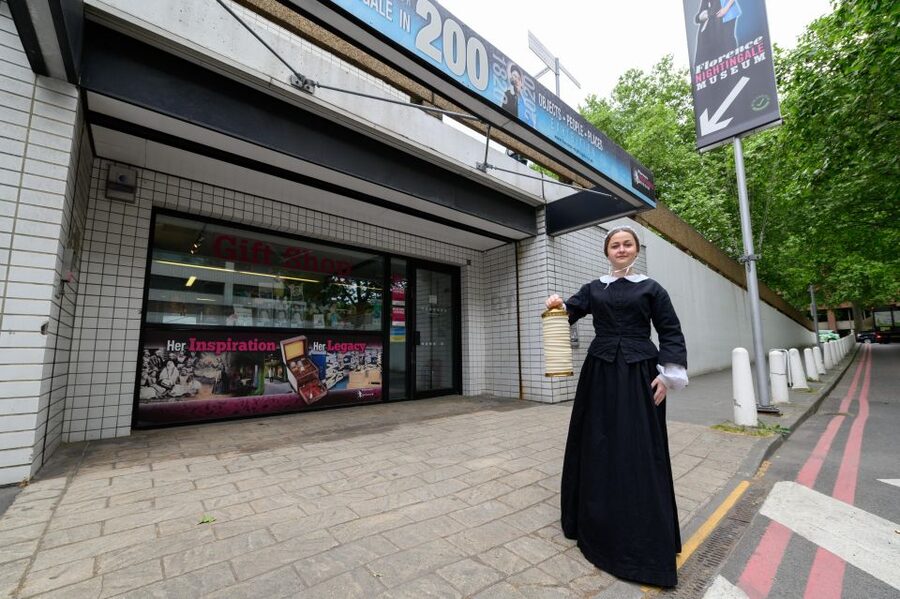
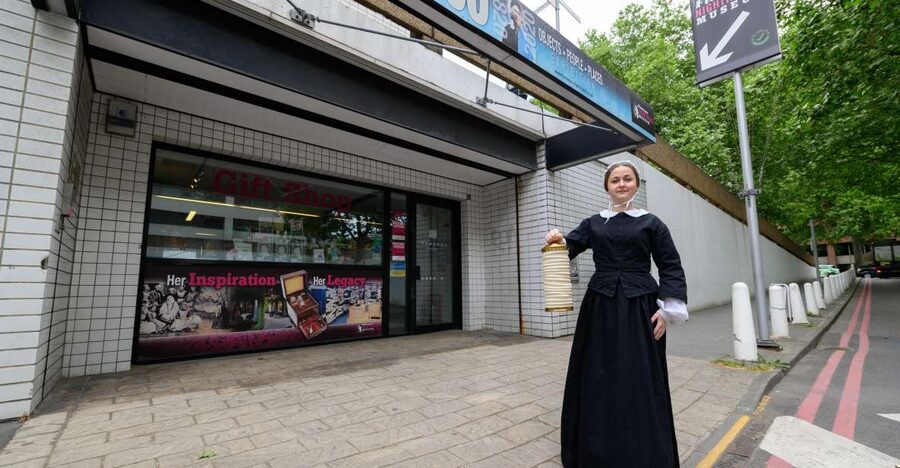
The Florence Nightingale Museum sits at parking level on the grounds of St Thomas’ Hospital. That location matters. You are not heading to a grand standalone museum with a giant entrance. Instead, you follow the signs at St Thomas’ Hospital and make your way to a compact museum tucked into a working hospital setting.
From the museum, you are only a short walk from the Houses of Parliament and the London Eye. I would pair it with a South Bank outing rather than travel across London for the museum alone. You can visit in the morning, walk along the Thames, and then continue toward Westminster or the London Eye.
The entrance instructions are simple, but allow a few extra minutes if you do not know the hospital grounds. Look for St Thomas’ Hospital signage directing you to the Florence Nightingale Museum. This is one of those places where checking the signs is more useful than simply following a map pin.
The museum is wheelchair accessible, which makes it a practical choice for visitors who need step-free access. Food and drinks are not allowed inside, so finish your coffee before entering.
More Museum Tours in London:
- London: Chelsea Football Club Stadium and Museum Tour
★ 4.8 · 4,576 reviews - London Transport Museum Entrance Ticket
★ 4.5 · 1,323 reviews - London: British Museum Guided Tour
★ 4.3 · 1,182 reviews
A focused look at Florence Nightingale’s early life
The museum begins with the person before the legend. You learn about Nightingale’s affluent childhood, her family background, and the expectations placed on a woman of her social position.
That context is important. Nursing was not an obvious career choice for someone from a wealthy family. Her decision to become a nurse went against her parents’ wishes, and the displays help explain why that choice was so bold. You are not simply shown a famous woman at the height of her success. You see the pressure she faced before she began changing nursing.
I like this part because it avoids reducing Nightingale to a costume, a lamp, and a nickname. Her story has conflict. She had to argue for the right to work in a field many people viewed as unsuitable or low-status. The museum uses her family life and childhood to show how unusual her decision really was.
If you are visiting with children, this section can help them understand that major change often begins with one person refusing to accept the usual path. Younger visitors may connect more easily with the personal side of her story than with the formal medical displays later on.
The Crimean War and The Lady with the Lamp
Florence Nightingale is best known for her work during the Crimean War, and the museum gives that period a central place. You learn how her work with wounded soldiers helped shape her reputation and changed public ideas about nursing.
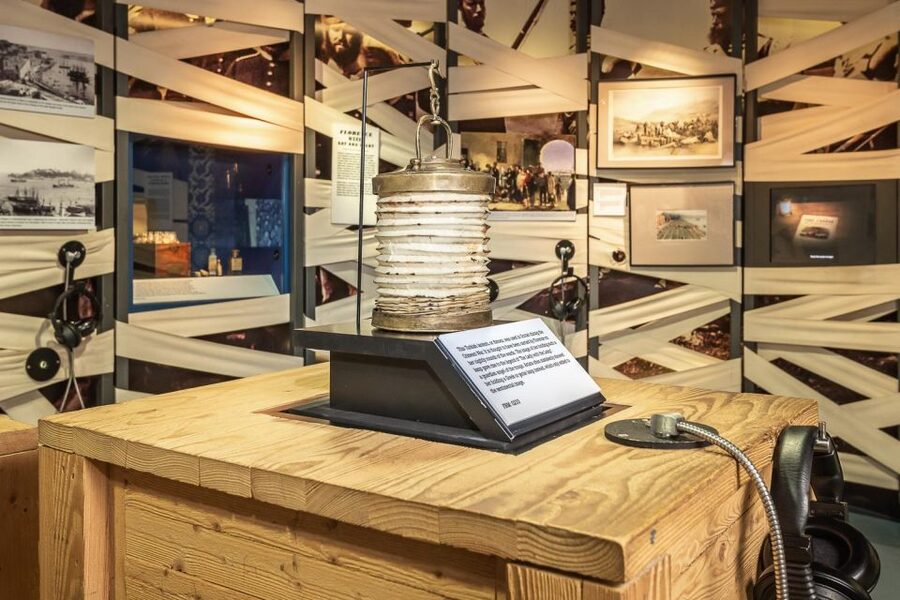
The most recognizable object here is her lamp. It is the physical link to the image of Nightingale walking through hospital wards, checking on patients. Seeing the object itself gives the nickname The Lady with the Lamp more weight than it has in a textbook or school lesson.
The lamp is not valuable only because it is famous. It helps you connect the public image with the practical work behind it. Nightingale was not simply a comforting figure moving through dark corridors. Her work led to wider changes in hospital care and nursing standards.
The museum also gives attention to her medicine chest. This personal, practical object adds another layer to her story. It reminds you that healthcare in her era depended on equipment and treatment methods very different from those available today.
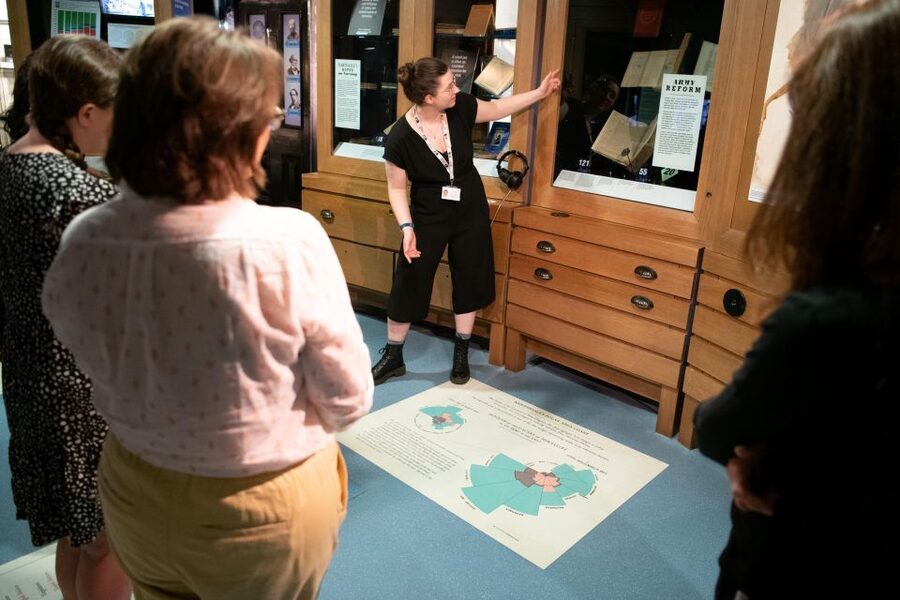
I would spend time reading the medical information rather than rushing toward the familiar objects. One of the strongest features of the museum is the extent of its medical content. You get more than a biography. You get a sense of the problems Nightingale faced and the kind of nursing system she wanted to improve.
Personal objects that make the story human
The museum’s strongest moments come from items connected directly to Nightingale’s daily life. Her lamp and medicine chest are useful historical objects, but her pet owl Athena is the detail many people will remember most.
Athena gives the exhibition a softer side. Nightingale is often presented as a serious reformer, and rightly so, but a pet owl makes her feel less remote. It is a small detail, yet it helps you picture her as a person with interests and attachments outside her professional work.
Personal objects can do something broad historical accounts cannot. They give you a point of contact. Instead of thinking only about Nightingale’s reforms, you begin to picture the person who owned these things, made difficult choices, and lived through a period of major change in healthcare.
The collection also includes information about Florence’s interaction with very young children. That material adds another human note and helps balance the more technical medical displays. If you are interested in the social side of nursing, this is one of the details worth seeking out.
A few more options to weigh up in London
- London: The London Eye Entry Ticket
★ 4.6 · 35,875 reviews - From London: Harry Potter Warner Bros Studio Tour
★ 4.7 · 26,588 reviews - London: Westminster to Greenwich River Thames Cruise
★ 4.5 · 22,836 reviews - Magical London: Harry Potter Guided Walking Tour
★ 4.7 · 22,044 reviews
Nursing as reform, not just bedside care
A visit becomes more rewarding when you look beyond Nightingale’s wartime work. Her achievements were not limited to caring for individual patients. She campaigned for better healthcare for ordinary people and helped shape nursing as a profession.
That broader focus is why I think this museum works well for anyone interested in public health, social reform, or women’s history. Nightingale challenged the limits placed on her, but she also challenged a healthcare system that needed better standards.
The museum presents her contributions to the art of nursing and shows why her influence lasted. You can expect the displays to connect her personal decisions with larger changes in medical care. The result is a story about systems as well as individuals.
This is also where the medical information becomes especially useful. You can see why training, cleanliness, organization, and proper care mattered so much. The museum does not treat nursing as a vague calling. It shows the work as a serious field requiring standards, knowledge, and reform.
A visitor who already knows the basic Nightingale story may still find value here. The familiar outline is only the beginning. The museum adds detail about her family, medical work, and campaign for ordinary people, giving you a fuller picture than the standard schoolbook version.
How long to allow for the visit
Your ticket is valid for one day, and you can enter at any time during the museum’s opening hours on your booked date. That flexible timing is useful in central London, where plans often shift because of weather, crowds, or delayed trains.
The museum is open Tuesday through Sunday from 10:00 AM to 5:00 PM. Last entry is at 4:30 PM, so do not arrive at the last minute and expect a full visit.
A late opening takes place on the last Thursday of the month, when the museum stays open until 8:00 PM. Last admission is at 7:30 PM. There is no late opening in December. From 5:00 PM during the late opening, the museum shop has a cash and card bar.
I would allow roughly an hour if you want a relaxed visit with time for the medical displays and personal objects. The exact length depends on how closely you read the information. Since the museum is compact, it can also fit neatly into a busy sightseeing day.
You should avoid treating the one-day validity as a reason to leave everything until the final half hour. The last entry time is firm, and the museum’s value comes from reading and looking carefully rather than making a quick pass through the room.
Is $16 good value?
At $16 per person, the ticket is reasonably priced for a central London museum with original personal objects and a clear subject. I see the value in the concentration of the collection. You are paying for access to a focused story, not for a huge building filled with unrelated galleries.
The ticket makes the most sense if you already have an interest in Florence Nightingale, nursing, medical history, or women who shaped public life. It is also a good choice if you want a short indoor activity near the London Eye and Westminster.
The value is less obvious if you prefer large museums with many rooms, broad art collections, or lots of interactive entertainment. This is a specialist visit. Its success depends on your interest in the subject.
The rating of 4.7 from 54 reviews reflects the museum’s clear strengths: easy booking, timely reminders, high-quality information, and the amount of medical material. One especially useful point is that the collection does not stop at the famous lamp. It gives you enough background to understand why Nightingale mattered.
The ticket includes entry to the Florence Nightingale Museum. Food and drinks are not included or allowed inside, and no separate transportation is provided. You reach the museum on your own at St Thomas’ Hospital.
Small-group details and accessibility
The activity is described as a small-group experience limited to nine participants, with an English-speaking host or greeter. That small size should make the visit feel manageable, although you should not assume it is a private guided tour. The information provided focuses on museum entry and self-guided viewing rather than a named guide leading you from room to room.
No guide name is provided, so you should plan to explore the displays yourself. That is not a major issue here. A compact museum about a single figure is easy to follow, and self-guided viewing lets you spend more time on the lamp, owl, medicine chest, or medical information that interests you most.
Wheelchair access is available. If accessibility is important for your visit, the hospital setting and clear museum signage are useful points to keep in mind, though the information does not provide detailed measurements or a full access guide.
English is the stated language for the host or greeter and the activity. The available information does not list other language options.
Who will enjoy this museum most?
I would recommend the Florence Nightingale Museum to:
- People with an interest in nursing or medical history
- Students studying Florence Nightingale, healthcare, or social reform
- Families looking for a short educational stop near the South Bank
- Visitors who enjoy original objects and personal stories
- Anyone planning a Westminster or London Eye day
- Nurses and healthcare workers who want to see the roots of their profession
It is especially suitable for visitors who like learning through objects. The lamp, owl, and medicine chest give you memorable points to carry away, while the medical displays provide more serious detail.
You may want to skip it if you have no interest in Nightingale or the development of nursing. The museum is not designed as a general London attraction, and its narrow subject is part of both its charm and its limitation.
Practical booking advice
Booking ahead gives you entry on your chosen date and lets you arrive at any point during opening hours. The reserve-now, pay-later option can help if you are building a London schedule several weeks in advance and do not want to pay immediately.
You can cancel up to 24 hours before the visit for a full refund. That is helpful when your London plans include outdoor sights, since poor weather or transport problems can change the order of your day.
Check the opening calendar before booking. The museum is closed on Mondays under the stated schedule and does not offer its late Thursday opening in December. If you are visiting on a Sunday, remember the 5:00 PM closing time.
I would book a morning or early afternoon slot if you want to combine the museum with the London Eye or Westminster. A late Thursday visit works well for an evening plan, but remember the 7:30 PM last admission.
Should you book the Florence Nightingale Museum?
Book it if you want a compact, thoughtful museum that brings Florence Nightingale to life through authentic objects and solid medical information. The lamp, owl Athena, and medicine chest provide memorable highlights, while the displays about her childhood, family, Crimean War work, and healthcare campaigns give the visit real substance.
Skip it if you are looking for a major London attraction that will fill half a day. This museum is small and specialized. At $16, though, it offers good value for the right audience, especially when combined with nearby Westminster and South Bank sights.
For nurses, students, families, and anyone curious about how one woman helped change healthcare, I would make room for it. Go with enough time to read the medical material, not just photograph the lamp, and you will leave with a much clearer idea of Florence Nightingale’s achievement.
FAQ
Where is the Florence Nightingale Museum?
The museum is at parking level on the grounds of St Thomas’ Hospital in London. It is a short walk from the Houses of Parliament and the London Eye.
How much does the museum ticket cost?
The listed price is $16 per person.
How long is the ticket valid?
The ticket is valid for one day, on the booked date.
Can I enter at any time during the day?
Yes. You can access the museum at any time within its opening hours on your booked date.
What are the museum’s opening hours?
The museum is open Tuesday through Sunday from 10:00 AM to 5:00 PM. Last entry is at 4:30 PM.
Does the museum open late?
On the last Thursday of the month, it stays open until 8:00 PM, with last admission at 7:30 PM. There is no late opening in December.
Is the Florence Nightingale Museum wheelchair accessible?
Yes. The activity information states that the museum is wheelchair accessible.
Are food and drinks allowed inside?
No. Food and drinks are not allowed inside the museum.
What can I see at the museum?
You can see authentic artifacts connected with Florence Nightingale, including her lamp, pet owl Athena, and medicine chest. Displays also cover her childhood, family, Crimean War work, nursing career, and healthcare campaigns.
Can I cancel my booking?
Yes. You can cancel up to 24 hours in advance for a full refund.
Just added in London
- The Best of British Cooking Class & Dining Experience★ 5.0 · 1 review
- London: Live Comedy Show at Big Belly Bar and Comedy Club★ 4.5 · 80 reviews
- London: British Museum Highlights Guided Small Group Tour★ 4.9 · 113 reviews
- The Beatles London Walking Tour★ 4.2 · 147 reviews
- The Best Highlights of London Walking Tour & Boat Cruise★ 5.0 · 1 review
- The Authentic Walking Tour with Indian Tasting Meal★ 4.8 · 4 reviews
- Iconic London: Bard, Beatles, Bond & Baker Street★ 4.9 · 15 reviews
- London: Tate Britain Official Discovery Tour★ 4.7 · 7 reviews
Museums, compared.
Liverpool Football Club Museum and Stadium Tour
Read our review →
Chelsea Football Club Stadium and Museum Tour
Read our review →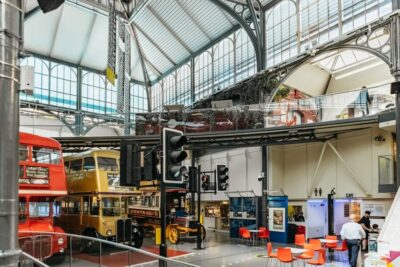


Other lists this tour turns up in