
REVIEW · BRITISH MUSEUM TOURS
British Museum Highlights: Parthenon, Rosetta and Sutton Hoo
One museum, thousands of years, two focused hours. This British Museum tour brings you face to face with the Rosetta Stone and Parthenon sculptures, then moves through Egyptian mummies, Sutton Hoo treasures, and enormous Assyrian guardians. I like the clear route and the licensed English-speaking guide, especially if you want the museum’s major sights without wandering its huge galleries alone. I also like that the tour includes both famous objects and less expected highlights, such as Anglo-Saxon burial treasures.
The main drawback is the tight two-hour schedule. The British Museum holds more than eight million artifacts, so this can only be an introduction. You will walk quite a lot, and the tour is not suitable for wheelchair users. The price is $84 per person, which is fair if you value explanation and structure, but less appealing if you prefer to explore at your own pace.
In This Review
- Key points to know before you book
- Why this two-hour British Museum tour works
- Starting beneath the Great Court’s glass roof
- The Rosetta Stone and the work of reading Egypt
- Parthenon sculptures: beauty with a difficult question
- Mummies, sarcophagi, and Egyptian ideas about death
- Sutton Hoo and the power of an Anglo-Saxon burial
- The Winged Bulls of Khorsabad
- What $84 gets you
- Timing, pace, and practical details
- Who should book this museum experience?
- Should you book the British Museum highlights tour?
- FAQ
- Where does the British Museum tour meet?
- How early should I arrive?
- How long does the tour last?
- What language is the tour offered in?
- Is the tour private?
- Is transportation included?
- What objects will the tour cover?
- What should I bring?
- Is the tour suitable for wheelchair users?
- Can I cancel the booking?
Key points to know before you book
- The Rosetta Stone anchors the Egyptian portion: See the inscription that helped scholars read ancient Egyptian hieroglyphs.
- The Parthenon sculptures bring beauty and controversy together: Admire the marble carvings while considering the debate over their removal from Athens.
- Sutton Hoo adds an English chapter: Examine jewelry, weapons, and burial objects from an Anglo-Saxon ship burial.
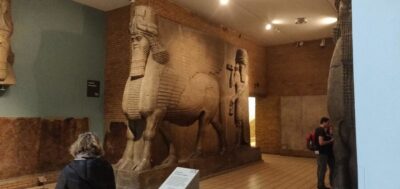
- The Winged Bulls are truly imposing: These Assyrian palace guardians combine human, lion, and eagle features.
- The route begins and ends on Great Russell Street: Meet on the main entrance stairs after passing through security.
- Two hours means a brisk pace: Comfortable shoes matter, and you should expect a shared, non-private tour in English.
Why this two-hour British Museum tour works
The British Museum can be hard to approach. Its galleries cover ancient Egypt, Greece, Assyria, Anglo-Saxon England, and many other cultures. Without a plan, you can spend a long time looking at objects without understanding why they matter.
This guided visit solves that problem with a short route through several famous collections. You are not trying to see everything. Instead, you follow a clear thread through major works of art, religious objects, burial finds, and symbols of scholarly discovery.
I like this format for a first visit, especially if you have limited time in London. The guide provides the basic story behind each object and connects it to larger questions about power, belief, art, and ownership. You still need time afterward if you want a slower look at the displays.
The tour is conducted in English and is not private. That usually means you should expect to share the guide’s attention with other people. For some visitors, this is a useful way to meet the museum’s headline objects without paying for a private guide. For others, the group setting and set pace may feel restrictive.
More British Museum visits:
- London: British Museum Guided Tour
★ 4.3 · 1,182 reviews - London: Tour of the British Museum
★ 4.1 · 678 reviews - London: British Museum Audio Tour & Priority Entrance Ticket
★ 4.5 · 631 reviews
Starting beneath the Great Court’s glass roof
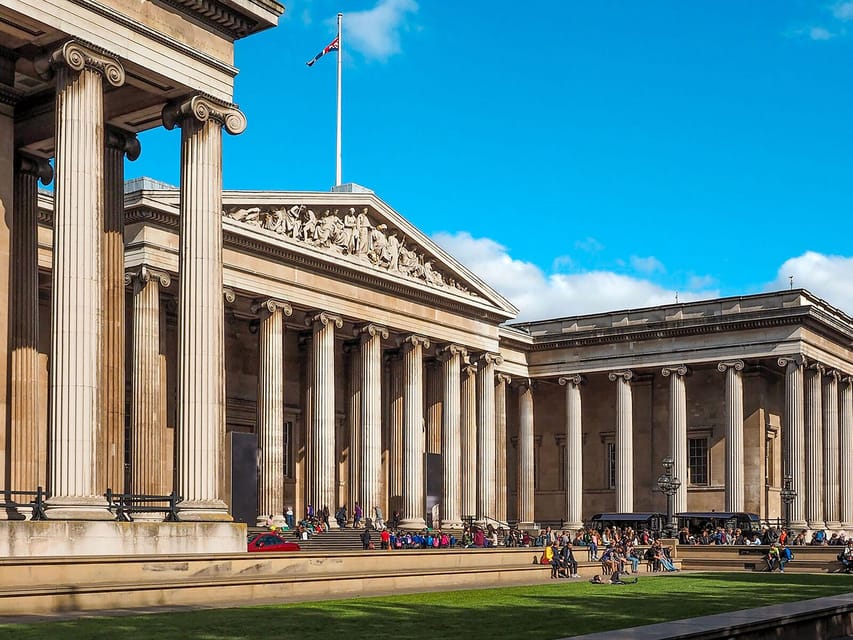
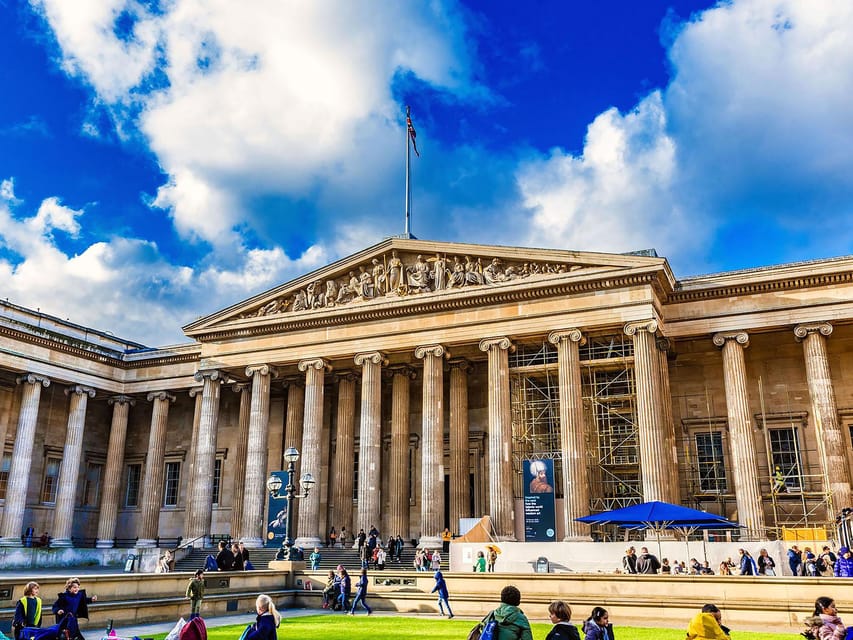
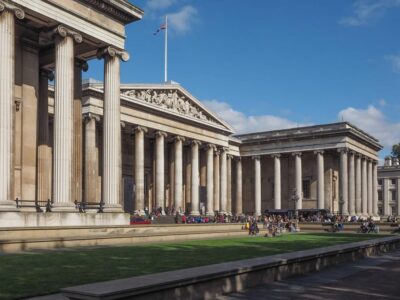
Your meeting point is the stairs at the main entrance on Great Russell Street. First pass through security, then look for your guide on the stairs. Arrive at least 15 minutes before the scheduled start, since the museum entrance and security process need to be factored into your timing.
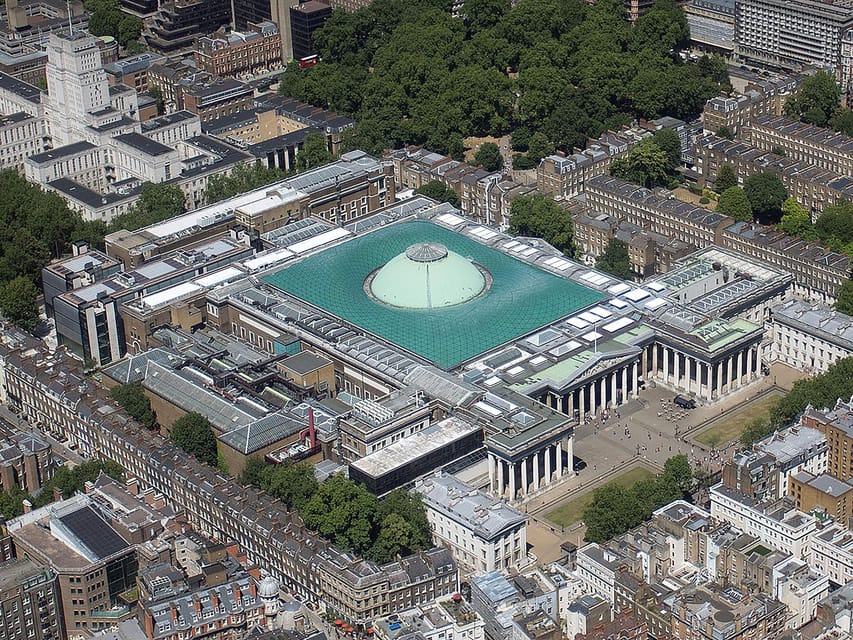
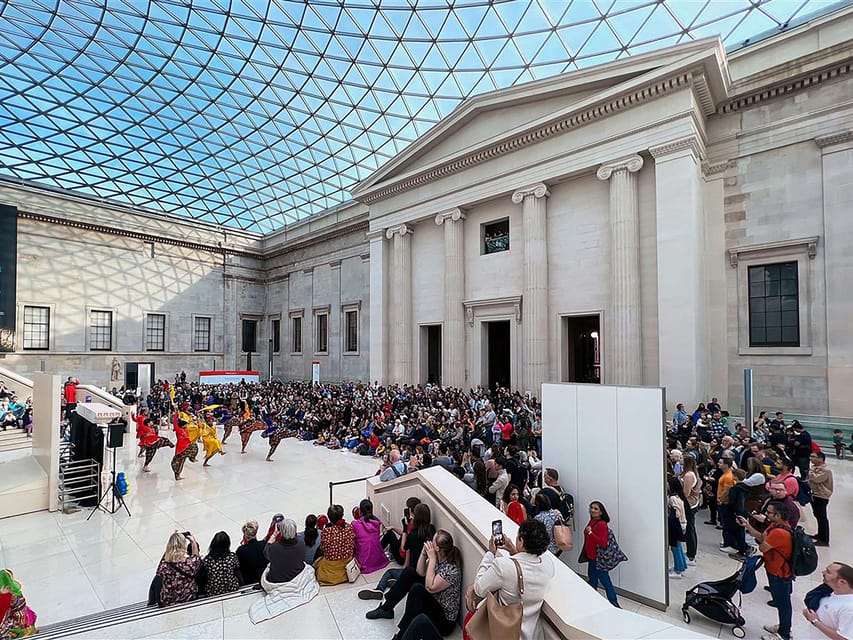
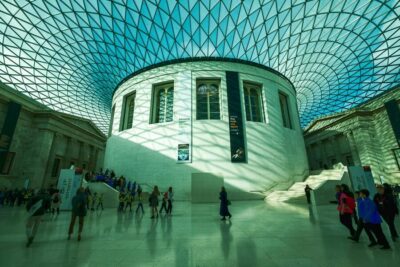
The first stop is the Great Court, covered by the dramatic glass roof designed by Norman Foster. It is described as the largest covered public square in Europe, and the scale is easy to appreciate as soon as you enter. The roof floods the central space with daylight and creates a modern counterpoint to the museum’s older architecture.
This opening is more than a photo stop. It gives you a sense of the British Museum’s size before you move into its galleries. Your guide can also set the scene for the objects ahead, which helps the tour feel like a connected story rather than a string of unrelated displays.
Do not linger too long here if you want time at the main objects. Two hours passes quickly, and the museum is large enough that moving between galleries takes time.
The Rosetta Stone and the work of reading Egypt
The Rosetta Stone is one of the museum’s essential stops. Discovered in 1799, it carries the same decree in three forms of writing. That combination gave scholars the comparison they needed to decipher Egyptian hieroglyphs.
The object itself is not enormous, and the surrounding crowds can affect how long you get to examine it. The value comes from understanding what the stone changed. Egyptian temples and tombs had preserved a written world that modern scholars could see but could not fully read. The Rosetta Stone helped provide the key.
I like this stop because it turns a famous object into a practical lesson in scholarship. You are not simply looking at an old slab. You are seeing the point where language, archaeology, and patient comparison began to open up ancient Egyptian texts.
Your guide’s explanation matters here. Without context, the inscriptions can look like three blocks of marks. With a short explanation, the stone becomes a powerful example of how one artifact can change what people know about an entire civilization.
Parthenon sculptures: beauty with a difficult question
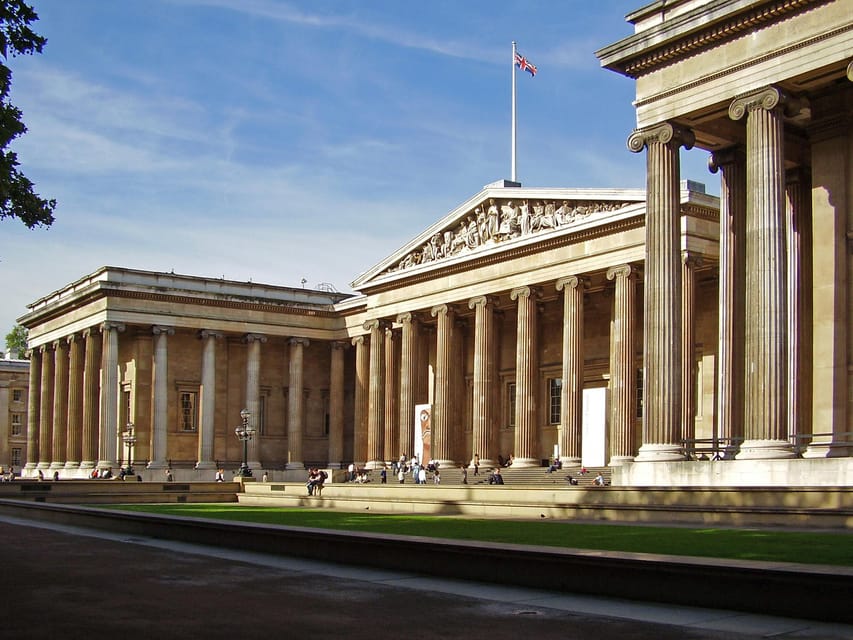
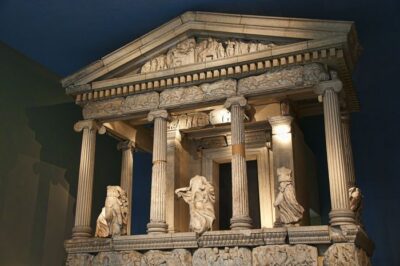
The Parthenon sculptures are among the museum’s most famous works. Originally part of the Parthenon in Athens, they show gods, heroes, and mythical creatures in finely carved marble. Look closely at the movement in the figures and the way the sculptors handled the human body, fabric, and stone.
The sculptures are also known as the Elgin Marbles, after Lord Elgin, who removed them while he was British ambassador to the Ottoman Empire. Their beauty is not in question. Their ownership and removal remain deeply disputed.
That tension is one of the most useful parts of the visit. You can appreciate the technical skill of ancient Greek artists while also asking who has the right to hold major cultural objects. The tour presents a chance to consider museum collections as more than displays of beautiful things. They also carry stories about empire, diplomacy, power, and national identity.
The downside is time. The sculptures deserve a long, quiet look, but the group must continue. If this is your main reason for visiting, you may want to return after the tour and study the gallery on your own.
More Museum Tours in London:
- London: Chelsea Football Club Stadium and Museum Tour
★ 4.8 · 4,576 reviews - London Transport Museum Entrance Ticket
★ 4.5 · 1,323 reviews - London: Jack the Ripper Museum Tickets
★ 4.2 · 894 reviews - Afternoon Tea at the British Museum
★ 4.2 · 511 reviews
Mummies, sarcophagi, and Egyptian ideas about death
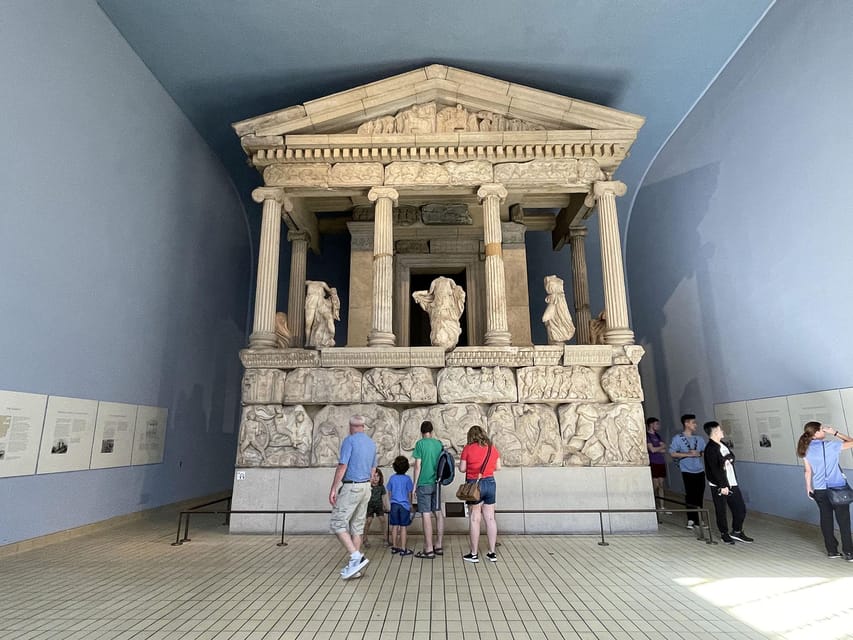
The Egyptian galleries shift the focus from written language to belief and daily practice. Here you encounter mummies, sarcophagi, and burial objects connected to ideas about death and the afterlife.
The preserved human remains can be striking, even unsettling. They also make the ancient world feel personal. You are looking at the remains of people who lived thousands of years ago, not just at anonymous objects from a textbook.
Elaborately decorated coffins and burial items show how much thought went into preparing for death. The objects offer clues about religious beliefs, social rank, craftsmanship, and family traditions. A guide can help explain how the pieces fit together, which is especially useful when the gallery contains many similar-looking cases.
You should expect plenty of walking in this part of the museum. The British Museum is huge, and this is a highlights route rather than a detailed study of Egyptian religion. The tour gives you a strong introduction, but it cannot cover every dynasty, object, or ritual in two hours.
Sutton Hoo and the power of an Anglo-Saxon burial
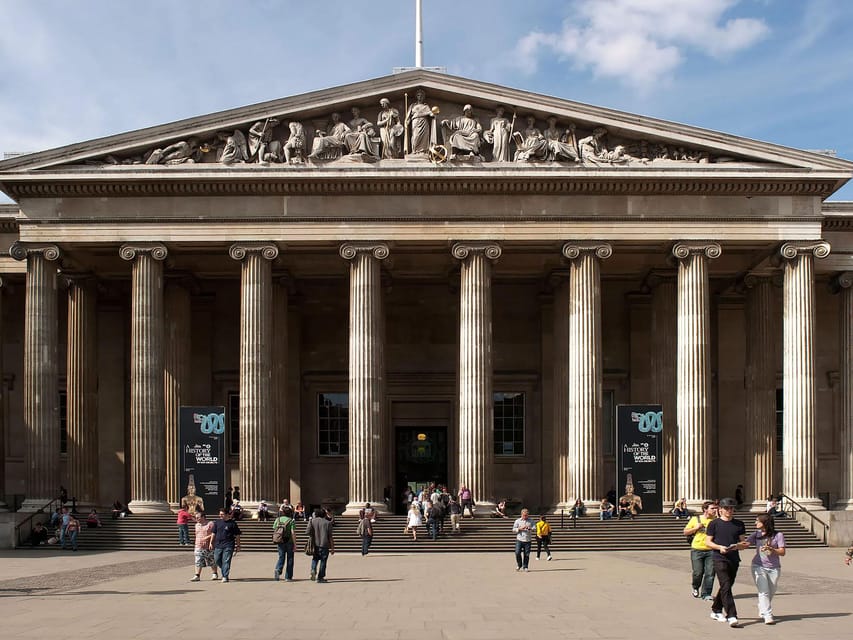
Sutton Hoo gives the tour a welcome change of pace. The finds come from an Anglo-Saxon ship burial discovered in the 20th century. The burial contained jewelry, weapons, and other grave goods that reveal the wealth and authority of early medieval society in England.
The objects are valuable not only for their beauty. They offer evidence about trade, status, warfare, craftsmanship, and funeral customs. The burial also raises questions about the person who was buried and the society that created such an elaborate memorial.
I like the way Sutton Hoo broadens the tour beyond the better-known Greek, Egyptian, and Mesopotamian collections. Many people associate the British Museum mainly with classical antiquity and Egypt. This stop shows that England’s own early medieval past can be just as compelling.
Pay attention to the fine work in the jewelry and the ceremonial nature of the weapons and other objects. The display helps you picture a society with powerful leaders, skilled artisans, and long-distance connections, even though the tour cannot provide a full account of Anglo-Saxon England.
The Winged Bulls of Khorsabad
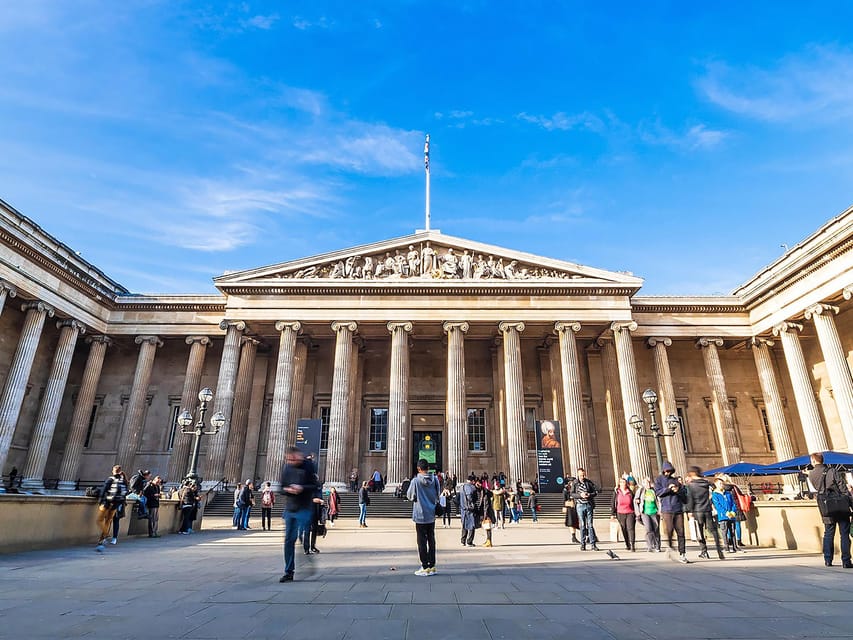
The final major highlight is a pair of colossal Winged Bulls from Khorsabad, connected with an ancient Assyrian palace. These guardian figures have human heads, lion bodies, and eagle wings. Their scale alone makes them memorable.
They were designed to project power. Positioned as palace guardians, they would have greeted people entering an important royal space. The combination of human intelligence, animal strength, and birdlike flight gave the sculptures an imposing symbolic force.
This is one of the stops where the museum’s architecture and the object work together. The Winged Bulls need room, and their size helps you understand the ambition of Assyrian rulers and artists. A guide can point out the details that are easy to miss when you are simply looking up at a huge stone figure.
If you have never seen Assyrian art, this may be one of the tour’s most surprising moments. It is less familiar to many first-time visitors than the Rosetta Stone or Parthenon sculptures, yet it gives the tour a powerful ending.
What $84 gets you
At $84 per person, this is not a cheap museum visit. The British Museum itself offers a great deal to explore, and a visitor who is comfortable reading labels and planning a route may prefer to go independently.
The price makes more sense if you want a guide to select the major objects, explain their importance, and keep you moving through the museum. You are paying for structure, interpretation, and time management. That can be valuable in a building with more than eight million artifacts.
The tour also includes online support at the time of boarding. Transfers are not included, so you must make your own way to Great Russell Street and return from there.
I would judge the value this way:
- Choose it if this is your first British Museum visit and you want a focused introduction.
- Choose it if you enjoy famous objects more when someone explains their story.
- Think twice if you want to linger at one gallery or explore obscure collections.
- Think twice if $84 feels high for a short museum visit and you are happy going without a guide.
The tour’s free cancellation policy allows you to cancel up to 24 hours in advance for a full refund. You can also reserve now and pay later, which helps if your London plans are still changing.
Timing, pace, and practical details
The listed duration is two hours, with the route beginning and ending on Great Russell Street. There is no transfer, so the experience is entirely on foot inside and around the museum entrance.
Wear comfortable shoes. The building is large, and even a guided highlights route involves substantial walking. Bring a passport or ID card, as this is listed among the required items.
The tour is not suitable for wheelchair users. If you need step-free access or mobility support, this experience is not the right choice based on the stated restrictions.
The tour is not private, and English is the only listed language. If your preferred time is unavailable, you may be moved to another available time on the same day. A same-day or next-day booking can also be moved to the following day if there are no seats, so last-minute reservations require some flexibility.
The phrase skip the line does not mean instant entry without other people. It means you use a priority queue rather than the normal long queue, alongside other customers who selected that option.
Who should book this museum experience?
This tour suits a first-time British Museum visitor who wants the major highlights with a clear plan. It also works well for anyone who enjoys archaeology but does not want to spend hours researching the galleries before arriving.
Families with older children may appreciate the strong visual stops, especially the enormous Winged Bulls, mummies, and dramatic marble sculptures. The guide’s stories can help younger visitors understand why the objects matter, though the pace may be brisk.
It is less suitable for a repeat visitor who already knows the museum and wants time for specialist collections. It is also not ideal for anyone who dislikes groups, has limited walking ability, or wants a slow and private experience.
Should you book the British Museum highlights tour?
Book this experience if you want a fast, well-organized introduction to the British Museum’s best-known objects. The combination of the Rosetta Stone, Parthenon sculptures, Egyptian burial objects, Sutton Hoo, and the Winged Bulls gives you a broad look at several major cultures in only two hours.
I would treat it as a first pass, not a complete museum visit. The best plan is to take notes about the objects that catch your attention, then return independently if your schedule allows. At $84, the tour earns its price through guidance and focus, not through the amount of time inside the museum.
If that trade-off suits you, it is a practical way to get your bearings and see the museum’s headline works without getting lost among its enormous collections.
FAQ
Where does the British Museum tour meet?
Meet your guide on the stairs at the main entrance on Great Russell Street, after completing the security checks.
How early should I arrive?
Arrive at least 15 minutes before your scheduled start time.
How long does the tour last?
The guided tour lasts two hours.
What language is the tour offered in?
The tour is conducted in English with a live guide.
Is the tour private?
No. This is a shared, non-private tour.
Is transportation included?
No. Transfers are not included. You make your own way to the British Museum and return to Great Russell Street after the tour.
What objects will the tour cover?
The route includes the Great Court, Rosetta Stone, Parthenon sculptures, Egyptian mummies and burial artifacts, Sutton Hoo treasures, and the Winged Bulls from Khorsabad.
What should I bring?
Bring a passport or ID card. Comfortable shoes are also recommended because the tour involves walking.
Is the tour suitable for wheelchair users?
No. The experience is listed as unsuitable for wheelchair users.
Can I cancel the booking?
Yes. You can cancel up to 24 hours in advance for a full refund. You can also reserve now and pay later.
Just added in London
- The Best of British Cooking Class & Dining Experience★ 5.0 · 1 review
- London: Live Comedy Show at Big Belly Bar and Comedy Club★ 4.5 · 80 reviews
- London: British Museum Highlights Guided Small Group Tour★ 4.9 · 113 reviews
- The Beatles London Walking Tour★ 4.2 · 147 reviews
- The Best Highlights of London Walking Tour & Boat Cruise★ 5.0 · 1 review
- The Authentic Walking Tour with Indian Tasting Meal★ 4.8 · 4 reviews
- Iconic London: Bard, Beatles, Bond & Baker Street★ 4.9 · 15 reviews
- London: Tate Britain Official Discovery Tour★ 4.7 · 7 reviews
British Museum Tours, compared.
British Museum Audio Tour & Priority Entrance Ticket
Read our review →
British Museum Archaeology Course and Guided Tour
Read our review →
British Museum Highlights Guided Small Group Tour
Read our review →
British Museum Guided Tour with Priority Entrance
Read our review →Other lists this tour turns up in