
REVIEW · BRITISH MUSEUM TOURS
British Museum Tour: Rosetta Stone, Parthenon, Mummies
Some museums are simply too big to tackle alone. This two-hour British Museum tour gives you a sensible route through the collections, focusing on the Rosetta Stone, Parthenon sculptures, Egyptian mummies, Sutton Hoo treasures, and the Winged Bulls of Khorsabad. I like the clear choice of major highlights, and I like that an English-speaking guide adds context instead of leaving you to decode thousands of objects by yourself.
The main drawback is the museum’s size and noise. One guide was praised for strong historical and mythological explanations, but also spoke softly, making it hard to hear in crowded galleries. At $84.69 per person, the tour offers good value if you want an organized introduction, but it is less attractive if you prefer to wander alone or spend a full day with individual exhibits.
In This Review
- The Five Highlights That Shape the Visit
- Why a Two-Hour Route Makes Sense
- Starting Beneath the Great Court Roof
- The Rosetta Stone and the Story of Reading Egypt
- Parthenon Sculptures and a Difficult British Museum Debate
- Egyptian Mummies and the Meaning of Burial Objects
- Sutton Hoo and the Anglo-Saxon World
- Winged Bulls from Khorsabad
- The Guide Makes the Difference
- Is $84.69 a Fair Price?
- Timing, Cancellations, and Important Booking Notes
- Who Should Book This British Museum Tour?
- Final Verdict: A Smart First Look at the British Museum
- FAQ
- How long does the British Museum tour last?
- What language is the tour conducted in?
- Where do I meet the guide?
- How early should I arrive?
- Does the tour include hotel pickup?
- Does the tour include food or drinks?
- What objects are included on the route?
- Is the tour private?
- Can I cancel for a refund?
- Can I reserve now and pay later?
- What should I bring?
The Five Highlights That Shape the Visit
- The Rosetta Stone: See the famous inscription that helped scholars read Egyptian hieroglyphics.
- The Parthenon sculptures: Examine the art while learning why their removal from Athens remains controversial.
- Egyptian mummies: Connect burial objects with ancient beliefs, craft, and daily life.
- Sutton Hoo treasures: View early medieval objects from an Anglo-Saxon burial site.
- Winged Bulls from Khorsabad: Encounter enormous Assyrian guardians carved with remarkable detail.
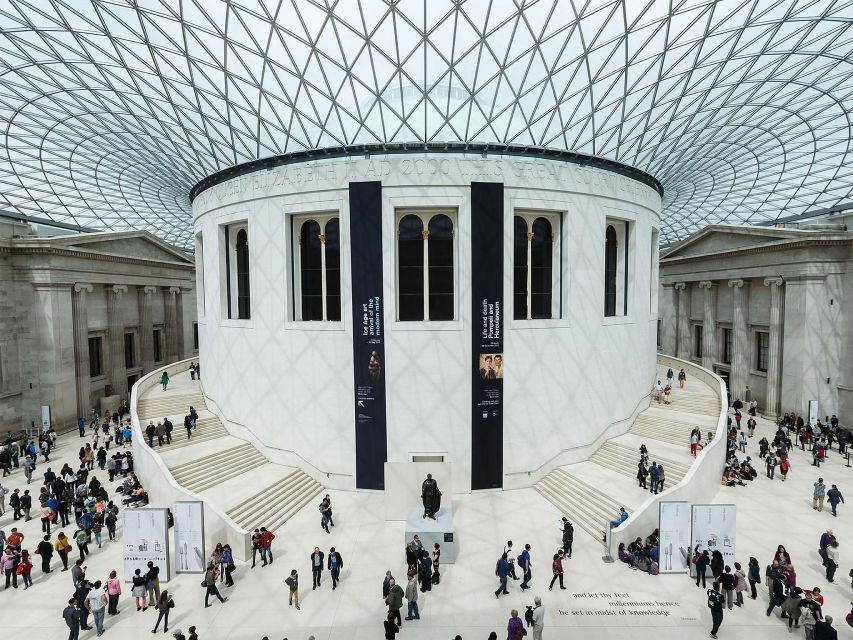
- The Great Court roof: Begin with one of London’s most memorable modern museum spaces.
Why a Two-Hour Route Makes Sense
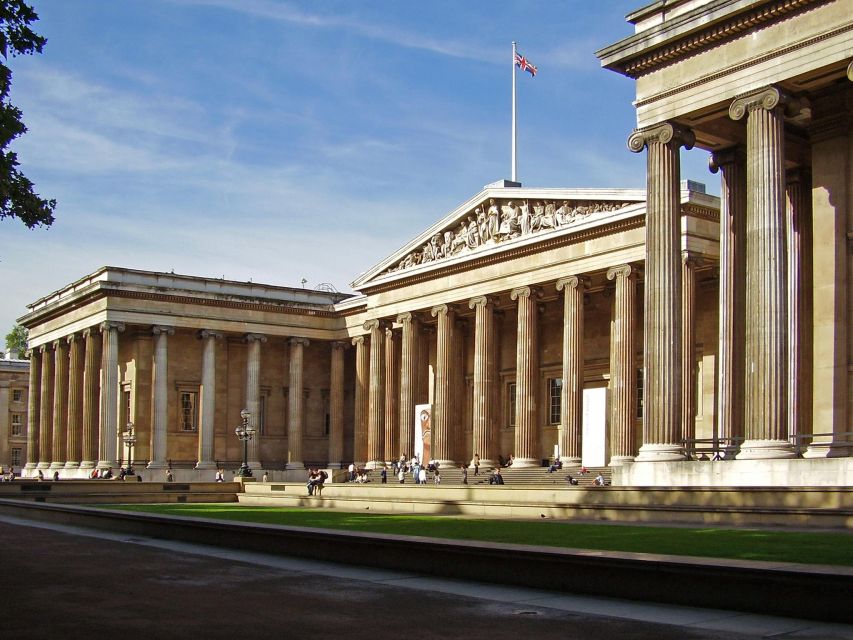
The British Museum is vast enough to fill several days, yet many first-time visitors lose time simply deciding where to go. This tour gives you a route and a purpose. You move from major object to major object without trying to cover every room, every period, and every civilization in one tiring sweep.
I think that focus is the tour’s biggest strength. The selected objects cross several cultures and thousands of years, but they share one useful theme: how people recorded language, honored the dead, displayed power, and created art. You get a broad introduction without being buried under dates and names.
The two-hour length also suits a busy London day. You can fit it between other plans, though you should not expect a slow, detailed look at every gallery. The tour is on foot, and the museum requires plenty of walking. Comfortable shoes are a must.
The group is not private, so you will share the guide and the viewing space with other people. That keeps the price below what a private tour would normally cost, but it also means you may need to stay close and listen carefully.
More British Museum visits:
- London: British Museum Guided Tour
★ 4.3 · 1,182 reviews - London: Tour of the British Museum
★ 4.1 · 678 reviews - London: British Museum Audio Tour & Priority Entrance Ticket
★ 4.5 · 631 reviews
Starting Beneath the Great Court Roof
Meet your guide on the stairs at the main entrance, after passing through security. Arrive at least 15 minutes before your scheduled time. This is not the moment to cut things close: the entrance can be busy, and you need time to clear security and find the meeting point.
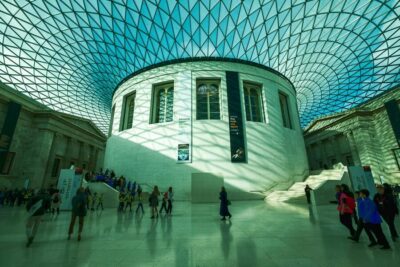
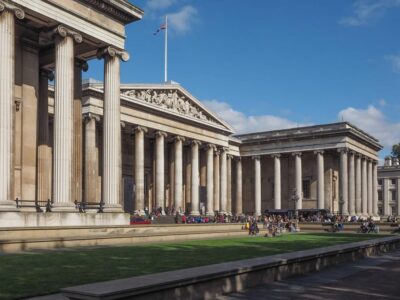
The Great Court is an excellent opening scene. Its sweeping glass roof brings daylight into the center of the museum, combining old stone architecture with a modern ceiling that feels almost weightless. Your guide uses this space to help you understand the building before leading you into the collection.
There is no hotel pickup, and food and drinks are not included. You make your own way to the British Museum and remain there for the entire activity. That is simple enough for visitors already exploring central London, but it is worth allowing extra time if you are coming from another part of the city.
The Rosetta Stone and the Story of Reading Egypt
The Rosetta Stone is the first major object on the route, and it earns its fame. The stone carries the same decree in three scripts, giving scholars the comparison they needed to make progress with ancient Egyptian hieroglyphics.
Seeing it in person is not just about admiring an old slab of dark stone. The real interest is the problem it helped solve. For centuries, the symbols on Egyptian monuments were difficult for modern scholars to read. The Rosetta Stone provided a bridge between a known written language and the picture-like hieroglyphic script.
Your guide can turn a short stop into a lesson about language, scholarship, and the way one object can change the study of an entire civilization. I especially like this kind of explanation because it gives you something to look for rather than asking you to admire an artifact simply because it is famous.
The stone is one of the museum’s best-known objects, so expect other people nearby. Stay close to the guide and listen for the key explanation before trying to take your own look. A guide who speaks softly may be difficult to hear in this setting, so position yourself near the front when possible.
Parthenon Sculptures and a Difficult British Museum Debate
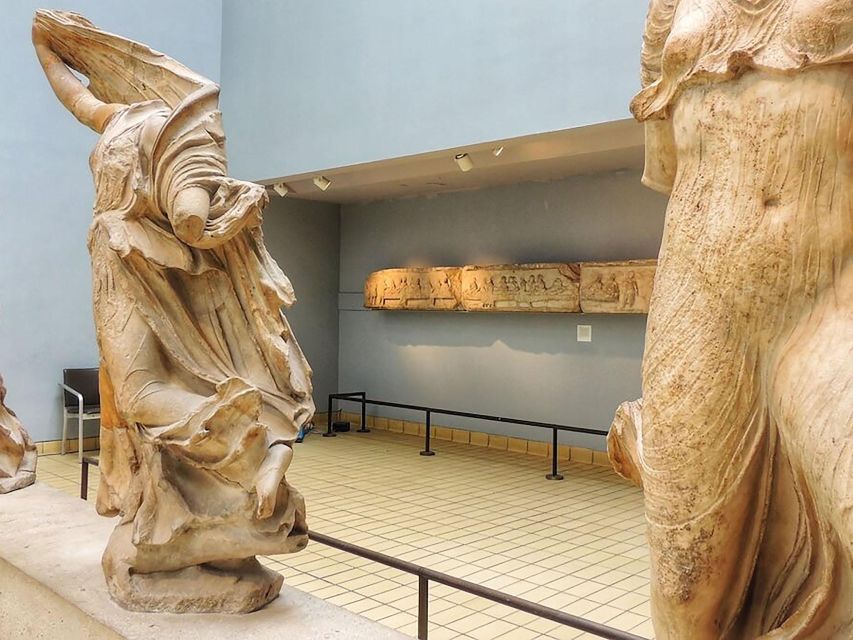
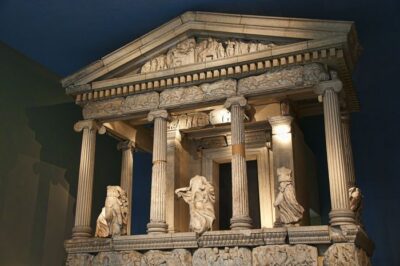
The Parthenon sculptures bring art together with politics and ownership. The pieces were removed from the Parthenon in Athens by Lord Elgin, who served as British ambassador to the Ottoman Empire, and later brought to the British Museum.
The sculptures are beautiful, but beauty is only part of the story. Their presence in London has caused a long-running dispute over whether they should remain in Britain or return to Greece. A good explanation should give you the basic events and the competing viewpoints without pretending the question is simple.
This stop is especially useful if you plan to visit Athens later. Seeing the sculptures in London gives you one side of a story that continues at the Parthenon itself. You will also better understand why museums are not just rooms full of old objects. Their collections carry stories about archaeology, empire, diplomacy, collecting, and cultural ownership.
Do not expect a private viewing or silence. The gallery can be busy, and the group may need to move aside for other people. The guide’s commentary is the main value here, since the sculpture itself can be studied at your own pace only after the group has moved on.
More Museum Tours in London:
- London: Chelsea Football Club Stadium and Museum Tour
★ 4.8 · 4,576 reviews - London Transport Museum Entrance Ticket
★ 4.5 · 1,323 reviews - London: Jack the Ripper Museum Tickets
★ 4.2 · 894 reviews - Afternoon Tea at the British Museum
★ 4.2 · 511 reviews
Egyptian Mummies and the Meaning of Burial Objects
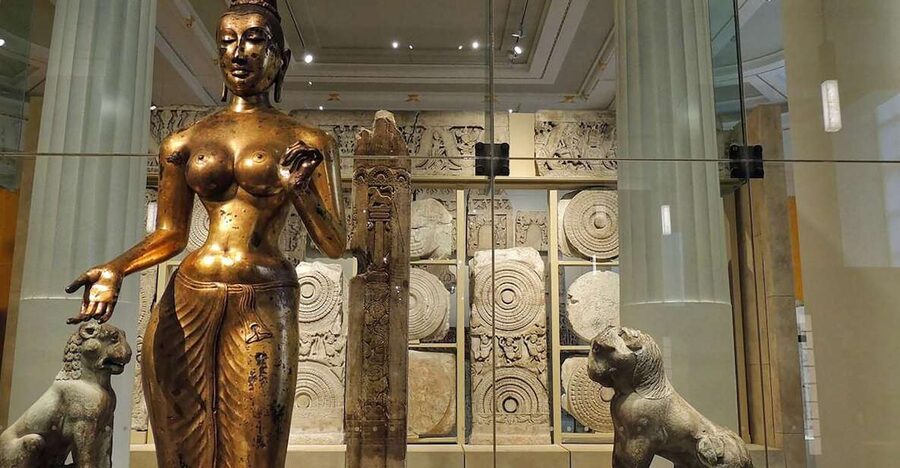
The Egyptian galleries provide some of the tour’s most visually powerful moments. You see mummies along with burial objects that help explain how ancient Egyptians thought about death, the body, and the next life.
A mummy can attract attention on its own, but the objects around it make the display more useful. Burial goods show craftsmanship, religious ideas, and practical concerns. They also give you clues about daily life and social status. The tour connects these items rather than treating each case as an isolated display.
I like this section because it moves beyond the familiar image of pyramids and pharaohs. You begin to see how much work went into preparing the dead and how closely religious belief shaped material life. The guide’s comments can also help you understand why preservation mattered so much to ancient Egyptians.
This is another area where the museum’s scale can work against you. You will see important examples, not every mummy and every burial object in the collection. If Egypt is your main interest, use the tour as an introduction and plan extra museum time afterward if your schedule allows.
Sutton Hoo and the Anglo-Saxon World
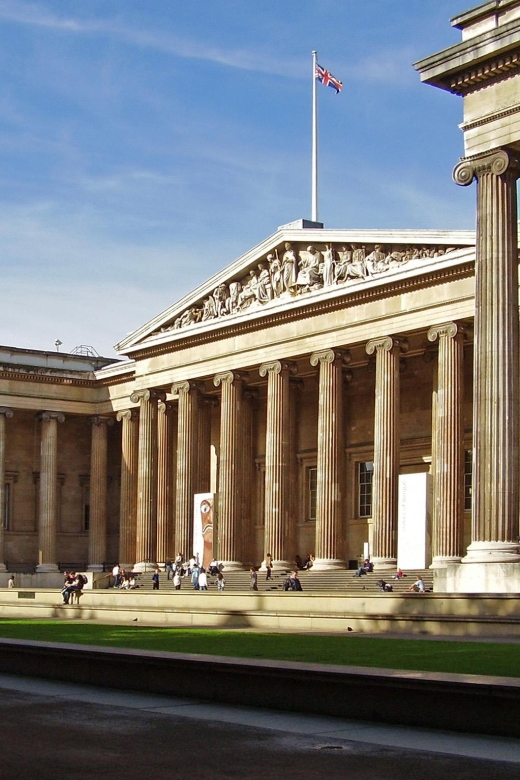
Sutton Hoo changes the subject from ancient Egypt to early medieval Britain. The site is famous for rich burial treasures connected with an Anglo-Saxon burial, offering a glimpse into the power, ceremony, and wider contacts of the period.
This stop is valuable because it broadens the idea of what the British Museum covers. After monumental Egyptian objects and Greek sculpture, you encounter artifacts tied to Britain’s own early medieval past. The objects help you think about burial customs, elite identity, craftsmanship, and the movement of goods across the ancient world.
The guide’s wider story matters here. A display of metalwork or burial equipment can seem hard to place without an explanation of who used it and why it was buried. The tour supplies that frame in a short, clear visit.
Sutton Hoo may appeal most to you if you enjoy archaeology and local British history rather than only famous classical monuments. It is also a good reminder that the museum’s strongest collections are not limited to Greece, Rome, or Egypt.
Winged Bulls from Khorsabad
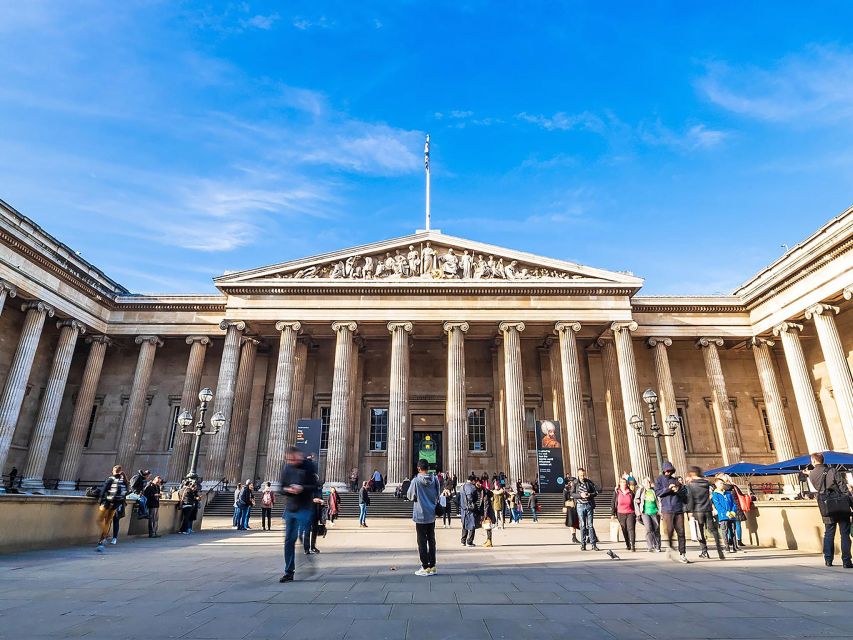
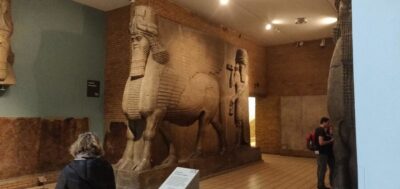
The Winged Bulls from Khorsabad provide the tour’s most imposing finish. These monumental sculptures once guarded a grand palace and reflect the scale and confidence of ancient Assyrian art.
Their size makes an immediate impression, but take time to notice the details. The carved figures combine human, animal, and winged features, creating guardians that were meant to project power. They were not small decorative pieces tucked into a corner. Their scale and placement helped shape the experience of entering an important building.
This stop also brings Mesopotamia into the route. You move from Egyptian writing and burial customs to Greek sculpture, Anglo-Saxon objects, and Assyrian palace art. The result is a fast but useful survey of different ways societies expressed authority and belief.
For me, the Winged Bulls are exactly the sort of object that benefits from a guide. Their size is obvious, but the explanation about their original role makes the display more memorable. Without that context, you might simply photograph them and move on.
The Guide Makes the Difference
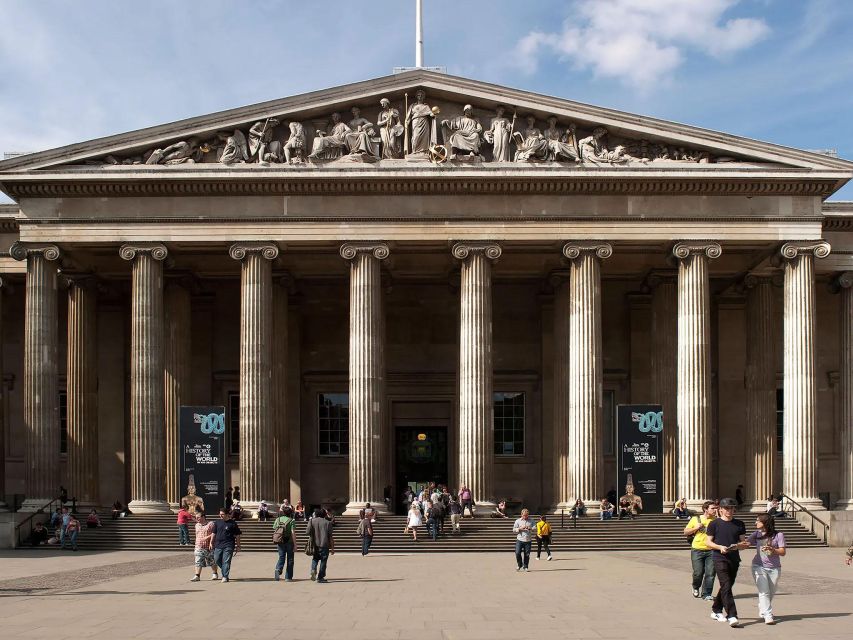
The guide is central to the value of this activity. The tour includes a licensed English-speaking guide, and the strongest praise has focused on clear historical and mythological background, including information about prehistory, antiquity, and the museum itself.
That broad knowledge matters because the route jumps across cultures and time periods. You need someone who can explain not only what you are seeing, but why each object belongs in the larger story. The guide also helps explain how objects reached the museum, a subject that is especially important at the Parthenon galleries.
There is one practical concern: one guide was described as very soft-spoken, with crowd noise sometimes making the commentary difficult to follow. Try to stay near the guide and ask for a repeat if you miss an important point. This is a shared tour, so the experience depends partly on group size, gallery noise, and where you are standing.
The tour includes online support at the time of boarding, which can help if you need assistance finding the meeting point. Still, the essential preparation is simple: arrive early, clear security, and keep your ID or passport with you.
Is $84.69 a Fair Price?
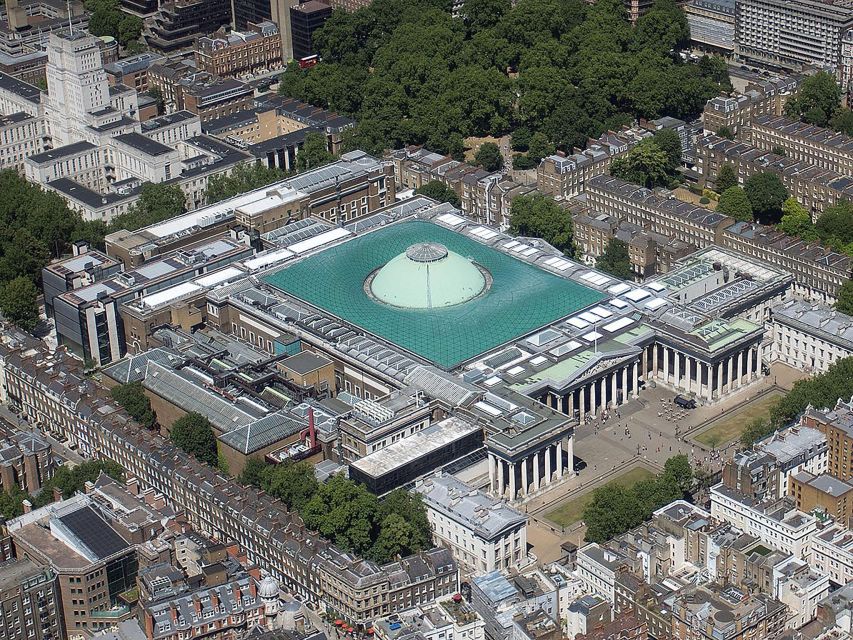
At $84.69 per person, this is not the cheapest way to enter the British Museum. The value comes from the guide and the time saved, not from access to a large number of attractions. The museum route is focused, and the commentary gives meaning to objects you might otherwise pass with only a quick glance.
I would consider the price fair if you have about two hours, want the major highlights, and prefer explanations as you walk. It is particularly useful for a first visit, families who need a clear route, or anyone who feels overwhelmed by the museum’s size.
The price is harder to justify if you already know the collection well or want to spend long periods with individual objects. You may also prefer an unguided visit if you like setting your own pace, reading every label, or returning to one gallery several times.
The tour is not private, and there is no food, drink, or hotel transfer included. Those limits are normal for a museum walking tour, but they help clarify what you are paying for: a guided introduction, not a full-day personal museum service.
Timing, Cancellations, and Important Booking Notes
You can cancel up to 24 hours before the activity for a full refund. You can also reserve now and pay later, which is useful when your London plans are still changing.
Check the exact starting time carefully. If your selected slot is unavailable, you may be moved to another time on the same day. A requested 10:00 start, for example, could become the first available afternoon slot. Same-day or next-day bookings can also be moved to the following day if no places remain.
The activity ends back at the British Museum meeting point. There is no separate transportation segment, so you can continue exploring the museum or head to your next London stop afterward.
The tour is not suitable for wheelchair users according to the supplied activity information. If accessibility is essential for your plans, confirm the arrangements directly before booking.
Who Should Book This British Museum Tour?
I would recommend this tour to you if you want a quick orientation with the museum’s most famous objects. It works well for first-time visitors, short London breaks, and people who enjoy learning the story behind an artifact instead of simply taking a photograph.
It also suits you if Greek, Egyptian, Mesopotamian, and Anglo-Saxon collections all sound appealing. The range is wide, and the guide’s explanations help connect objects that otherwise might feel unrelated.
I would skip it if you want a quiet, private experience or a slow study of one collection. The museum can be crowded, the group is shared, and a soft-spoken guide may be hard to hear. You should also avoid booking a tight same-day schedule unless you can handle a possible change in start time.
Final Verdict: A Smart First Look at the British Museum
Book this tour if you want the British Museum’s headline objects explained in a manageable two-hour route. The Rosetta Stone, Parthenon sculptures, mummies, Sutton Hoo treasures, and Winged Bulls make a strong selection, and the historical and mythological background adds real value.
The main caution is practical rather than cultural: expect walking, crowds, a shared group, and possible changes to your chosen time. At $84.69, I see this as a useful introduction rather than the best choice for repeat museum visitors. Arrive early, stay close to the guide, wear comfortable shoes, and treat the tour as your map for deciding which galleries deserve a longer look.
FAQ
How long does the British Museum tour last?
The tour lasts two hours.
What language is the tour conducted in?
The live tour guide speaks English.
Where do I meet the guide?
Meet the guide on the stairs at the British Museum’s main entrance after passing through security.
How early should I arrive?
You should arrive at least 15 minutes before your scheduled start time.
Does the tour include hotel pickup?
No. Hotel pickup is not included, and you must make your own way to the British Museum.
Does the tour include food or drinks?
No. Food and drinks are not included.
What objects are included on the route?
The tour includes the Rosetta Stone, Parthenon sculptures, Egyptian mummies and burial artifacts, Sutton Hoo treasures, and the Winged Bulls from Khorsabad.
Is the tour private?
No. This is a shared, non-private tour.
Can I cancel for a refund?
Yes. You can cancel up to 24 hours in advance for a full refund.
Can I reserve now and pay later?
Yes. The activity offers a reserve-now, pay-later option.
What should I bring?
Bring a passport or ID card, and wear comfortable shoes because the tour takes place on foot inside a very large museum.
Just added in London
- The Best of British Cooking Class & Dining Experience★ 5.0 · 1 review
- London: Live Comedy Show at Big Belly Bar and Comedy Club★ 4.5 · 80 reviews
- London: British Museum Highlights Guided Small Group Tour★ 4.9 · 113 reviews
- The Beatles London Walking Tour★ 4.2 · 147 reviews
- The Best Highlights of London Walking Tour & Boat Cruise★ 5.0 · 1 review
- The Authentic Walking Tour with Indian Tasting Meal★ 4.8 · 4 reviews
- Iconic London: Bard, Beatles, Bond & Baker Street★ 4.9 · 15 reviews
- London: Tate Britain Official Discovery Tour★ 4.7 · 7 reviews
British Museum Tours, compared.
British Museum Audio Tour & Priority Entrance Ticket
Read our review →
British Museum Archaeology Course and Guided Tour
Read our review →
British Museum Highlights Guided Small Group Tour
Read our review →
British Museum Guided Tour with Priority Entrance
Read our review →Other lists this tour turns up in