
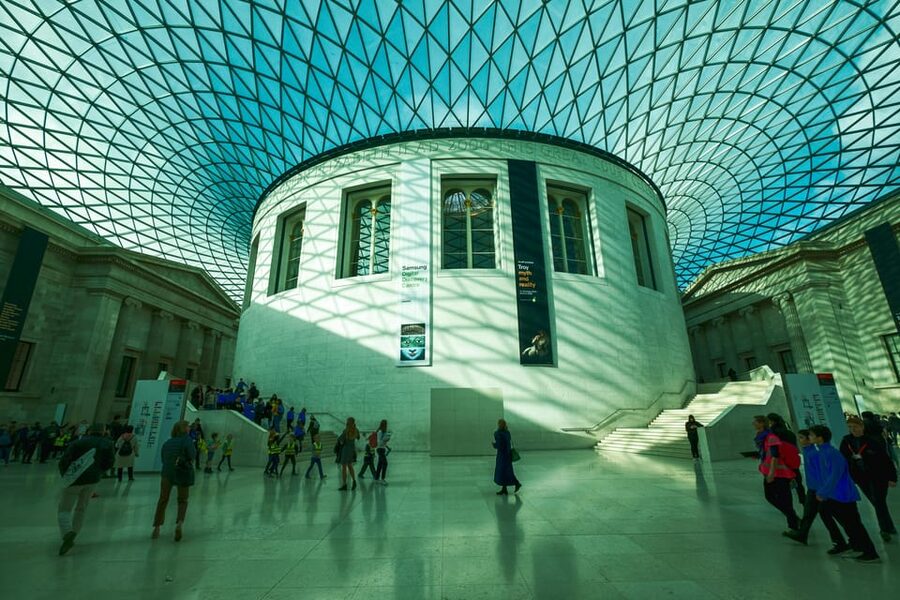
REVIEW · BRITISH MUSEUM TOURS
London: British Museum Guided Tour Chinese
Ancient wonders, one smart route. This private British Museum tour brings a Chinese-speaking licensed guide into the museum’s biggest stories, from the Rosetta Stone to the Parthenon sculptures. I like the tailor-made focus and the chance to ask questions without being folded into a large group. I also like that the route reaches objects from several continents in only two hours.
The main concern is price: $1,146 per group of up to five is a serious outlay for a short museum visit. You are paying for privacy, a guide in Traditional Chinese, and a focused visit, not for a full-day museum experience. The guide’s quality matters greatly, and Wanqi receives especially warm praise for kindness, clear explanations, and a strong command of the museum’s stories.
In This Review
- Key points to know before booking
- What this private British Museum tour is really offering
- Beginning with Egypt and the Rosetta Stone
- Ancient Greece and the Parthenon sculptures
- Roman power in statues, mosaics, and engineering
- Sutton Hoo and the beginnings of English identity
- Hoa Hakananai’a and a distant Polynesian culture
- A guide who makes the two hours count
- Price, timing, and meeting details
- Who should book this experience?
- Should you book the Chinese British Museum tour?
- FAQ
- How long does the British Museum tour last?
- What languages are available?
- Is this a private tour?
- How much does the tour cost?
- Where do I meet the guide?
- How do I receive the entry tickets?
- Is the tour wheelchair accessible?
- Can I cancel the tour for a refund?
Key points to know before booking
- Rosetta Stone first: See the famous object that helped scholars read Egyptian hieroglyphs.
- Private Chinese-language visit: The group is limited to your party, with live guiding in Chinese or Traditional Chinese.
- Major Greek and Roman works: The route includes the Parthenon sculptures, Elgin Marbles, Roman statues, mosaics, and inscriptions.
- More than Egypt and Greece: Sutton Hoo and the Hoa Hakananai’a moai add British and Polynesian perspectives.
- Two hours, tightly planned: The tour suits you if you want highlights rather than every gallery.
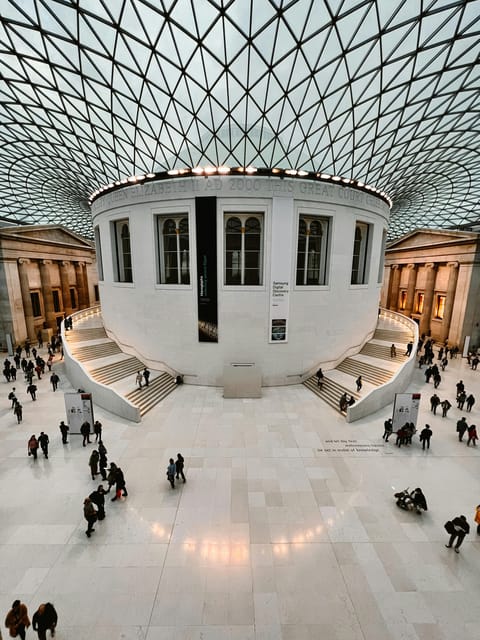
- Meet inside the museum: After security, find your guide on the stairs near the pillars and portals. Entry tickets are sent by WhatsApp one hour before the tour.
What this private British Museum tour is really offering
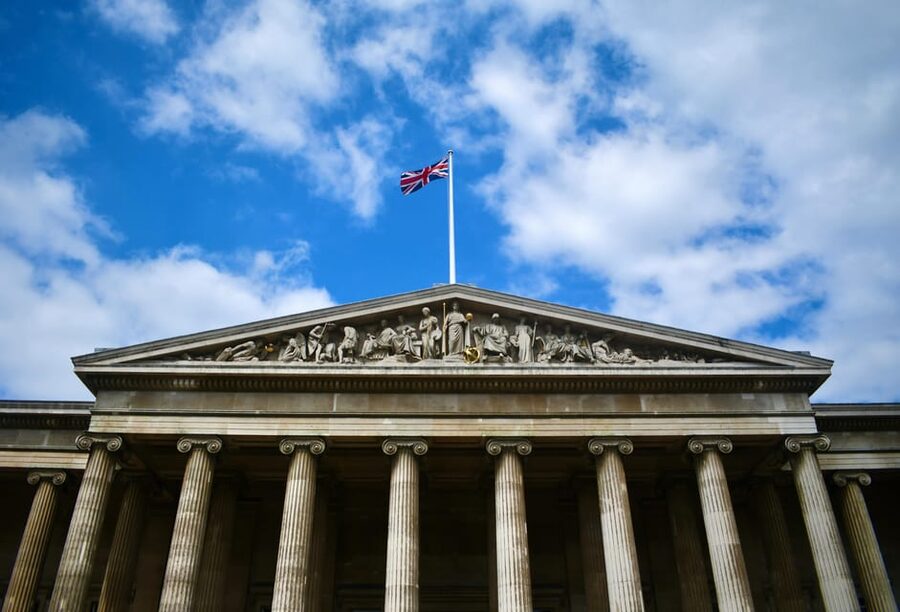
The British Museum is not a place you casually finish. Its public galleries cover thousands of years and objects from across the world. Without a plan, you can spend an hour crossing corridors and still miss the pieces you most wanted to see.
This tour solves that problem with a two-hour route through major collections. You meet a licensed guide and move from ancient Egypt to Greece, Rome, early England, Easter Island, and other world cultures. The route gives you a basic framework for human history rather than treating each object as an isolated display.
That framing is useful. The Rosetta Stone is not simply a famous slab. The Parthenon sculptures are not merely handsome marble figures. Sutton Hoo is more than a group of old metal objects. A good guide connects each piece to language, belief, power, burial, art, and contact between cultures.
You also get a private group. That matters if you are traveling with family or friends and want the pace shaped around your interests. You can ask for clarification, pause over a detail, or move on when a subject does not hold your attention. A large public tour rarely gives you that freedom.
The limitation is time. Two hours is enough for a well-chosen introduction, but not enough for a slow look at every major collection. You should book this as a highlights tour, not as a complete survey of the museum.
More British Museum visits:
- London: British Museum Guided Tour
★ 4.3 · 1,182 reviews - London: Tour of the British Museum
★ 4.1 · 678 reviews - London: British Museum Audio Tour & Priority Entrance Ticket
★ 4.5 · 631 reviews
Beginning with Egypt and the Rosetta Stone
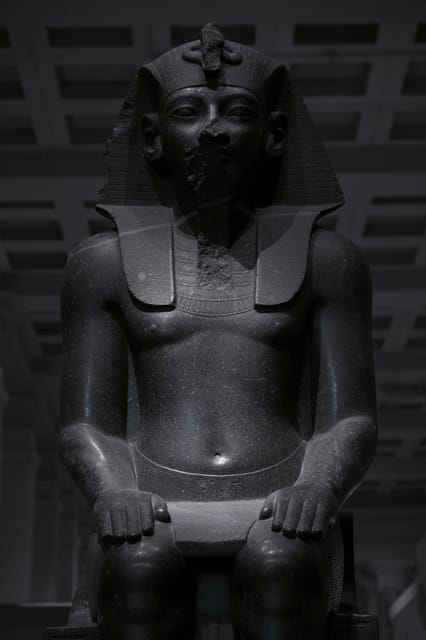
The tour begins with ancient Egypt, an excellent choice for a first stop. Egyptian objects are visually powerful, but their real appeal comes from the ideas behind them: kingship, death, writing, religion, and the careful preservation of the body.
You can expect to see relics connected with pharaohs and the long tradition of Egyptian art. The guide’s job here is to explain what you are looking at and why it mattered in its own time. That context can turn a row of carved figures into evidence of how Egyptian society understood order and the afterlife.
The Rosetta Stone is the likely star of this section. It carries the same decree in multiple scripts, and its importance comes from language rather than decoration. Comparing the inscriptions helped scholars make sense of Egyptian hieroglyphs, giving modern readers access to a writing system that had long been unread.
I like this opening because it gives you an immediate sense of discovery. You are not just seeing an old object. You are seeing a key moment in the recovery of an ancient written world.
The Egyptian galleries can also be busy and visually crowded. A guide helps you focus, but you may not have much time to linger at every case. If Egypt is your main reason for visiting, tell your guide early so the route can give this section the attention you want.
Ancient Greece and the Parthenon sculptures
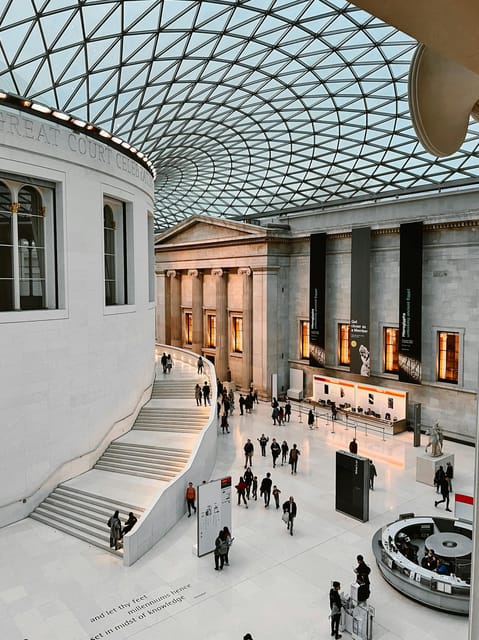
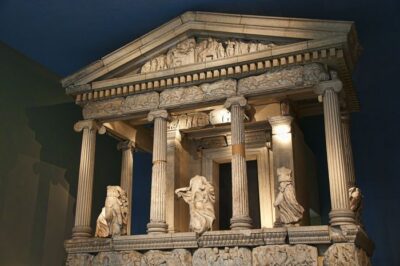
The Greek section shifts the mood from Egyptian royal and religious traditions to the art, public life, and ideas of the ancient Greek world. The tour highlights the Parthenon sculptures, among the museum’s most famous and disputed holdings.
The sculptures once formed part of the Parthenon in Athens. Their presence in London is tied to the controversial removal of material from the Acropolis, often associated with Lord Elgin. The term Elgin Marbles remains common, but the ownership and removal of these works continue to raise serious questions in Greece and elsewhere.
That controversy is part of the visit, not an awkward footnote to skip. A useful guide can explain both the artistic importance of the sculptures and the debate surrounding their location. You get more from the gallery when you consider not only how the marble looks, but also how it reached the museum and why the issue still matters.
The route also refers to marble inscriptions and the intellectual culture of ancient Greece. These works connect art with public life, religion, philosophy, and civic identity. You may find that the sculptures make more sense when you view them as parts of a building and a society, not as isolated museum pieces.
This stop is especially good for first-time visitors who want the museum’s best-known Greek works without spending hours working out which room to find. The tradeoff is that the Parthenon display deserves time. Two hours for the whole museum means your look will be focused rather than leisurely.
Roman power in statues, mosaics, and engineering
From Greece, the route moves to ancient Rome. The Roman galleries offer a different kind of story, one shaped by empire, public authority, technical skill, and the adoption of ideas from earlier cultures.
You can expect statues of gods and heroes, intricate mosaics, and objects linked to Roman life. The guide may use these works to show how Rome borrowed from Greek art while giving its own political and practical stamp to the ancient world.
The Roman stop adds useful balance to the tour. Egypt can feel centered on religion and the afterlife, while Greece often brings art and philosophy to the front. Rome lets you consider rule, infrastructure, domestic decoration, and the way a large empire represented power.
Mosaics reward close attention. From a distance, they can look like colorful patterns. Up close, the small pieces create scenes, symbols, and figures with remarkable control. A guide can help you notice what your eye might otherwise skip.
You will not receive a full study of Roman history in this short visit. Instead, you get a clear set of examples showing how art and authority worked together. If your group includes children or people who prefer concrete objects to long political explanations, the statues and mosaics may be among the easiest parts of the tour to enjoy.
More Museum Tours in London:
- London: Chelsea Football Club Stadium and Museum Tour
★ 4.8 · 4,576 reviews - London Transport Museum Entrance Ticket
★ 4.5 · 1,323 reviews - London: Jack the Ripper Museum Tickets
★ 4.2 · 894 reviews - Afternoon Tea at the British Museum
★ 4.2 · 511 reviews
Sutton Hoo and the beginnings of English identity
Sutton Hoo brings the story closer to Britain. The Anglo-Saxon treasures offer clues about early English life, burial customs, craftsmanship, trade, and social rank.
This section is valuable because it widens the idea of British history beyond royal palaces and later national institutions. The objects come from a much earlier world, one where burial goods could signal status and connections across regions.
You may find the Sutton Hoo material especially interesting after seeing Egypt and Rome. The comparison shows that societies separated by time and distance still used objects to express belief, memory, and power. The objects look different, but the human questions are familiar.
The guide’s explanation is important here because some of the meaning is not obvious from a quick glance. Metalwork and burial objects need context. You want to know what was found, what it suggests about the people involved, and why the discovery changed understanding of early English culture.
For a visitor interested in Britain itself, this may be the most personal part of the route. It places English history inside the wider story of human societies rather than presenting it as an isolated chapter.
Hoa Hakananai’a and a distant Polynesian culture
The Hoa Hakananai’a moai offers one of the tour’s most striking changes of direction. This stone figure from Easter Island represents a culture far from the Mediterranean and northern Europe, with its own religious ideas, artistic traditions, and social structures.
The moai is powerful partly because of its scale and simplicity. It also raises questions about what happens when sacred objects leave their original setting and enter a museum thousands of miles away. A guide can help you consider both the sculpture’s spiritual meaning and the wider issue of how museums hold objects from other cultures.
This stop prevents the tour from becoming a familiar parade of Egypt, Greece, and Rome. Those collections attract much of the attention, but a world museum should also show cultures that developed outside the usual Western classroom story.
You may not get every detail of Easter Island culture in the time available. Still, the inclusion of Hoa Hakananai’a makes the route feel broader and more honest. Human achievement did not happen in only one place.
A guide who makes the two hours count
The tour’s value depends heavily on the guide. The strongest praise goes to Wanqi, described as kind, polite, curious, and thoroughly familiar with the stories presented. Those qualities matter in a museum because a guide must do more than recite dates.
Kindness and patience are practical advantages. You may have different interests within your group, and a guide who listens can keep the visit enjoyable rather than turning it into a lecture. Clear explanations also matter when the objects involve disputed ownership, unfamiliar religious customs, or complex political history.
The Chinese-language format is the central reason to consider this experience. A private explanation in Chinese or Traditional Chinese can make difficult ideas easier to follow and gives you a natural way to ask questions. If you are comfortable with English museum labels and enjoy exploring alone, you may not need this service. If language slows you down, the guide could make the museum far more rewarding.
The information lists a live guide as included and also repeats live guide under exclusions. That is inconsistent. I would confirm the exact inclusions with the provider before paying, especially at this price.
Price, timing, and meeting details
The cost is $1,146 per group of up to five. For five people, that works out to about $229 per person. For two people, it is about $573 each, and for a solo visitor it is a very expensive way to spend two hours.
The price makes more sense for a full group that values privacy and Chinese-language guiding. Families, friends, or business groups can share the fixed cost. A small party should compare the convenience of a private guide with the cost of a standard group tour or a self-guided museum visit.
The meeting point requires care. Do not wait outside the gates. First pass through security, then meet your guide in front of the museum portals, on the stairs near the pillars. Entry tickets are sent through WhatsApp one hour before the tour. If you do not use WhatsApp, contact the provider by email so the tickets can be sent there.
That ticket timing is worth noting. Keep your phone available and check your messages before heading to the museum. You do not want to be searching for an entry message while your two-hour appointment is ticking away.
The activity is wheelchair accessible, which makes the private format more useful for groups with different mobility needs. The stated duration is two hours, and start times depend on availability, so check the schedule before you commit your day.
You can cancel up to 24 hours in advance for a full refund, and you can reserve now and pay later. Those policies give you some flexibility, though they do not change the question of whether the high price fits your group.
Who should book this experience?
I would recommend this tour to a group of up to five that wants a private, guided introduction in Chinese or Traditional Chinese. It is particularly suitable if you want to see famous objects but do not want to spend your first visit studying a floor plan.
It also suits families. The route moves through different cultures and types of objects, which can hold attention better than two hours in one collection. The guide can adjust the focus, at least within the limits of the planned route, to match your group’s interests.
I would be more cautious if you are a solo visitor, a couple on a tight budget, or someone who likes to spend twenty minutes with one object. The price is hard to justify for a small party unless the language support and private attention are essential.
You should also remember that the museum’s controversial objects deserve thoughtful treatment. The Elgin Marbles and Hoa Hakananai’a are not just famous sights. Their ownership, removal, and cultural meaning raise serious questions. A guide who explains those issues adds real value.
Should you book the Chinese British Museum tour?
Book it if your group can share the $1,146 cost and you want a private, Chinese-language route through the museum’s major highlights. Wanqi’s reported warmth, curiosity, and clear command of the subject are strong reasons to feel hopeful about the guiding, though you should confirm who will lead your date.
Skip it if you want a cheap museum visit, a long session in one gallery, or the freedom to wander without a fixed route. Two hours goes quickly, but the selected stops give you Egypt, Greece, Rome, Sutton Hoo, Easter Island, and a wider view of world culture in a single visit.
FAQ
How long does the British Museum tour last?
The tour lasts two hours.
What languages are available?
The live guide speaks Chinese, including Traditional Chinese.
Is this a private tour?
Yes. The tour is for a private group, with the listed price covering up to five people.
How much does the tour cost?
The price is $1,146 per group of up to five people.
Where do I meet the guide?
After passing the security check, meet the guide in front of the British Museum portals, on the stairs near the pillars. Do not wait outside the gates.
How do I receive the entry tickets?
The entry tickets are sent by WhatsApp one hour before the tour. If you do not have WhatsApp, contact the provider by email to receive them there.
Is the tour wheelchair accessible?
Yes. The activity is listed as wheelchair accessible.
Can I cancel the tour for a refund?
Yes. You can cancel up to 24 hours in advance for a full refund. You can also reserve now and pay later.
Just added in London
- The Best of British Cooking Class & Dining Experience★ 5.0 · 1 review
- London: Live Comedy Show at Big Belly Bar and Comedy Club★ 4.5 · 80 reviews
- London: British Museum Highlights Guided Small Group Tour★ 4.9 · 113 reviews
- The Beatles London Walking Tour★ 4.2 · 147 reviews
- The Best Highlights of London Walking Tour & Boat Cruise★ 5.0 · 1 review
- The Authentic Walking Tour with Indian Tasting Meal★ 4.8 · 4 reviews
- Iconic London: Bard, Beatles, Bond & Baker Street★ 4.9 · 15 reviews
- London: Tate Britain Official Discovery Tour★ 4.7 · 7 reviews
British Museum Tours, compared.

British Museum Audio Tour & Priority Entrance Ticket
Read our review →
British Museum Archaeology Course and Guided Tour
Read our review →
British Museum Highlights Guided Small Group Tour
Read our review →
British Museum Guided Tour with Priority Entrance
Read our review →Other lists this tour turns up in