
REVIEW · BRITISH MUSEUM TOURS
London: British Museum Highlights: Private Tour
Ancient art gets a human voice. This private British Museum tour makes a huge collection manageable, with Richard’s friendly storytelling and a clear route through major objects such as the Rosetta Stone, Parthenon Marbles, Egyptian mummies, and medieval Christian art. I like the small group size, limited to four people, and the way the tour links old objects to modern ideas about beauty, love, belief, and death. The main consideration is time: two hours gives you a lively introduction, not a full museum visit.
The fast-track security entrance is useful at a museum this popular, and the price of $74.08 per person can make sense if your group wants guidance instead of wandering through eight million objects alone. The tour involves a moderate amount of walking, large bags are not allowed, and it is not suitable for wheelchair users.
In This Review
- Key points at a glance
- A private introduction to an enormous museum
- Meeting Richard at Edward VII’s Entrance
- The Rosetta Stone and the power of written language
- The Parthenon Marbles and changing ideas of beauty
- Egyptian mummies, medicine, and the dance of life and death
- Mesopotamia and the inventions that still shape daily life
- Indian beliefs about yoga, rebirth, and the soul
- Tragic love, fate, and the art of strong emotion
- Medieval Christian art and the childhood stories of Jesus
- What $74.08 per person really buys
- Who will get the most from this tour
- How to plan your museum time
- Should you book the British Museum private tour?
- FAQ
- How long does the British Museum private tour last?
- How many people can join the private tour?
- What language is the tour conducted in?
- Where does the tour begin?
- Where does the tour end?
- Is fast-track entry included?
- Is hotel pickup included?
- Can I take photographs inside the museum?
- Can I bring a large backpack or food into the museum?
- Is the tour suitable for wheelchair users?
Key points at a glance
- Richard has earned especially warm praise: His friendly manner, enthusiasm, and clear explanations are the strongest part of the experience.
- The group is truly private: Your party can include up to four people, so you can ask questions and keep the pace personal.
- The Rosetta Stone anchors the story: You see the object tied to the deciphering of Egyptian hieroglyphs.
- The route crosses several cultures: Greek, Egyptian, Mesopotamian, Indian, and medieval Christian works all appear in the tour’s themes.
- Two hours keeps the visit focused: You get a guided sample of major highlights rather than an exhausting museum marathon.
- Practical limits matter: No large backpacks, food, drinks, selfie sticks, flash photography, or touching exhibits.
A private introduction to an enormous museum
The British Museum can feel like a city in miniature. Its collection contains more than eight million artifacts, and no first visit can sensibly cover everything. This tour solves that problem by giving you a two-hour path through selected objects and ideas.
The focus is not simply on famous pieces. The guide uses them to ask broad questions: How did ancient societies define beauty? How did people explain death? Why do tragic love stories survive? How do religious ideas change as they pass from one generation to another?
I like this approach because it gives the objects a reason to matter. You are not just ticking off the Rosetta Stone and the mummies. You are using them to think about language, art, belief, medicine, desire, and the stories people tell about themselves.
The private format is important here. With a maximum of four people, you can pause for an explanation, ask about a detail, or say when you need a moment to look. A larger group can still work well in a museum, but a small party usually gets more direct contact with the guide.
More British Museum visits:
- London: British Museum Guided Tour
★ 4.3 · 1,182 reviews - London: Tour of the British Museum
★ 4.1 · 678 reviews - London: British Museum Audio Tour & Priority Entrance Ticket
★ 4.5 · 631 reviews
Meeting Richard at Edward VII’s Entrance
The tour begins at the group entrance of the British Museum, known as Edward VII’s Entrance. Look for the guide holding a My London Guide sign. You are responsible for reaching the museum yourself, since hotel pickup and drop-off are not included.
The meeting point is useful because it gives you a clear place to gather before security. The included express security check can save time, though you should still arrive ready for inspection. Avoid bringing a large bag or backpack, since these are not allowed inside the museum.
The tour ends back at the meeting point. That makes planning easier if you have a restaurant booking, another London attraction, or a timed train connection afterward. Still, I would avoid scheduling anything too tightly. Museum discussions can take a few extra minutes, and you will likely want time afterward to revisit a favorite room.
Richard is the guide name associated with the strongest praise for this experience. The available comments describe him as very nice, informative, and great, while also highlighting the guide’s enthusiasm for the museum and its objects. Those details matter because a museum tour succeeds or fails on communication. A polished route is helpful, but a guide who can make you care about a damaged stone or a carved figure is much better.
The Rosetta Stone and the power of written language
The Rosetta Stone is one of the tour’s main stops. Its importance comes from the different scripts carved into the same artifact, which helped scholars read Egyptian hieroglyphs. That makes it more than a famous stone behind glass. It represents the moment when a long-lost written system became readable again.
A guide can help you notice why the object matters instead of treating it as a quick photo stop. The story connects language, translation, scholarship, and the way modern people reconstruct the past.
Photography is allowed, but flash photography is prohibited. You should also remember that touching exhibits is not allowed. The stone is likely to attract attention, so a private guide is useful for giving you context while helping you move through the stop without wasting your limited tour time.
The route’s larger point is that museums preserve more than beautiful things. Some objects change what we can know about an entire civilization. The Rosetta Stone is a strong early example of that idea.
The Parthenon Marbles and changing ideas of beauty
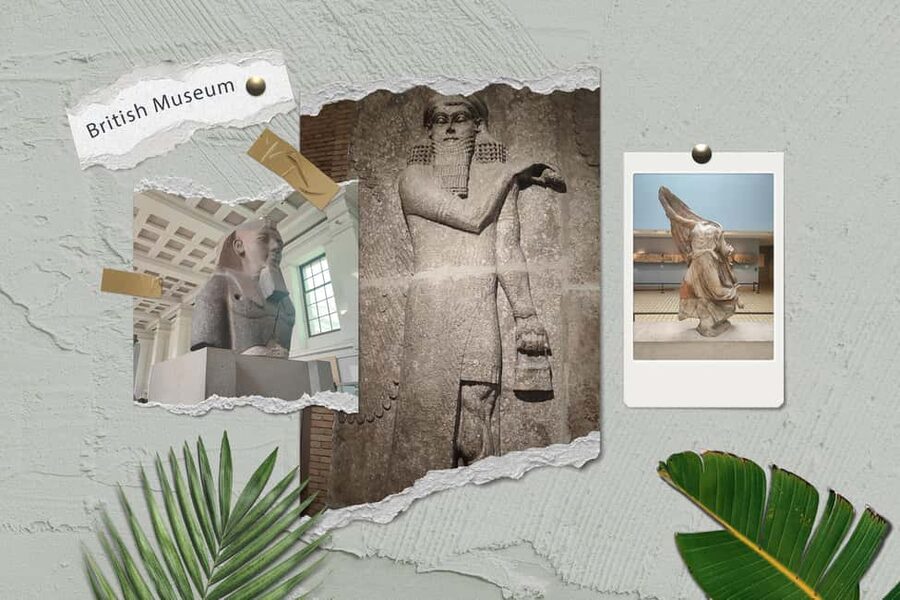
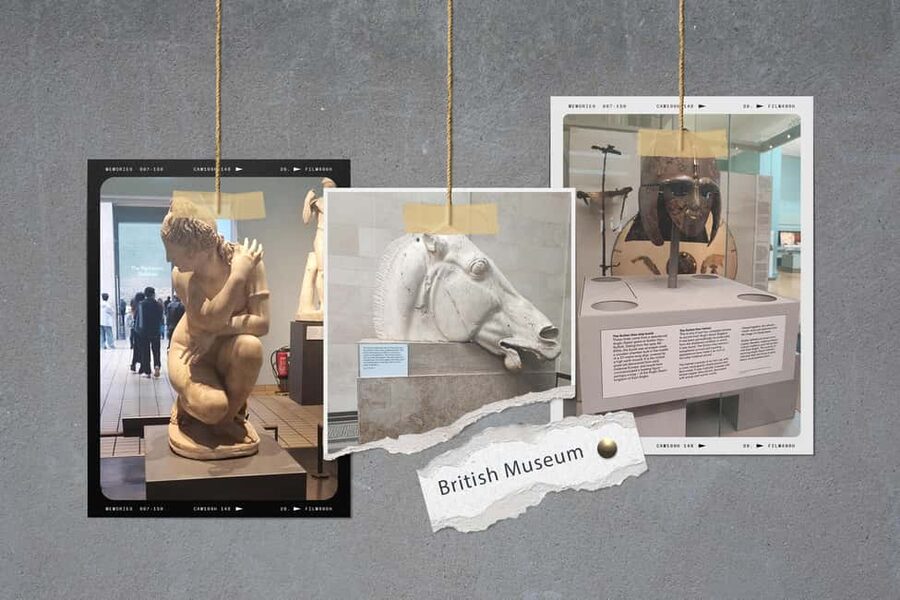
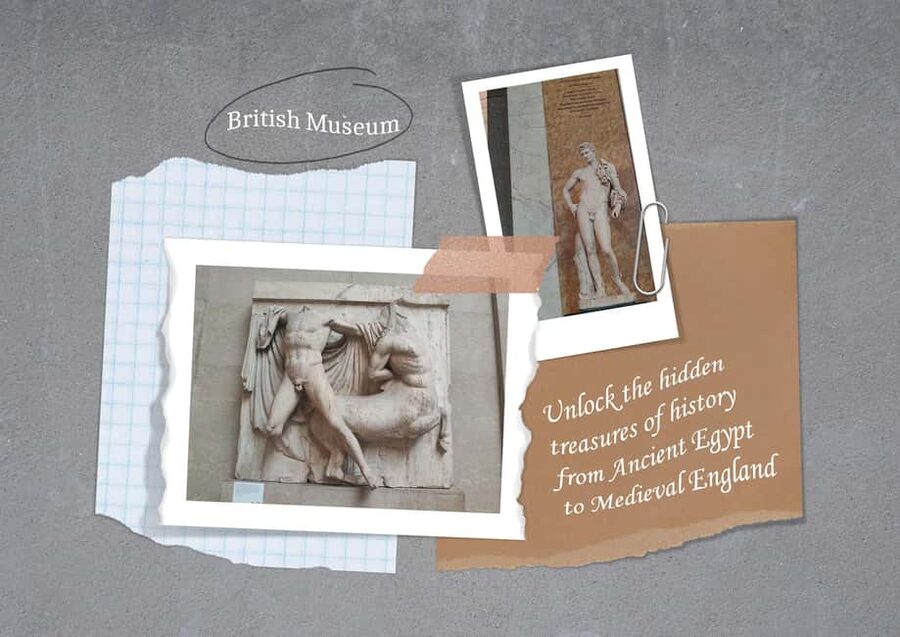
The Parthenon Marbles bring the tour into ancient Greece and its lasting influence on art. The route uses them to consider how Greek sculpture shaped later ideas of proportion, balance, the human body, and beauty.
You do not need a background in classical art to appreciate this stop. The guide’s job is to show you what to look for and explain why Greek forms have had such a long afterlife in European culture. The tour also connects ancient Greece with philosophy, democracy, theatre, and drama, so the discussion reaches beyond sculpture.
This is one place where a short tour has a clear limit. The British Museum’s Greek collection is broad, and two hours cannot settle every question about the marbles, their removal, or their place in modern debates. You should think of this as an introduction to the objects and their artistic influence, not a complete political or historical discussion.
I like the theme because it helps you question the idea that beauty is fixed. What a society praises in art tells you something about its values, power, and view of the human body. The marbles provide a memorable way into that subject.
More Museum Tours in London:
- London: Chelsea Football Club Stadium and Museum Tour
★ 4.8 · 4,576 reviews - London Transport Museum Entrance Ticket
★ 4.5 · 1,323 reviews - London: Jack the Ripper Museum Tickets
★ 4.2 · 894 reviews - Afternoon Tea at the British Museum
★ 4.2 · 511 reviews
Egyptian mummies, medicine, and the dance of life and death
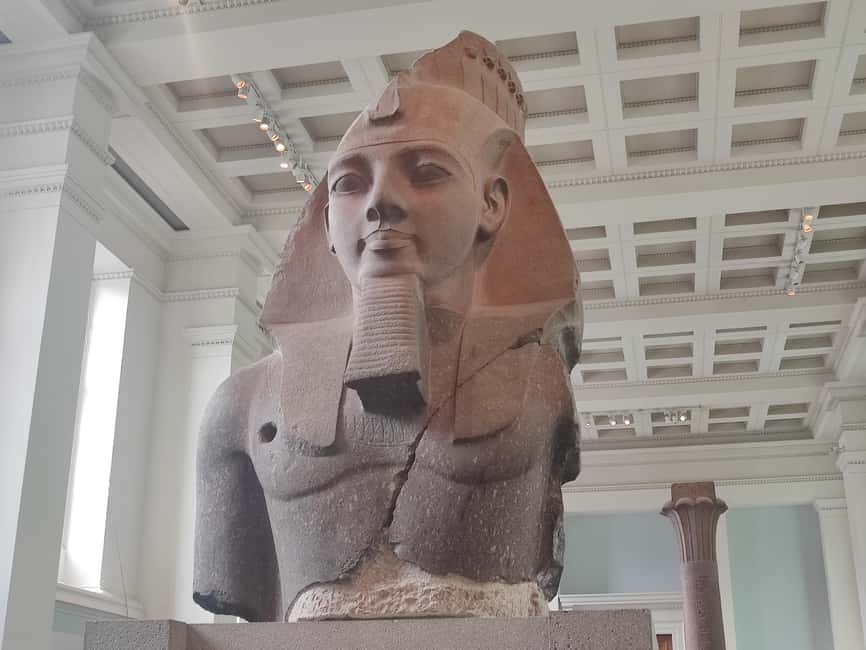
The Egyptian section adds a very different mood. Mummies bring death close, but they also reveal how people prepared for another existence and how seriously they treated the body after death.
The tour connects Egyptian objects with pyramids, hieroglyphs, and advances in medicine. That combination keeps the discussion from turning into a simple parade of tombs and wrapped bodies. You can consider the practical skills, religious beliefs, and ideas about the soul that shaped ancient Egyptian life.
This part may be especially effective for families and first-time museum visitors because the objects are visually striking. It also creates room for thoughtful questions. Why preserve a body? What does a society owe the dead? How do medical knowledge and religious belief work together?
The mummies can draw crowds, so staying close to the guide matters. The tour’s moderate walking requirement also becomes relevant here. You will move between galleries and spend time standing, so comfortable shoes are sensible.
Mesopotamia and the inventions that still shape daily life
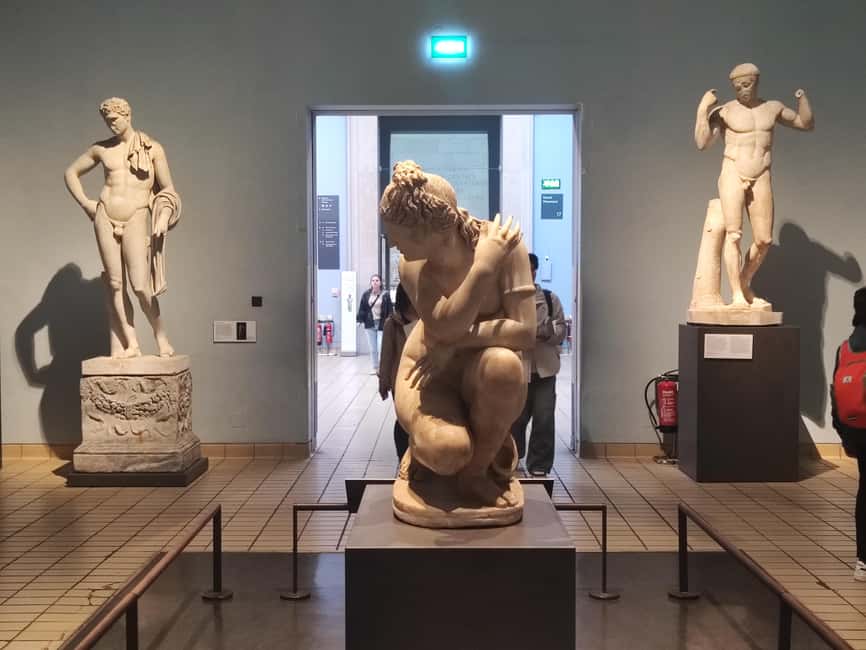
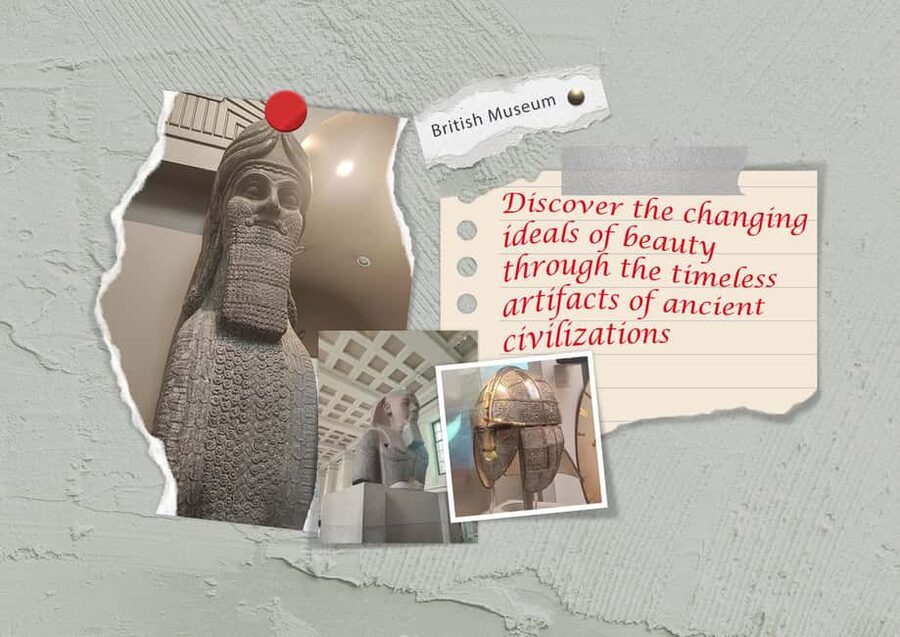
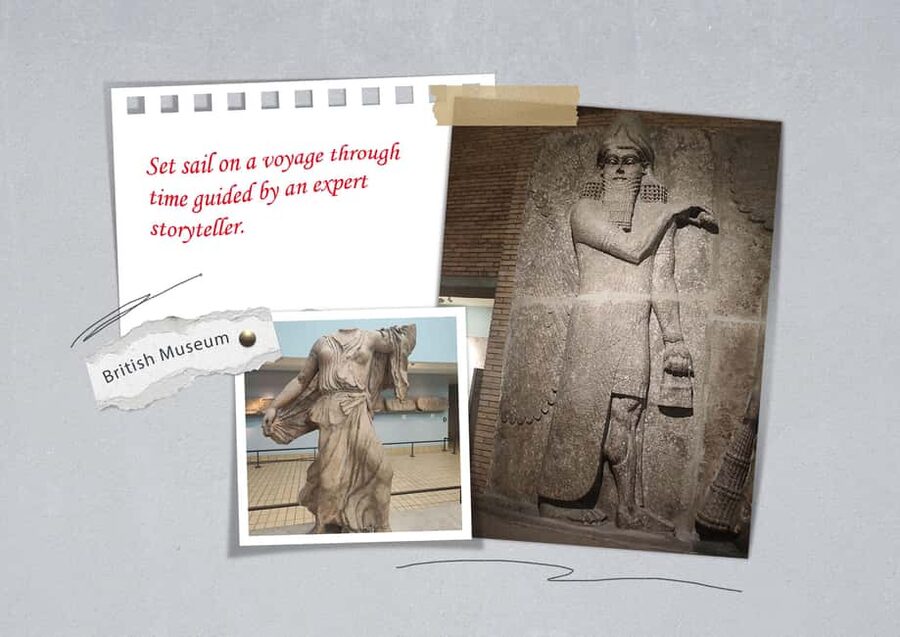
The Mesopotamian section asks what ancient societies can still teach us. The tour points to the wheel, siege engines, and modern farming as part of this story.
These examples help place the museum’s objects in everyday context. The wheel is not only an ancient invention in a display case. Farming systems and engineering changed how people traveled, built communities, stored food, and fought wars.
This stop may appeal to you if you enjoy practical history more than royal portraits. It shows that the past is not made only of grand monuments. Tools, systems, and technical ideas can have a longer effect on ordinary life.
The guide’s storytelling is especially important here because some Mesopotamian objects may be less immediately familiar than the Rosetta Stone or Egyptian mummies. A lively explanation can make a small artifact feel connected to the modern world.
Indian beliefs about yoga, rebirth, and the soul
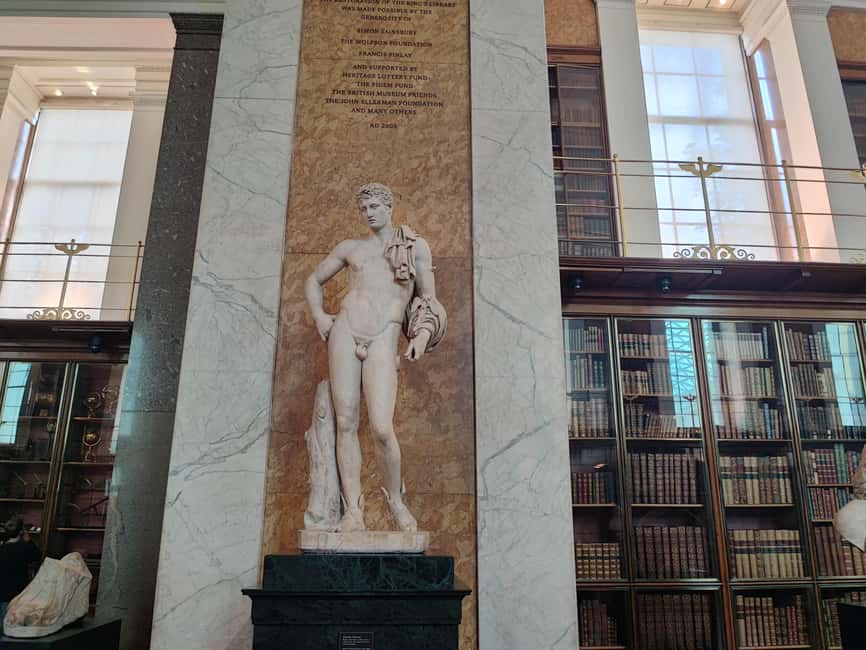
The route also turns toward ancient India and ideas of yoga, rebirth, and enlightenment. These subjects are presented as living influences, not as museum labels frozen in the past.
You can consider how beliefs about the soul shape a culture’s view of life and death. The discussion also makes a modern connection to the continuing search for inner peace, including the familiar modern image of a yoga mat.
This section adds balance to the tour. The British Museum is not only about rulers, battles, and monumental buildings. It also preserves ideas about the inner life, spiritual practice, and the effort to understand what happens beyond ordinary experience.
Because the tour is in English, you should be comfortable following a spoken discussion of religious and philosophical ideas. The private setting gives you a chance to ask the guide to explain a term or return to a point you did not catch.
Tragic love, fate, and the art of strong emotion
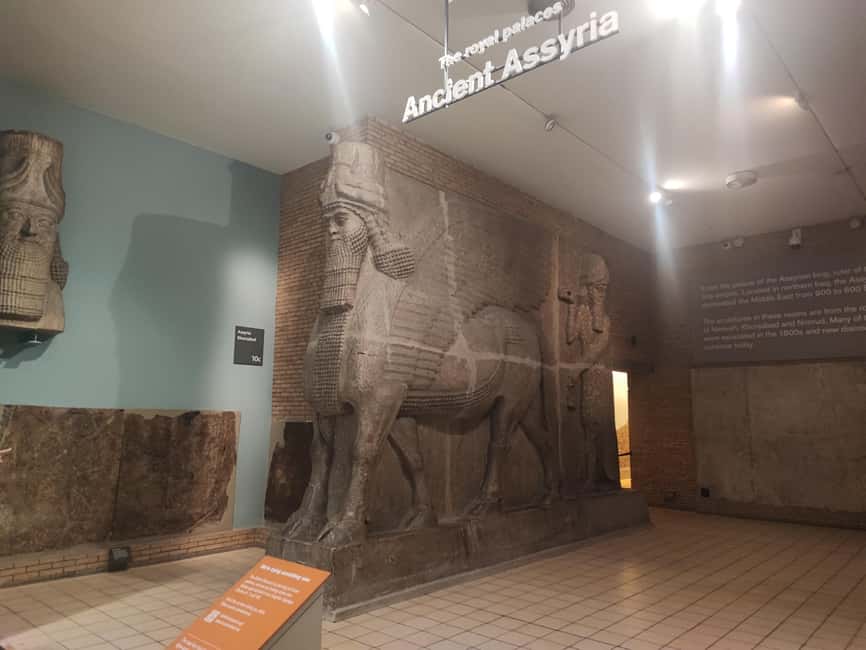
The tour’s treatment of tragic love and fate gives the collection an emotional thread. Ancient and medieval artists were not only recording events. They were presenting fear, desire, loss, loyalty, and the consequences of human choices.
This can be one of the most accessible parts of the visit. You do not need to recognize every figure or understand every myth to respond to a story about love ending badly. The guide helps you see how earlier audiences may have reacted to these tales and why similar themes keep returning in art.
I appreciate the inclusion of this subject because it prevents the tour from becoming too academic. It brings the museum back to ordinary human feelings. Even Cupid might need a tissue after some of these stories.
The exact objects used for this part of the route are not specified, so you should expect the guide to shape the discussion around selected works on the day. That flexibility is a strength in a private tour, though it also means the precise order and examples may vary.
Medieval Christian art and the childhood stories of Jesus
The final theme looks beyond the traditional accounts of Jesus Christ and considers alternative stories about his childhood. The description compares these lesser-known narratives to bonus chapters that did not make the final edition.
This is a lively way to approach medieval Christian art. You can examine how artists and storytellers filled gaps, created imaginative scenes, and gave audiences more details about a central religious figure.
The subject needs a respectful guide, and Richard’s reported enthusiasm is useful here. The goal is not to dismiss familiar beliefs. It is to show that religious art often reflects a wide range of stories, traditions, and popular interests.
For you, this stop may be most valuable if you enjoy the relationship between religion and storytelling. It also gives the tour a strong ending because it returns to the main question: How do people shape meaning through images and narratives?
What $74.08 per person really buys
At $74.08 per person, this is not the cheapest way to enter the British Museum. The museum itself is a major London institution, but the value of this experience comes from the private guide, the focused route, and the express security entrance.
For a group of two, the cost is easier to compare with a standard guided visit or a self-guided audio option. For four people, the price becomes more attractive because the private fee is spread across the group, while you still receive a guide dedicated to your party.
I would book it if you want a strong first look and do not want to spend hours deciding which gallery to visit next. I would skip it if your main goal is quiet, unhurried viewing of a few favorite collections. The tour’s two-hour length gives you structure, but it also means you will not have time to inspect everything in detail.
Food and drinks are not included, and they are not permitted inside the exhibition halls. Plan to eat before or after the visit rather than expecting a museum break during the route.
Who will get the most from this tour
This experience suits first-time visitors who want the major highlights explained in plain English. It also works well for couples, families, or a small group of friends who prefer to ask questions without joining a large party.
It is a good choice if you enjoy connections between art and big human themes. The route touches on beauty, language, technology, medicine, spirituality, love, death, and religion, so you get more than a list of dates and names.
The tour may be less suitable if you need step-free access or use a wheelchair, since it is marked as not suitable for wheelchair users. It also requires a moderate amount of walking and standing.
You should leave selfie sticks, sharp objects, weapons, alcohol, drugs, and explosive substances at home. Assistance dogs are allowed, but other pets are not.
How to plan your museum time
Choose a starting time that leaves room around the tour. The available start times depend on the date you select, so check before booking. Since the visit lasts about two hours and returns to the meeting point, you can add an independent museum visit afterward if you still have energy.
Bring a small bag only. Large backpacks are not allowed, and food and drinks cannot enter the exhibition halls. Photography without flash is permitted, so your phone or a small camera is fine.
Wear shoes suited to museum floors and a moderate amount of walking. The private format means you can ask for clarification, but it does not remove the need to keep moving between galleries.
The tour offers free cancellation up to 24 hours before the start time, and you can reserve now and pay later. That flexibility is useful when your London schedule is still changing.
Should you book the British Museum private tour?
Book this tour if you want a lively, efficient introduction to the British Museum, especially with a group of up to four people. The strongest reason to choose it is the guide’s role: Richard is praised for being friendly, informative, and enthusiastic, qualities that can turn a huge museum into a clear and enjoyable story.
Do not book it expecting to see every major gallery or spend long periods with individual objects. Two hours passes quickly, and the route is an overview.
For a first visit, I think the private format and focused themes make the $74.08 price reasonable, particularly when shared across four people. You get a practical starting point, a handful of world-famous objects, and enough context to decide what deserves a longer look later.
FAQ
How long does the British Museum private tour last?
The tour lasts about two hours.
How many people can join the private tour?
The private group can include up to four people.
What language is the tour conducted in?
The live tour is conducted in English.
Where does the tour begin?
It begins at the group entrance of the British Museum, Edward VII’s Entrance. The guide will hold a My London Guide sign.
Where does the tour end?
The activity ends back at the meeting point.
Is fast-track entry included?
Yes. The tour includes an express security check for entry to the British Museum.
Is hotel pickup included?
No. Hotel pickup and drop-off are not included.
Can I take photographs inside the museum?
Yes, photography is allowed without flash.
Can I bring a large backpack or food into the museum?
Large bags and backpacks are not allowed inside. Food and drinks are not permitted in the exhibition halls.
Is the tour suitable for wheelchair users?
The activity is marked as not suitable for wheelchair users. It also involves a moderate amount of walking.
Just added in London
- The Best of British Cooking Class & Dining Experience★ 5.0 · 1 review
- London: Live Comedy Show at Big Belly Bar and Comedy Club★ 4.5 · 80 reviews
- London: British Museum Highlights Guided Small Group Tour★ 4.9 · 113 reviews
- The Beatles London Walking Tour★ 4.2 · 147 reviews
- The Best Highlights of London Walking Tour & Boat Cruise★ 5.0 · 1 review
- The Authentic Walking Tour with Indian Tasting Meal★ 4.8 · 4 reviews
- Iconic London: Bard, Beatles, Bond & Baker Street★ 4.9 · 15 reviews
- London: Tate Britain Official Discovery Tour★ 4.7 · 7 reviews
British Museum Tours, compared.
British Museum Audio Tour & Priority Entrance Ticket
Read our review →
British Museum Archaeology Course and Guided Tour
Read our review →
British Museum Highlights Guided Small Group Tour
Read our review →
British Museum Guided Tour with Priority Entrance
Read our review →Other lists this tour turns up in