
REVIEW · BRITISH MUSEUM TOURS
London: British Museum Private Tour for Kids & Families
Ancient history can be fun for kids. This private British Museum tour turns a huge collection into a 2.5-hour family adventure, with stories about Egypt, Greece, Rome, and Britain that give young minds a reason to look twice. I especially like the dedicated guide and the focus on famous objects such as the Rosetta Stone and Ginger the mummy. The main drawback is the price: at $312 per person, this is a serious splurge for a short museum visit.
I also like the clear age guidance. The tour is designed for children older than 6, while younger children are welcome but may struggle to stay engaged. You get museum admission and a private English-speaking guide, but no food, drinks, or hotel transport, so you need to handle those parts yourself.
In This Review
- Key points at a glance
- Why a private British Museum tour helps families
- Meeting at Great Russell Street
- The Rosetta Stone and the power of translation
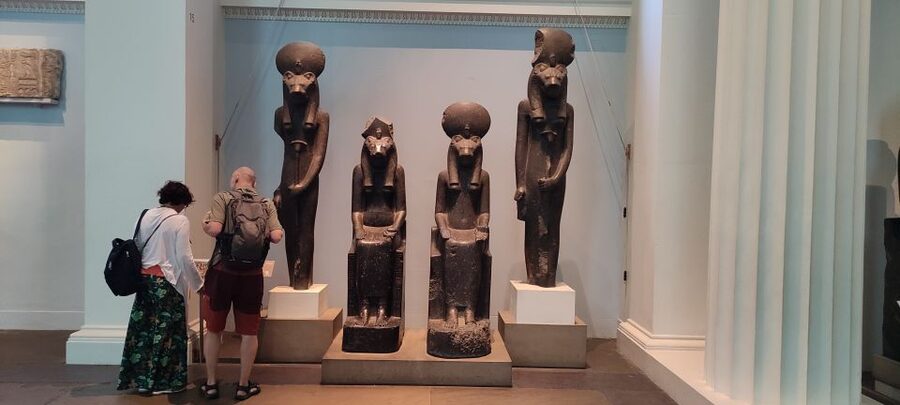
- Ancient Egypt and Ginger the mummy
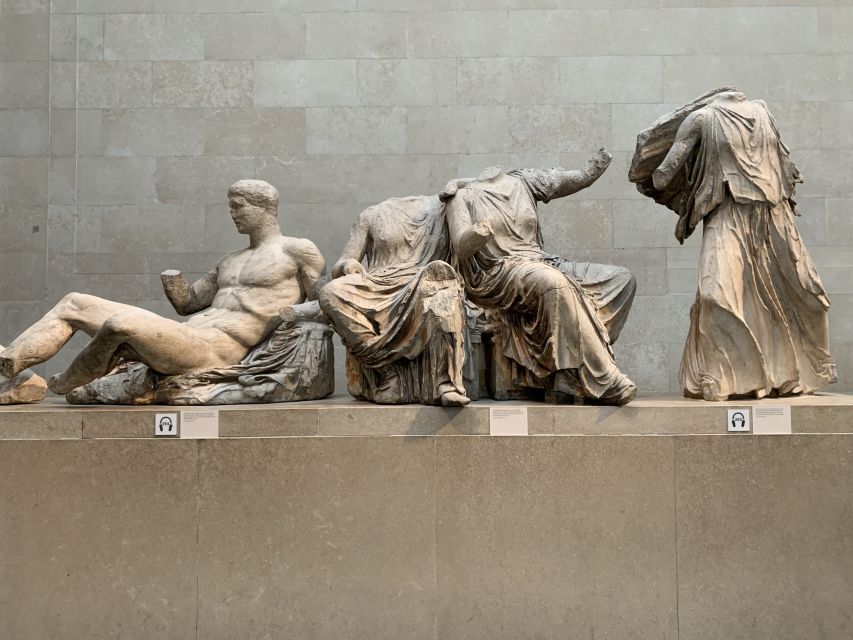
- The Parthenon sculptures from Athens
- Sutton Hoo and Britain’s buried treasure
- Vindolanda Tablets and the voices of ordinary people
- Lewis Chessmen and the fun of a puzzle
- How the guide keeps children involved
- Is $312 per person good value?
- Who should book this museum visit?
- Should you book the British Museum family tour?
- FAQ
- How long is the British Museum private family tour?
- What age group is the tour designed for?
- Are museum entrance tickets included?
- Is this a private tour?
- Where do you meet the guide?
- Can you cancel the tour for a full refund?
Key points at a glance
- A 2.5-hour private visit: Your group gets its own guide, which allows the pace and explanations to suit your children.
- About 6,000 years of human civilization: The route brings together ancient Egypt, Greece, and important finds from Britain.
- Famous objects with strong storytelling potential: Expect the Rosetta Stone, Parthenon sculptures, Ginger the mummy, Sutton Hoo treasure, Vindolanda Tablets, and Lewis Chessmen.
- Best for children over 6: The guide uses anecdotes and family-friendly stories, but very young children may not get much from the visit.
- Separate entrance for the tour: The experience includes museum tickets and access through a separate entrance, although you should still follow the meeting instructions carefully.
- Flexible booking terms: You can cancel up to 24 hours before the tour for a full refund and reserve without paying immediately.
Why a private British Museum tour helps families
The British Museum is not a small, tidy collection that you can cover room by room. It contains more than 8 million objects, documenting human culture from its beginnings. That scale is thrilling for an adult with a clear plan, but it can feel like a maze to a child who has already walked several miles around London.
A private guide solves part of that problem. Instead of asking your family to choose between thousands of objects, the tour brings you to selected pieces and explains why they matter. You can ask questions, slow down when something catches your child’s eye, or move on when attention starts to fade.
I like this format more than a standard museum visit for families with limited time. In 2.5 hours, you get a focused introduction rather than a tiring attempt to see everything. You will not cover the full museum, and that is a good thing. Even adults would struggle to absorb the entire collection in one afternoon.
The guide speaks English and is described as kid-friendly. That matters here. Children tend to remember a strange story, a mystery, or a surprising detail more easily than a list of dates. The tour aims to make each object part of a larger story about people, power, trade, belief, and daily life.
More British Museum visits:
- London: British Museum Guided Tour
★ 4.3 · 1,182 reviews - London: Tour of the British Museum
★ 4.1 · 678 reviews - London: British Museum Audio Tour & Priority Entrance Ticket
★ 4.5 · 631 reviews
Meeting at Great Russell Street
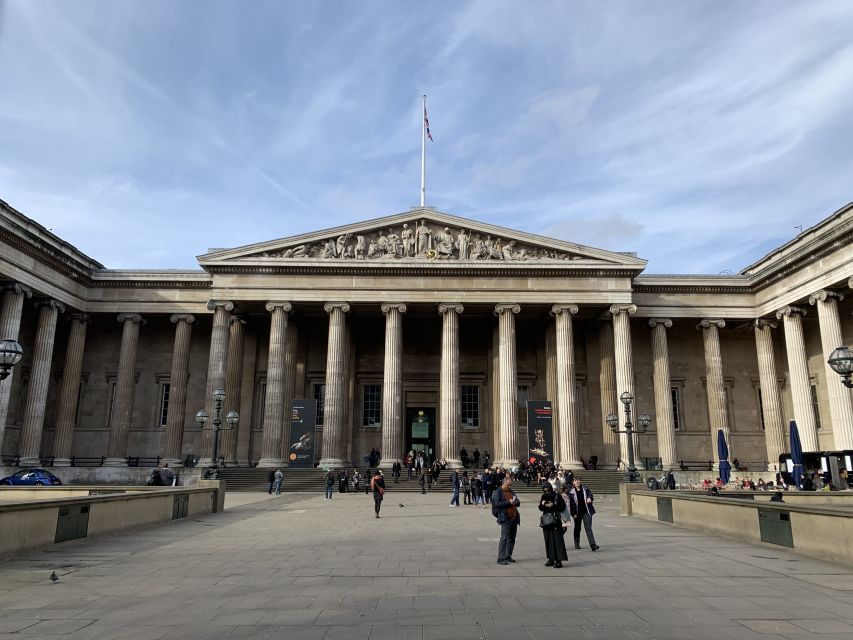
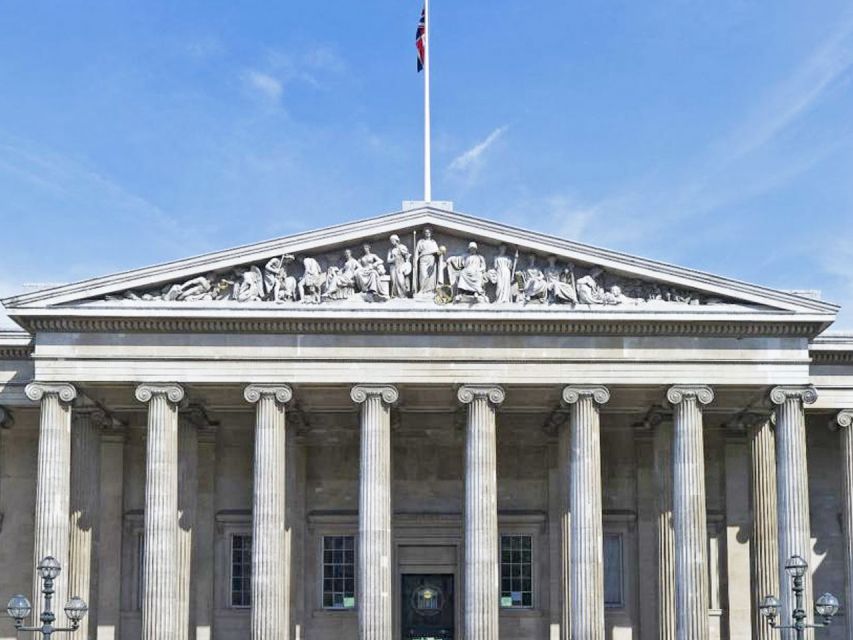
You meet outside the main gate of the British Museum, opposite the Museum Tavern and next to Starbucks at 49 Great Russell Street, Bloomsbury, London WC1B 3BA. The guide will hold a sign with your name.
That meeting point is easy to identify, but Great Russell Street can be busy with pedestrians. I would arrive a little early, especially with children, so you are not trying to find the guide while watching bags, coats, and excited young museum-goers.
Hotel pickup and drop-off are not included. Plan to reach the museum on your own and allow extra time for London traffic or a delayed Tube journey. The tour begins outside, so do not head straight inside and assume the guide will find you in the galleries.
The experience includes museum entrance tickets and access through a separate entrance. That can save time and spare you from sorting out admission after you arrive, though the tour details do not promise that every queue will disappear. Follow the meeting instructions first.
The Rosetta Stone and the power of translation
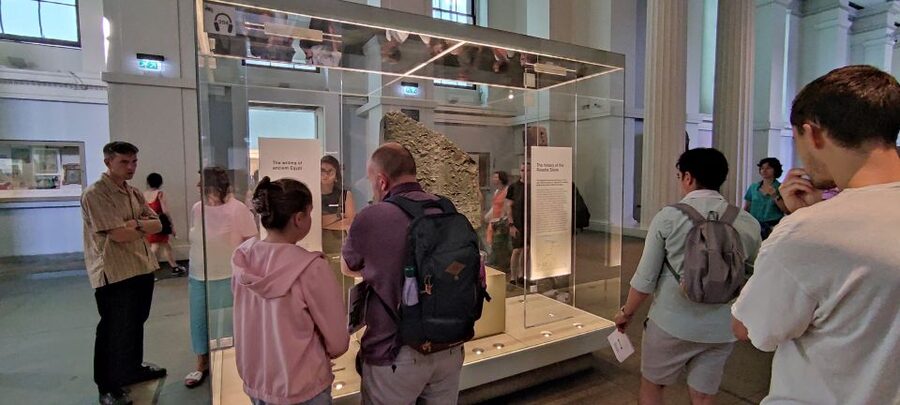
The Rosetta Stone is one of the strongest opening points for a family discussion. It helped scholars understand Egyptian hieroglyphs because the same decree appears in different scripts. For a child, the basic idea is clear and memorable: one stone helped people read a writing system that had been silent for centuries.
A guide can turn this from a display case into a puzzle. You can think about what happens when one message is written in several languages, why scholars needed a known script, and how a single object can change our understanding of an entire civilization.
The museum can be crowded around famous pieces, so a private guide is useful for keeping the group together and making sure children can see. Do not expect a long, quiet look with no people around. This is one of the museum’s best-known objects, and it draws attention for good reason.
Ancient Egypt and Ginger the mummy
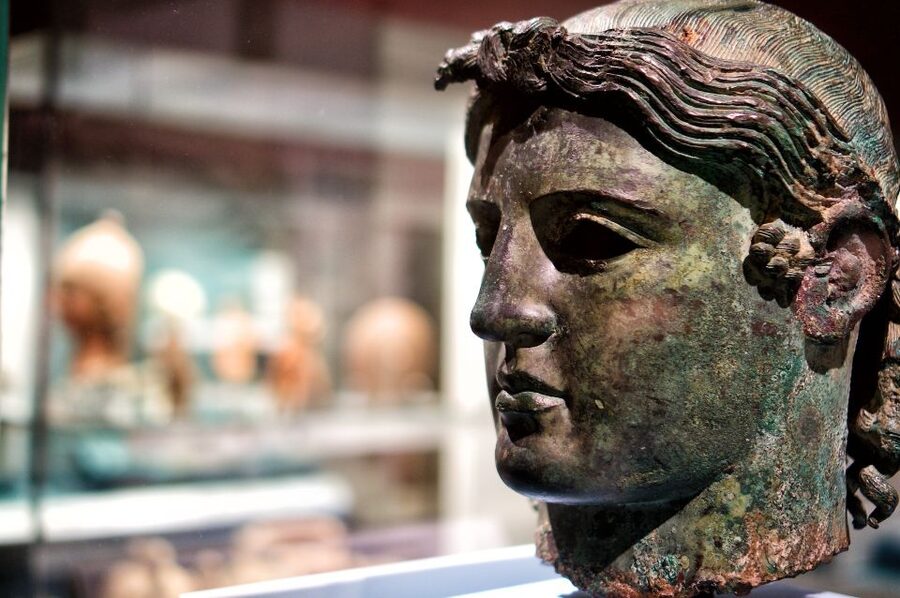
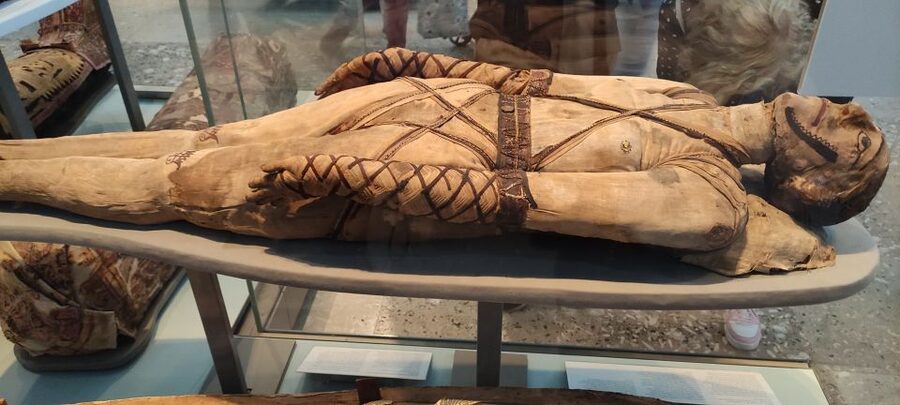
The Egyptian displays offer the kind of visual material that often works well with children. Mummies, carved figures, writing, and burial objects give you immediate subjects to discuss. Ginger, the famous Egyptian mummy, is especially memorable because the preserved human remains make the ancient past feel close and real.
This section may suit children who like mysteries, science, or questions about how people lived and died. It can also raise sensitive questions. Parents know their own children best, so you may want to prepare younger visitors for the fact that they will see a real ancient mummy, not a movie prop.
The guide’s job is to give the display context without turning the visit into a lecture. The family-friendly approach is important here. A good anecdote can help children understand burial customs and ancient beliefs without getting lost in difficult terminology.
You should also expect a wide range of objects rather than one single attraction. Ginger is a memorable focus, but the value of the Egyptian galleries comes from seeing how writing, art, religion, and everyday life fit together.
More Museum Tours in London:
- London: Chelsea Football Club Stadium and Museum Tour
★ 4.8 · 4,576 reviews - London Transport Museum Entrance Ticket
★ 4.5 · 1,323 reviews - London: Jack the Ripper Museum Tickets
★ 4.2 · 894 reviews - Afternoon Tea at the British Museum
★ 4.2 · 511 reviews
The Parthenon sculptures from Athens
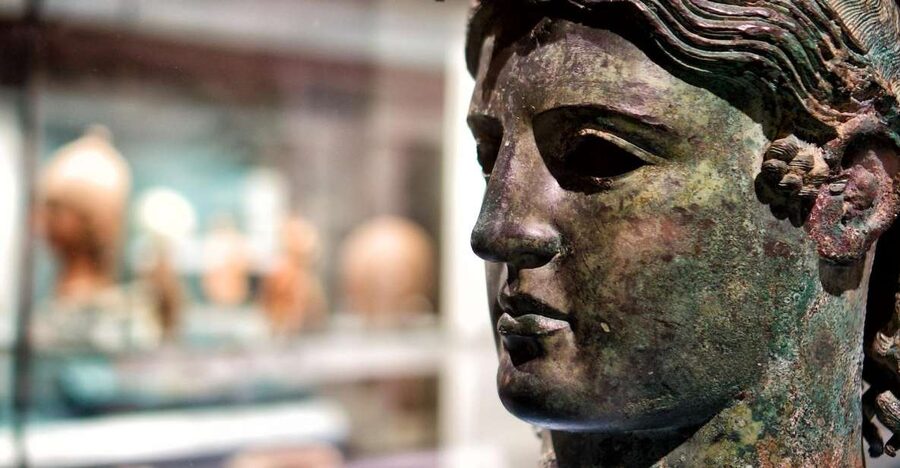
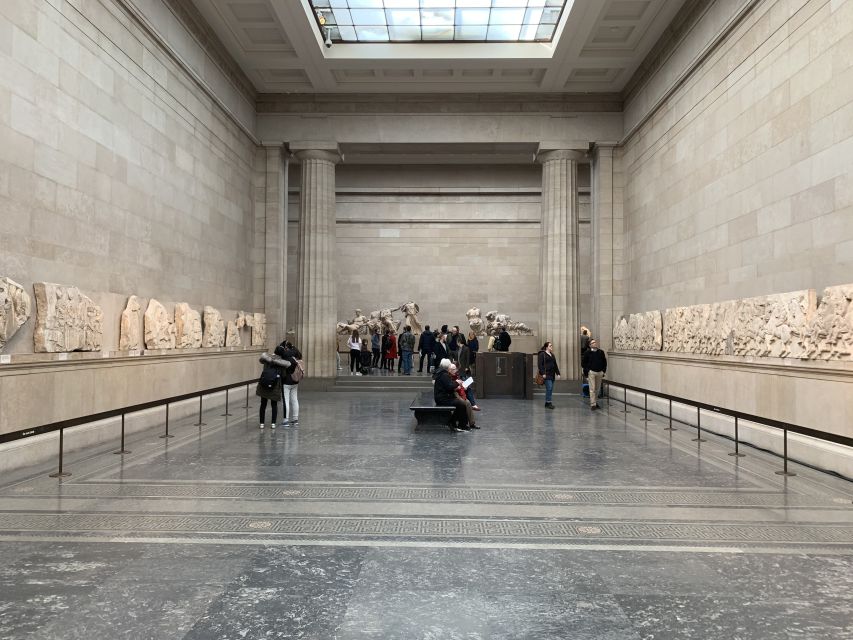
The Parthenon sculptures introduce ancient Greece through large-scale art and a major cultural debate. The pieces came from the Parthenon in Athens, and their presence in London gives the guide a chance to explain both the beauty of the sculptures and the questions surrounding how famous antiquities reached modern museums.
For children, the easiest entry point may be the people, animals, clothing, and movement shown in the carvings. You can ask them what they notice before offering too much explanation. A child who studies one figure closely may get more from the visit than one who is hurried through a room full of marble.
This is also a useful place to show that museums are not just rooms of old things. They raise questions about ownership, preservation, and who gets to tell the story of the past. The tour is short, so you should not expect a full debate about museum ethics, but the sculptures offer a natural starting point.
The size of the pieces can help maintain attention. After smaller objects and display cases, large marble works give the eyes a change of pace.
Sutton Hoo and Britain’s buried treasure
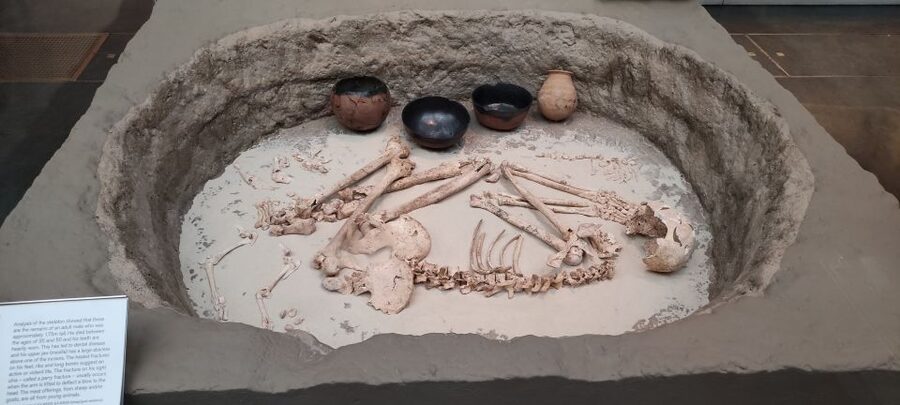
Sutton Hoo brings the story closer to Britain. The treasure comes from an Anglo-Saxon burial site and gives children a chance to picture a buried ship, a powerful leader, and the objects placed with the dead.
The appeal is partly visual. Metalwork and ceremonial objects can prompt questions about wealth, status, craftsmanship, and long-distance connections. Children often respond well to the idea that an important discovery was hidden in the ground and later brought to light.
The tour’s broad timeline is helpful here. You are not only jumping between disconnected ancient cultures. You are moving through different periods and seeing how human societies expressed power and belief. Sutton Hoo gives the British part of the collection a clear place within that wider story.
Do not expect the entire Sutton Hoo collection to receive the same amount of time as the museum’s biggest attractions. A 2.5-hour tour must make choices. The benefit is that the guide can select the pieces most likely to hold your family’s attention.
Vindolanda Tablets and the voices of ordinary people
The Vindolanda Tablets offer a different kind of historical evidence. Instead of grand sculpture or royal treasure, these writing tablets preserve everyday messages from Roman Britain. That makes them useful for children because they connect a distant period with familiar acts such as writing notes, making requests, and keeping in touch.
The tablets can help you explain that history is not only about kings and battles. Small personal records can reveal how people worked, communicated, and managed daily life. A guide using anecdotes can make this material easier to picture.
This part of the tour may appeal most to children who enjoy codes, writing, or small details. The objects are not as visually dramatic as the Parthenon sculptures or a mummy, so the storytelling matters. That is one reason a family guide can make a real difference.
Lewis Chessmen and the fun of a puzzle
The Lewis Chessmen are among the most naturally engaging objects for children. They are small carved chess pieces discovered on the Isle of Lewis, and their faces and poses give them character. Even children who know little about medieval history may recognize the game and start asking how the pieces were made or who used them.
This stop can provide a lighter moment after the more serious Egyptian displays. You can look at the figures as both game pieces and works of art. Their expressions invite close inspection, and a guide can use them to talk about play, status, craftsmanship, and the movement of objects across the medieval world.
The chessmen also show why a museum tour should mix grand subjects with human-scale objects. A child may remember one small carved face long after forgetting a complicated date.
How the guide keeps children involved
The supplied experience information stresses anecdotes and stories aimed at children. That is the heart of the tour. The guide is not simply meant to point at objects and repeat labels. The goal is to connect each piece to a question, a person, or a surprising event.
One earlier family described the dedicated guide as holding their attention through stories and family-focused details. That praise points to the most important quality of the experience: presentation. The British Museum already has remarkable objects. The guide earns the fee by helping your children notice and understand them.
A private group also gives you room to manage your own family. If one child has a question, you do not need to worry about interrupting a large public group. If attention drops, the guide can adjust the pace within the limits of the planned route.
Still, a guide cannot make every child love every gallery. The museum is large, the visit lasts 2.5 hours, and some objects require patience. Bring realistic expectations. This is an active learning experience, not an entertainment show.
Is $312 per person good value?
At $312 per person, this tour is expensive. The value depends heavily on your group size, the age of your children, and how much you want expert help inside the museum. Admission tickets are included, but the main purchase is the private guide and the time saved by following a focused route.
For a family that might otherwise wander through the museum without a plan, the service can be worthwhile. You get a private English-speaking guide, a child-friendly approach, museum entry, and a structured visit that covers major objects in a short period.
The cost is harder to justify for older children who already enjoy reading museum labels or for adults who are comfortable planning their own route. You could visit the British Museum independently and choose a few highlights at a much lower cost, but you would lose the tailored storytelling and private attention.
The tour received an overall rating of 3.9 from seven ratings, with two especially positive comments praising the family guide and the way stories held attention. That is encouraging, but the small number of ratings means you should not treat the score as a guarantee. The strongest evidence of value is the tour design itself: private, focused, and built around family engagement.
Who should book this museum visit?
I would choose this for families with children older than 6 who want a first introduction to the British Museum without trying to manage the whole collection alone. It is also a good fit if you have only one London morning or afternoon available and want a clear route through major objects.
It suits children who respond to stories, mysteries, treasure, ancient writing, and unusual objects. The Rosetta Stone, Ginger, Sutton Hoo, Vindolanda Tablets, Lewis Chessmen, and Parthenon sculptures provide plenty of variety.
I would think twice if your children are under 5. Younger children are allowed, and admission is free for those under 5, but the experience information warns that they may be difficult to engage. A toddler may enjoy the movement and sights for a while, but the explanations are aimed at older children.
The tour is wheelchair accessible, which makes it a practical option for families who need that feature. Meals, drinks, and transport are not included, so arrange those around the museum visit.
Should you book the British Museum family tour?
Book it if you want a private guide to turn a vast museum into a manageable story, and if the cost fits your London budget. The focused route, family anecdotes, famous objects, and private format are the real strengths.
Skip it if you are happy to explore independently, your children are too young for sustained museum attention, or $312 per person feels too high for 2.5 hours. For the right family, this can be a memorable introduction to world culture. For the wrong age group, it may become an expensive walk past glass cases.
FAQ
How long is the British Museum private family tour?
The tour lasts 2.5 hours.
What age group is the tour designed for?
It is tailored for families with children older than 6. Younger children are welcome, but they may be harder to engage.
Are museum entrance tickets included?
Yes. Museum entrance tickets are included in the tour price.
Is this a private tour?
Yes. The experience is for a private group with a live English-speaking guide.
Where do you meet the guide?
Meet at the main gate of the British Museum, opposite the Museum Tavern and next to Starbucks at 49 Great Russell Street, Bloomsbury, Greater London, WC1B 3BA. The guide will hold a sign with your name.
Can you cancel the tour for a full refund?
Yes. You can cancel up to 24 hours in advance for a full refund. You can also reserve the tour and pay later.
Just added in London
- The Best of British Cooking Class & Dining Experience★ 5.0 · 1 review
- London: Live Comedy Show at Big Belly Bar and Comedy Club★ 4.5 · 80 reviews
- London: British Museum Highlights Guided Small Group Tour★ 4.9 · 113 reviews
- The Best Highlights of London Walking Tour & Boat Cruise★ 5.0 · 1 review
- The Beatles London Walking Tour★ 4.2 · 147 reviews
- The Authentic Walking Tour with Indian Tasting Meal★ 4.8 · 4 reviews
- Iconic London: Bard, Beatles, Bond & Baker Street★ 4.9 · 15 reviews
- London: Tate Britain Official Discovery Tour★ 4.7 · 7 reviews
British Museum Tours, compared.


British Museum Audio Tour & Priority Entrance Ticket
Read our review →
British Museum Archaeology Course and Guided Tour
Read our review →
British Museum Highlights Guided Small Group Tour
Read our review →
British Museum Guided Tour with Priority Entrance
Read our review →Other lists this tour turns up in