
REVIEW · BRITISH MUSEUM TOURS
London: British Museum Tour with Archaeologist Guide
A huge museum needs a smart route. This 2.5-hour British Museum tour gives you one, led by archaeologist Rossa, whose storytelling brings famous objects and lesser-known pieces into focus. I like the careful selection of major exhibits, and I like that the guide explains how each object fits into its time, culture, and discovery. The main drawback is the museum crowd, which can make it hard to hear and move around, especially near the most popular displays.
At $58 per person, the tour is a sensible choice if you have limited time or feel daunted by the British Museum’s size. It includes museum entry and a separate entrance for the group. You will not see every gallery, but you should leave with a clear sense of the museum’s greatest stories and a plan for exploring more on your own.
In This Review
- Key points to know before you book
- Meeting at Russell Square Station at 9:45 a.m.
- Entering the British Museum through a separate entrance
- How the 2.5-hour route works
- The Rosetta Stone and the work of deciphering Egypt
- Assyrian palaces and the power of carved stone
- The Parthenon Marbles and a complicated legacy
- Lewis Chessmen and the Viking Age
- Sutton Hoo and the mystery of King Raedwald
- Aztec treasures and Easter Island’s Moai
- Why Rossa’s storytelling matters
- Is $58 good value for this museum tour?
- Who should book this experience?
- Should you book the British Museum archaeologist tour?
- FAQ
- Where does the British Museum tour meet?
- What time does the group leave Russell Square?
- How long does the tour last?
- Is the walk from Russell Square to the museum long?
- Is British Museum entry included?
- Which language is the tour offered in?
- Is the tour wheelchair accessible?
- Can I bring luggage or a large bag?
- What should I bring?
- Can I cancel for a refund?
Key points to know before you book
- A five-minute walk starts the experience: Meet at Russell Square Station, then walk with the guide to the museum.
- Rossa is the main reason to book: His archaeology background, strong speaking voice, and lively storytelling receive the highest praise.
- The route covers major world treasures: Expect the Rosetta Stone, Ramses II, the Parthenon Marbles, Assyrian palaces, Lewis Chessmen, and Sutton Hoo.
- The tour focuses on depth rather than quantity: You see fewer objects than you could on a quick self-guided sweep, but you get much more context.
- The 9:45 a.m. departure is firm: The group must leave promptly to meet its museum entry slot.
- Plan to explore afterward: The tour ends inside the museum, giving you a useful starting point for further visits to galleries that interest you.
Meeting at Russell Square Station at 9:45 a.m.
Your guide meets you at the entrance to Russell Square Station, holding a tablet displaying Spirit of Discovery. This is a practical meeting point near the British Museum, and the group walks about five minutes to the museum entrance.
Pay close attention to the start time. The group leaves promptly at 9:45 a.m. to meet its timed entry slot, and late arrivals cannot simply expect the tour to wait. If you are running late, call the tour provider for directions to the group.
The walk is short, but the meeting arrangement still favors careful planning. I would arrive early, allow time to find the correct station entrance, and avoid bringing anything that could slow you down at security.
Large bags and luggage are not allowed, and weapons or sharp objects are prohibited. Bring comfortable shoes and water. The British Museum is large, and two and a half hours on hard floors is enough to make sensible footwear matter.
More British Museum visits:
- London: British Museum Guided Tour
★ 4.3 · 1,182 reviews - London: Tour of the British Museum
★ 4.1 · 678 reviews - London: British Museum Audio Tour & Priority Entrance Ticket
★ 4.5 · 631 reviews
Entering the British Museum through a separate entrance
Entry to the British Museum is included in the price, along with the guided visit. The group uses a separate entrance, which can save time compared with joining the general admission flow.
That does not mean the museum will feel quiet. The British Museum’s most famous rooms can become crowded, and one review specifically noted how difficult it was to focus and move around among so many people. A guide with a clear voice is especially useful here.
Rossa receives repeated praise for speaking loudly and clearly enough to be heard in noisy galleries. His voice helps keep a small group together, which matters when people are stopping for photos, reading labels, or trying to get a better view of a famous object.
The tour is wheelchair accessible, though the museum’s crowds may still affect how easily you move between displays. If you use a wheelchair, it is sensible to confirm current access details when booking, since the tour data confirms accessibility but does not describe the exact route.
How the 2.5-hour route works
The British Museum contains far more than anyone can sensibly cover in one morning. The strength of this tour is its refusal to pretend otherwise.
Instead of racing past dozens of cases, the guide spends more time with a selected group of important objects. You hear what an artifact is, who made it, how it was used, why it mattered, and what questions remain around it.
That approach helps in two ways. First, you avoid the usual museum problem of seeing a famous object without understanding it. Second, you leave with a mental map of the building and a short list of galleries worth returning to.
The guide also adds personal choices to the standard highlights. That makes the route feel less like a checklist and more like an introduction to the way an archaeologist looks at objects. One guide used historical notes on an iPad, much like a professor preparing a lesson, and answered questions throughout the visit.
The only tradeoff is pace. Spending several minutes on one object means less time for others. One particularly positive assessment still noted that some explanations ran long, limiting the number of displays seen. If you want to cover as much floor space as possible, a self-guided visit may suit you better. If you want interpretation and stories, the slower pace is usually a fair exchange.
The Rosetta Stone and the work of deciphering Egypt
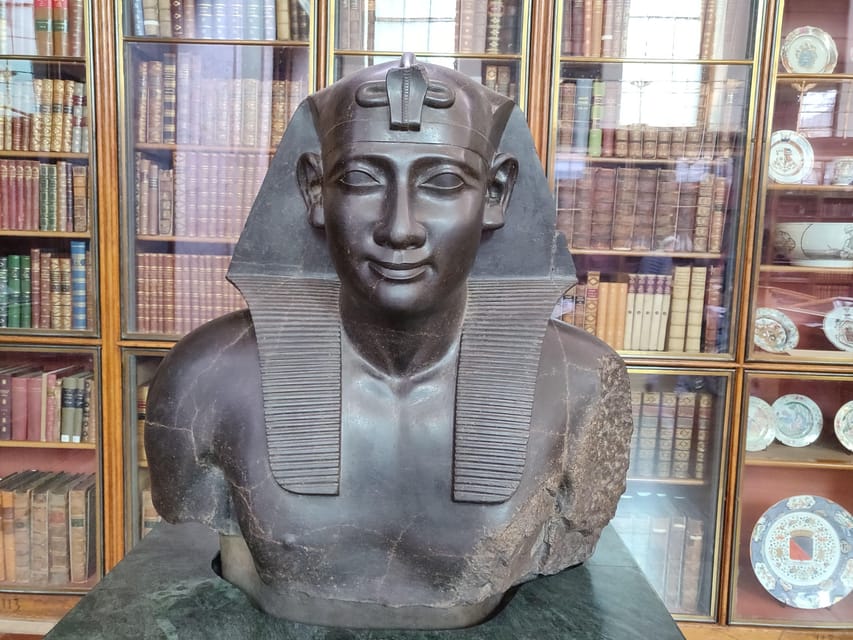
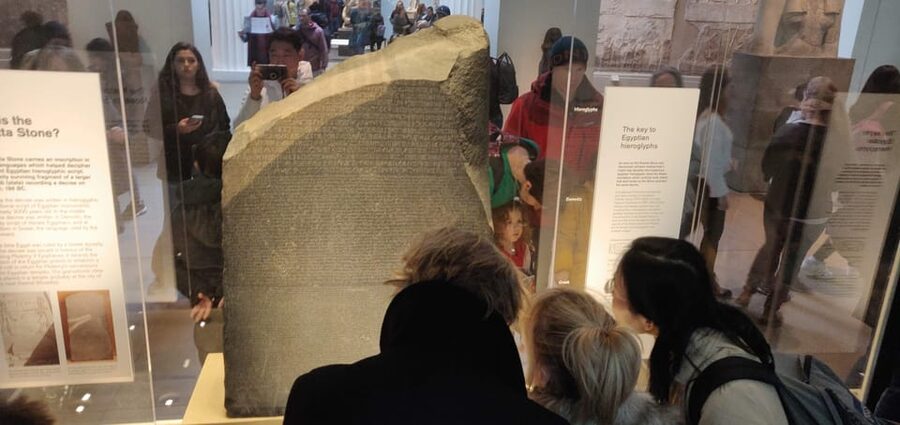
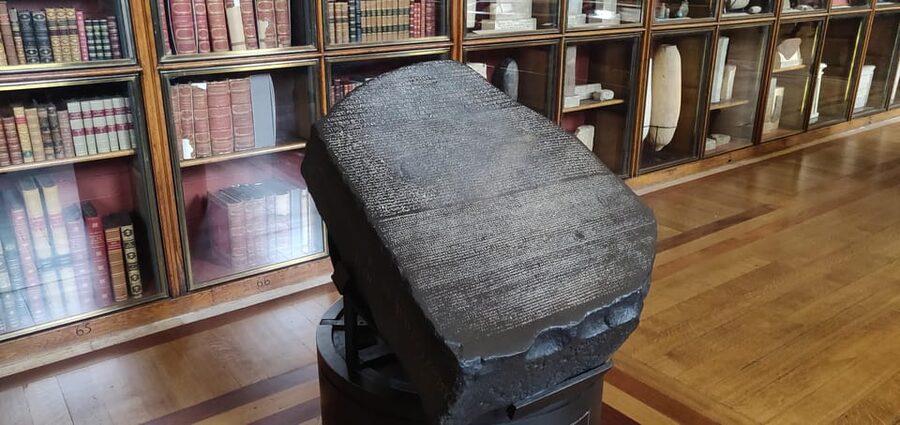
The Rosetta Stone is one of the tour’s essential stops. It is famous because its inscriptions helped scholars understand Egyptian hieroglyphs, but simply seeing the stone tells you very little without explanation.
Your guide can show how the same decree was written in different scripts and why that mattered to the people trying to read ancient Egyptian. The object becomes more than a large, dark slab behind glass. It becomes evidence of the painstaking work needed to connect languages and recover meaning from the past.
The Egyptian galleries also include the colossal statue of Pharaoh Ramses II. Its scale gives you an immediate sense of royal power and public image. Rossa’s style, according to the detailed feedback, links the object to the period and to the people connected with its discovery, rather than stopping at a list of dates.
This is where an archaeologist guide adds real value. Labels can tell you the name of a pharaoh or an object. A good explanation shows how the object functioned in society and what it reveals about the people who made it.
More Museum Tours in London:
- London: Chelsea Football Club Stadium and Museum Tour
★ 4.8 · 4,576 reviews - London Transport Museum Entrance Ticket
★ 4.5 · 1,323 reviews - London: Jack the Ripper Museum Tickets
★ 4.2 · 894 reviews - Afternoon Tea at the British Museum
★ 4.2 · 511 reviews
Assyrian palaces and the power of carved stone
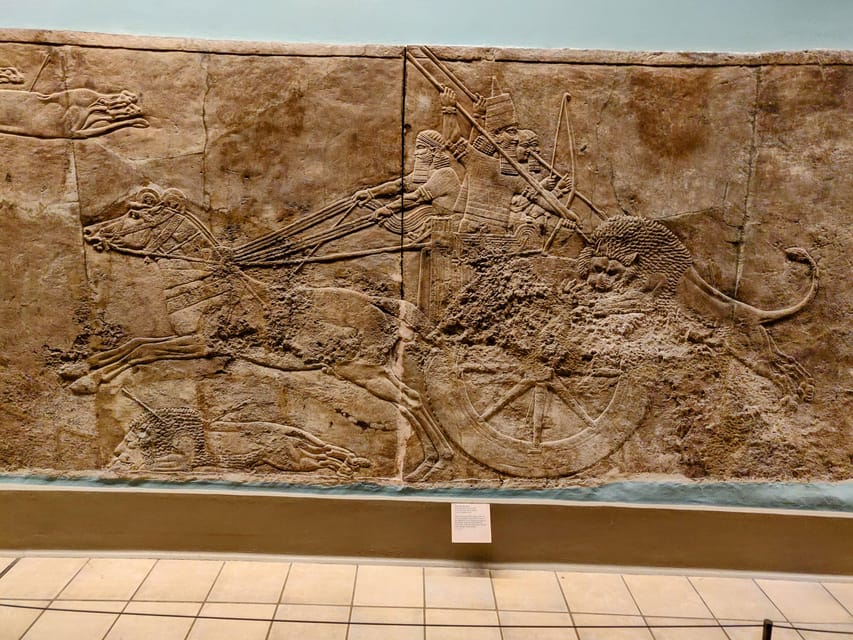
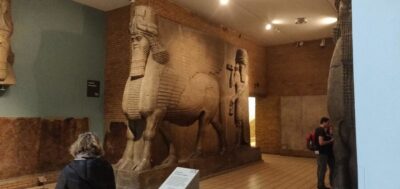
The Assyrian galleries offer a change of mood. Instead of a single celebrated object, you encounter huge reliefs and palace sculpture that project the strength of an empire.
The towering palace displays are visually impressive, but they can also be hard to read without guidance. A guide can direct your attention to the details in the carvings, explain their political purpose, and connect the scenes to the wider story of Assyrian rule.
This is a recurring strength of the tour. Rossa does not treat archaeology as a collection of isolated facts. He uses the objects to discuss power, belief, conflict, craftsmanship, and the way later generations discovered and interpreted ancient remains.
The group may pause at fewer panels than you would on your own. That is worth remembering if Assyrian art is your main reason for visiting. Still, the focused treatment helps you remember what you saw instead of leaving with a blur of stone figures and unfamiliar names.
The Parthenon Marbles and a complicated legacy
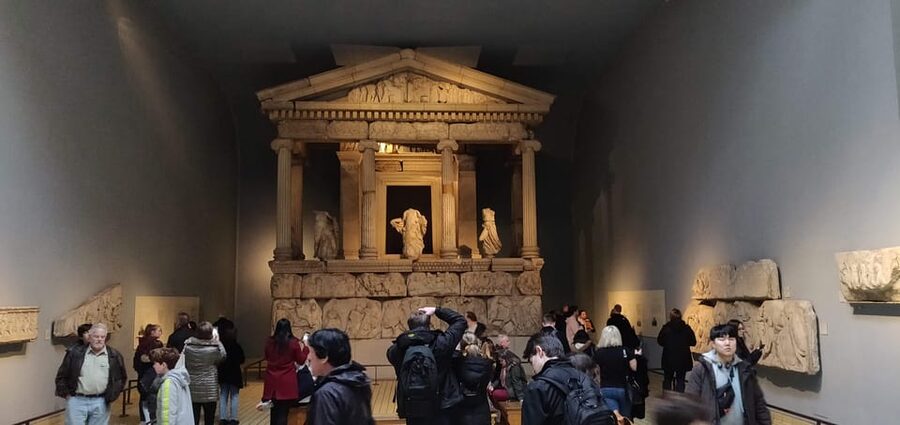
The Parthenon Marbles are among the museum’s most famous exhibits. They offer a chance to look closely at Greek sculpture, architecture, and religious life, but they also raise serious questions about ownership and removal.
The tour presents the marbles as works of art and as part of a larger story involving the Parthenon, ancient Athens, later damage, and their journey to Britain. That wider setting is important. Without it, you are left admiring fragments without understanding why their presence in London remains debated.
The guide’s role here is not simply to point at the most photographed objects. It is to help you see the craftsmanship, the original purpose of the sculptures, and the modern arguments surrounding them.
Crowding can be a problem in this gallery. You may need to wait for a clear view, and it may be difficult to stand exactly where you want. A guide who knows the room can still help you use your time well.
Lewis Chessmen and the Viking Age
The Lewis Chessmen provide one of the tour’s more memorable stops. These small carved figures are linked with the Viking Age and offer a very different experience from the monumental Egyptian and Assyrian pieces.
Their size makes them easy to miss in a crowded museum. They are not grand statues, but their faces, poses, and individual character make them unusually engaging. A strong guide can turn them into a doorway to everyday life, trade, travel, games, and social rank during the medieval period.
This is also a good example of why you should not judge a museum by size alone. The British Museum contains objects that are visually overwhelming and others that reward close attention. Rossa’s personal selections help balance the famous with the unexpected.
Families may especially appreciate this section. The guide’s storytelling kept children aged 12 and 14 engaged during one tour, and teenagers were also praised as part of another family visit. The subject matter changes often enough to keep the route moving, even when the explanations take time.
Sutton Hoo and the mystery of King Raedwald
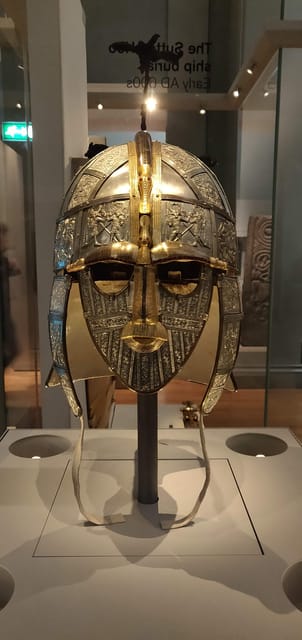
The Sutton Hoo hoard takes you into the early medieval world of Britain. It is linked with the mysterious King Raedwald and offers a rare look at the wealth, beliefs, and connections of a powerful ruler.
The display is filled with objects that feel personal as well as grand. Treasure, burial customs, craftsmanship, and questions about identity all come together here. The famous helmet is an obvious draw, but the wider collection matters because it shows that early medieval Britain was not a simple period of decline between the Roman and later medieval worlds.
The guide also discusses the people involved in finding and interpreting the hoard. That human side gives the display extra weight. Archaeology is not only about old things. It is also about the choices, methods, and assumptions used to understand them.
If you enjoy stories about discoveries, buried wealth, and unresolved questions, Sutton Hoo may be one of your favorite sections. It is also a useful reminder that the museum’s British collections deserve as much attention as its Egyptian and Greek galleries.
Aztec treasures and Easter Island’s Moai
The route reaches beyond Europe and the Mediterranean, with displays connected to the Aztec Empire and the Moai statues of Easter Island.
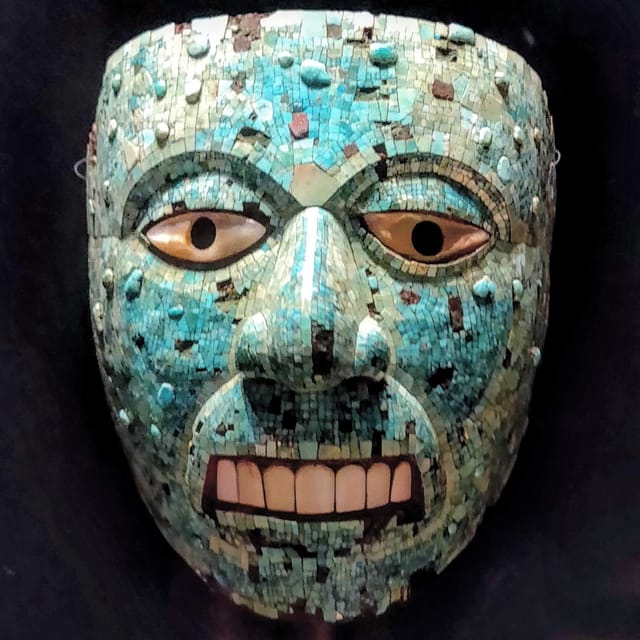
The Aztec material introduces another major civilization and gives the tour a wider geographic range. You may see objects associated with royal power and the empire’s visual culture, including items described as crown jewels.
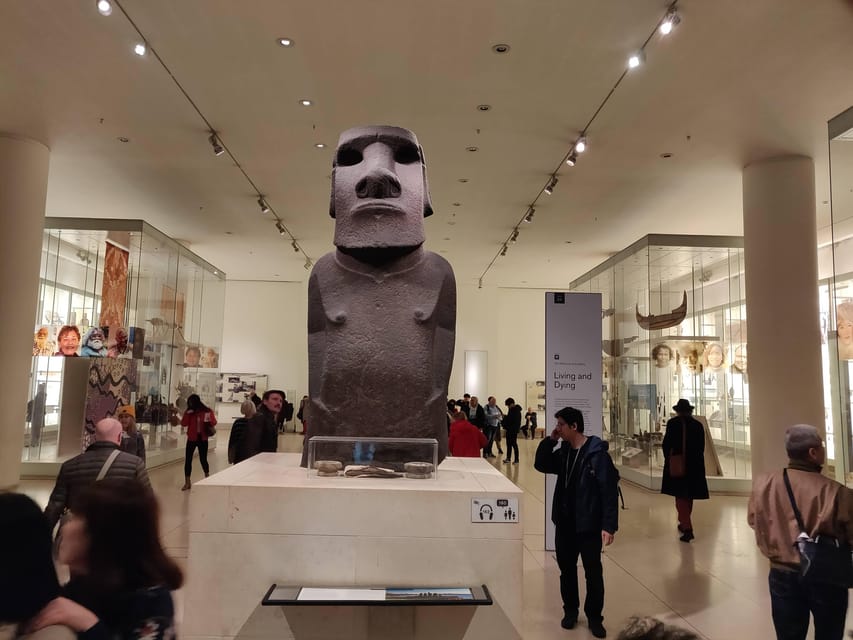
The Moai display offers a different kind of puzzle. The statues are instantly recognizable, but the important questions concern why they were made, how they related to community and belief, and what happened to the society that created them.
These sections help prevent the tour from becoming a narrow march through ancient Egypt, Greece, and Rome. You get a broader look at how different societies represented authority, religion, memory, and human identity.
The exact amount of time spent at each section can vary, since the tour gives more attention to selected objects. If one of these civilizations is your priority, tell the guide early and ask how it fits into the morning’s route.
Why Rossa’s storytelling matters
The highest praise for this experience goes to Rossa. His archaeology background is important, but his ability to tell a story is what makes the expertise useful.
He connects objects to people, places, discoveries, and unresolved questions. He also welcomes questions, which helps turn a lecture into a conversation. Several assessments described his enthusiasm, friendly manner, preparation, and ability to keep both adults and teenagers interested.
A clear voice makes a practical difference. In a crowded gallery, a soft-spoken guide can become background noise. Rossa’s volume and presence help the group stay together without relying on constant visual signals.
His focus on a smaller number of important pieces also suits first-time visitors. The museum can feel overwhelming, especially if you arrive with a long list of famous objects. The guide narrows the field and gives you a way to understand what you are seeing.
The tour is not perfect for everyone. If you prefer to read every label, linger alone, or move quickly between galleries, a guided route can feel restrictive. Some explanations may also feel lengthy if you would rather see more objects. But for most people facing their first British Museum visit, the structure is a major advantage.
Is $58 good value for this museum tour?
At $58, you are paying for entry, a two-and-a-half-hour tour, and an archaeologist guide. The value rests mainly in the interpretation, not in the ticket alone.
The British Museum is a place where you could spend hours wandering and still miss major sections. Without a plan, you may spend too much time finding the famous displays, reading short labels, and walking past objects whose importance is not obvious.
This tour gives you a focused route and the background needed to make the objects memorable. One detailed assessment described it as particularly useful for a limited schedule, while another called it an affordable first-class experience. Those comments make sense if you want to see the major highlights without giving the entire day to the museum.
The price is harder to justify if you already know the collection well or intend to visit independently for a full day. In that case, you may prefer the freedom of choosing your own galleries. For a first visit, a family with teenagers, or anyone who wants history explained rather than labeled, the cost is reasonable.
After the tour, you can remain at the British Museum and revisit the areas that caught your attention. That extra time improves the value, since the guided portion gives you a starting point rather than closing the door on further exploring.
Who should book this experience?
I would recommend this tour to first-time British Museum visitors, couples with a limited morning, and families who want children to stay interested. It also suits anyone who enjoys archaeology but does not want to prepare a detailed museum plan in advance.
It is especially useful if you want the Rosetta Stone, Parthenon Marbles, Egyptian sculpture, Assyrian reliefs, Lewis Chessmen, and Sutton Hoo in one structured visit. You get a broad sweep across civilizations, with enough explanation to connect the objects.
You may want a different approach if your main goal is quiet contemplation, detailed study of one collection, or seeing the maximum number of galleries. The museum can be crowded, and the guide’s longer explanations may reduce the number of objects you reach.
Book only if you can arrive before the 9:45 a.m. departure. Wear comfortable shoes, bring water, and leave large luggage elsewhere. Cancellation is free up to 24 hours in advance, and you can reserve now and pay later, which helps if your London schedule is still changing.
Should you book the British Museum archaeologist tour?
Yes, if you want a clear route and strong storytelling. Rossa’s archaeology training, preparation, enthusiasm, and easy-to-hear voice give the tour more substance than a quick highlights walk.
The tour is best understood as an introduction, not a complete survey. You will see major treasures and hear meaningful stories, but you will not cover every gallery in the British Museum.
For $58, the experience earns its price through context, pacing, and expert guidance. If the museum’s size feels exciting rather than intimidating, go alone and take your time. If it feels like a very large puzzle, book this tour and let an archaeologist help you assemble the first few pieces.
FAQ
Where does the British Museum tour meet?
The guide meets you at the entrance of Russell Square Station. The guide holds a tablet displaying Spirit of Discovery.
What time does the group leave Russell Square?
The group leaves promptly at 9:45 a.m. to meet its entry slot at the museum.
How long does the tour last?
The guided British Museum visit lasts 2.5 hours.
Is the walk from Russell Square to the museum long?
No. The itinerary describes the walk as approximately five minutes on foot.
Is British Museum entry included?
Yes. Museum entry, the British Museum tour, and the archaeologist guide are included.
Which language is the tour offered in?
The live tour guide speaks English, and English is the listed tour language.
Is the tour wheelchair accessible?
Yes. The activity is listed as wheelchair accessible.
Can I bring luggage or a large bag?
No. Luggage and large bags are not allowed. Weapons and sharp objects are also prohibited.
What should I bring?
Bring comfortable shoes and water. The tour lasts 2.5 hours and takes place on foot inside the museum.
Can I cancel for a refund?
Yes. You can cancel up to 24 hours in advance for a full refund. You can also reserve now and pay later.
Just added in London
- The Best of British Cooking Class & Dining Experience★ 5.0 · 1 review
- London: Live Comedy Show at Big Belly Bar and Comedy Club★ 4.5 · 80 reviews
- London: British Museum Highlights Guided Small Group Tour★ 4.9 · 113 reviews
- The Beatles London Walking Tour★ 4.2 · 147 reviews
- The Best Highlights of London Walking Tour & Boat Cruise★ 5.0 · 1 review
- Iconic London: Bard, Beatles, Bond & Baker Street★ 4.9 · 15 reviews
- The Authentic Walking Tour with Indian Tasting Meal★ 4.8 · 4 reviews
- London: Tate Britain Official Discovery Tour★ 4.7 · 7 reviews
British Museum Tours, compared.

British Museum Audio Tour & Priority Entrance Ticket
Read our review →
British Museum Archaeology Course and Guided Tour
Read our review →
British Museum Highlights Guided Small Group Tour
Read our review →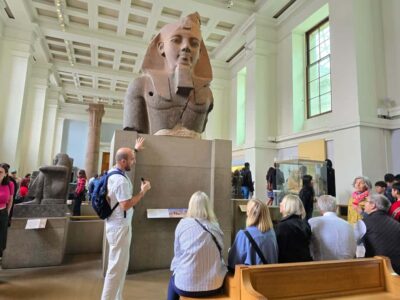
British Museum Guided Tour with Priority Entrance
Read our review →Other lists this tour turns up in