
REVIEW · BRITISH MUSEUM TOURS
London: British Museum with Expert Guide.
History gets a shortcut here. This 80-minute British Museum tour brings you to the Rosetta Stone, Egyptian mummies, the Parthenon sculptures, Assyrian lion hunt reliefs, and the Lewis Chessmen without leaving you to wander a huge museum alone. I like the clear focus on famous objects, and I like that guides such as Strabo add humor, context, and room for questions. The main drawback is the short running time, since the British Museum holds far more than any single tour can cover.
For $20.20 per person, this is a modest extra cost for help with one of London’s largest collections. You meet outside the Montague Place entrance by the two stone lions, then return to that meeting point at the end. The tour is in English, led by a certified guide, and wheelchair accessible, although some areas may be harder to navigate.
In This Review
- Key points at a glance
- Why a guide helps inside the British Museum
- Meeting at Montague Place and getting oriented
- The Rosetta Stone and the story of written language
- Egyptian mummies, coffins, and life after death
- The Parthenon sculptures and ancient Greek ambition
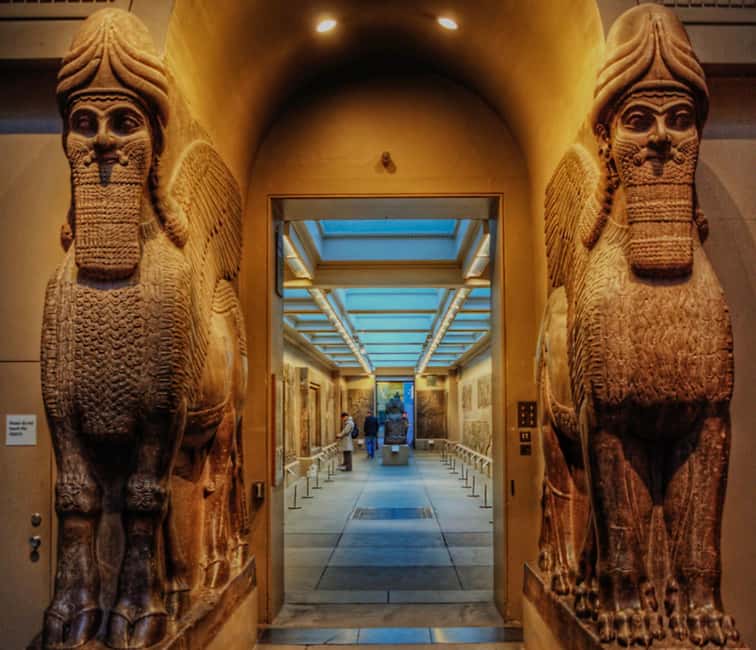
- Assyrian lion hunt reliefs and royal power
- The Lewis Chessmen and medieval life
- The guide’s style and the pace of the visit
- Price, access, and what happens afterward
- Who should book the British Museum tour?
- Should you book this 80-minute museum tour?
- FAQ
- How long does the British Museum tour last?
- Where is the meeting point?
- What language is the tour conducted in?
- Which objects are included on the tour?
- Is the British Museum tour wheelchair accessible?
- Can I take photographs inside the museum?
- Can I bring food or drinks into the galleries?
- Can I cancel the booking for a refund?
- Can I pay later?
Key points at a glance
- The Rosetta Stone comes first: See the object that helped scholars read ancient Egyptian hieroglyphs and understand why it matters.
- Five major collection highlights: The route includes Egyptian mummies, Parthenon sculptures, Assyrian lion hunt reliefs, and the Lewis Chessmen.
- An 80-minute time saver: The guide takes you to major exhibits quickly, useful when your London schedule is tight.
- Strong guide-led experience: Strabo has been praised for clear explanations, humor, patience, and easy answers to questions.
- Good value after the tour: You can remain in the museum and continue exploring at your own pace.
- Useful practical setup: Photography is allowed without flash, and food and drinks are not permitted in exhibition rooms.
Why a guide helps inside the British Museum
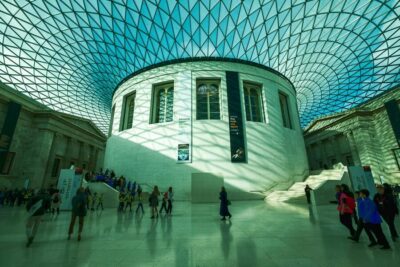
The British Museum can feel like several museums packed into one building. Its collection covers objects from ancient Egypt, Assyria, Greece, Scotland, and many other parts of the world. Without a plan, you may spend a great deal of time finding the famous pieces and very little time understanding them.
This tour gives you a route through some of the museum’s best-known objects. I like that approach for a first visit. You are not expected to absorb every gallery or remember every date. Instead, you get a short chain of stories about writing, religion, war, royal power, art, and daily life.
The guide’s role matters here. A good museum guide does more than point at a display and name it. The best explanations tell you what you are looking at, why it was made, and how it changed what people understood about the past.
That is where this experience earns its price. Several comments praise the guide’s ability to explain difficult subjects in an accessible way, answer questions without hesitation, and keep the tone light. Humor can be useful in a museum. It gives younger visitors a way into subjects that might otherwise feel like a list of dates and unfamiliar names.
Strabo is named as the experience provider, and the guide has received particular praise for being friendly, helpful, and easy to follow. One especially useful feature is the balance between explanation and freedom. After seeing the main pieces, you can stay inside the museum and look around on your own.
More British Museum visits:
- London: British Museum Guided Tour
★ 4.3 · 1,182 reviews - London: Tour of the British Museum
★ 4.1 · 678 reviews - London: British Museum Audio Tour & Priority Entrance Ticket
★ 4.5 · 631 reviews
Meeting at Montague Place and getting oriented
The meeting point is outside the Montague Place entrance, beside the two stone lions. The museum has two entrances, so pay attention to this detail when you arrive. It saves you from starting the tour by searching the building for the correct door.
The activity begins at the British Museum and ends back at the same meeting point. There is no separate transport between stops. The entire experience takes place inside the museum, which keeps the plan simple and makes this a useful option before or after other central London activities.
The tour lasts 80 minutes. That is long enough for a meaningful introduction, but not long enough to cover the museum in full. Think of it as a focused first look rather than a complete museum visit.
You should also allow time before the start to find the entrance and meet the guide. Starting times vary, so you need to check availability when booking. The activity is conducted in English.
The Rosetta Stone and the story of written language
The Rosetta Stone is the natural opening point for a tour of this kind. It is one of the museum’s most famous objects, not only because it is visually memorable, but because it helped scholars make sense of ancient Egyptian hieroglyphs.
The stone carries the same decree in different writing systems. Comparing those scripts allowed researchers to connect a language that had long been difficult to read with forms of writing they could already understand. Your guide explains how that process changed the study of ancient Egypt.
This is a strong first stop because it shows how one object can affect an entire field of study. You are not simply looking at a dark stone behind glass. You are seeing a key to a lost system of writing and a direct link between a physical object and modern understanding.
I also like this stop for families and younger visitors. The central idea is easy to grasp: people had a message, several forms of writing, and a determined effort to work out what it meant. A guide can make that story feel like a puzzle rather than a lecture.
The Rosetta Stone is also a good reminder that the British Museum is not arranged like a simple timeline. Objects from different places and periods sit within a wider story about how people recorded belief, government, trade, and power.
Egyptian mummies, coffins, and life after death
The Egyptian section shifts the focus from writing to belief. You see mummies and coffins, while the guide explains Egyptian ideas about death and what might follow it.
The important point is that mummification was not just a preservation trick. It was tied to religious beliefs, burial customs, and the hope of continuing life after death. The process required skill and ritual, and the objects around the dead carried meaning.
A guide adds value here because a display of mummies can easily become a parade of names and dates. With proper context, you can look at a coffin as more than a decorated case. It becomes part of a belief system that shaped art, burial, family life, and the treatment of the body.
You may find this section especially compelling if you are interested in ancient religion or archaeology. It can also be intense for some children, so families may want to judge the subject according to the age and temperament of their youngest member.
The tour does not try to show every Egyptian object. That is a benefit during a short visit. You get a focused introduction, then you can return later to explore other galleries if the subject catches your attention.
More Museum Tours in London:
- London: Chelsea Football Club Stadium and Museum Tour
★ 4.8 · 4,576 reviews - London Transport Museum Entrance Ticket
★ 4.5 · 1,323 reviews - London: Jack the Ripper Museum Tickets
★ 4.2 · 894 reviews - Afternoon Tea at the British Museum
★ 4.2 · 511 reviews
The Parthenon sculptures and ancient Greek ambition
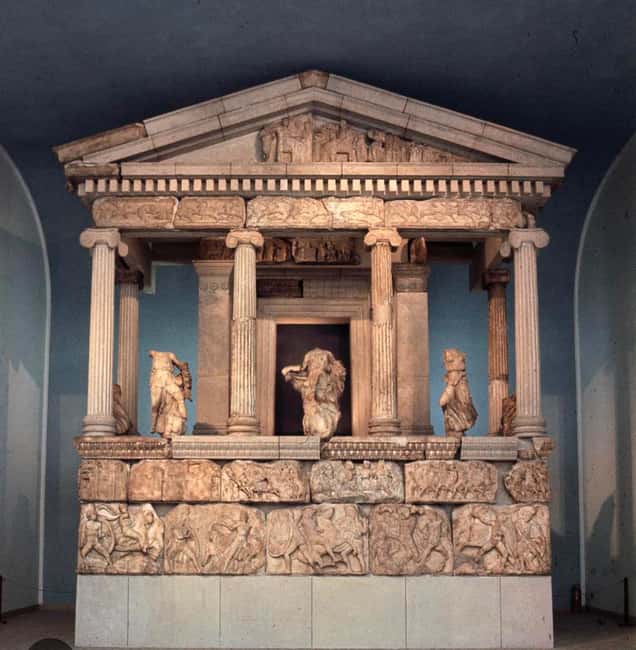
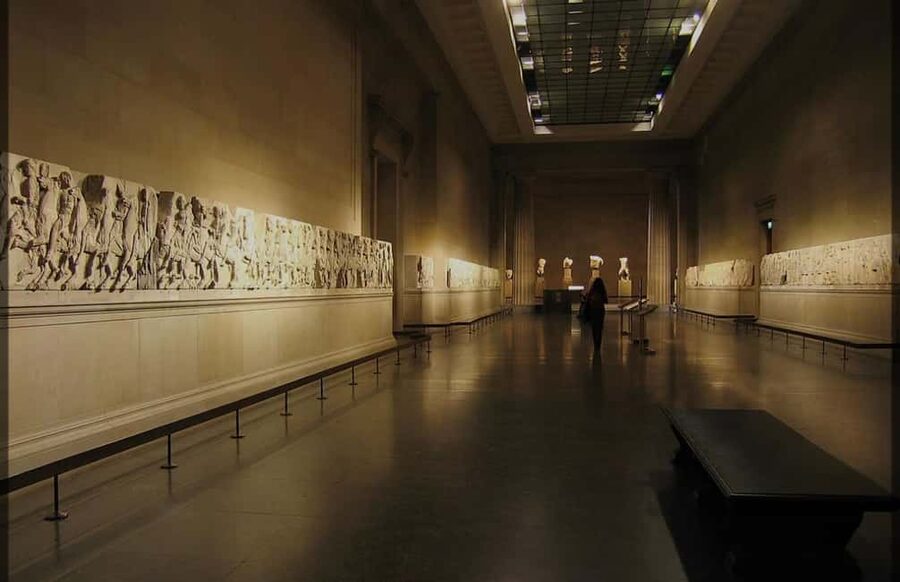
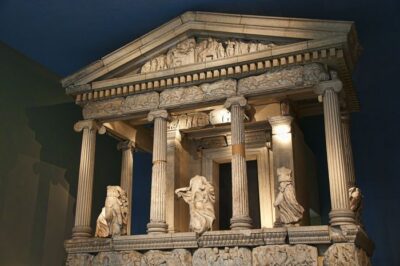
The route then reaches the sculptures from the Parthenon in Athens, often called the Elgin Marbles. These works date from the fifth century BCE and include scenes linked to Greek mythology.
The sculptures give you a sense of the scale and ambition of ancient Greek art. They were made for a major temple, not as isolated museum pieces. Seeing them in a gallery today can make it easy to forget their original setting, so the guide’s explanation helps connect the fragments to the larger building and its purpose.
This is also one of the tour’s most important points for understanding how museums collect and display the past. The sculptures are admired for their artistic quality, but their presence in London is connected to a long-running dispute over ownership and their return to Greece. The supplied tour details do not promise a detailed treatment of that debate, so you should not expect a full political discussion within the 80 minutes.
Still, the stop has real value. You can study the carving, movement, and storytelling while also thinking about how major objects travel from their original homes into modern institutions. That makes the Parthenon display more than an art lesson.
If you have a particular interest in Greek sculpture, you may want extra time after the guided portion. The tour introduces the main pieces, but an independent look lets you linger over details at your own pace.
Assyrian lion hunt reliefs and royal power
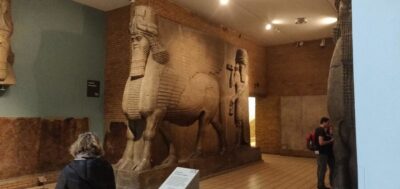
The Assyrian section changes the mood again. Here, the focus is on the empire’s royal power and the famous lion hunt reliefs.
These carved panels show the hunt in intricate detail. They are not simple records of an outdoor event. They present the ruler as powerful, controlled, and capable of defeating a dangerous animal. Your guide can help you read the scene as royal messaging as well as skilled carving.
This is one of the most useful stops for seeing how art served political purposes. The reliefs offer a picture of Assyrian court life, but they also show how rulers wanted to be seen. The king’s strength, courage, and authority are part of the subject.
I like this section because it broadens the tour beyond the usual Egypt and Greece highlights. The British Museum’s collection can introduce you to civilisations that receive less attention in a standard London sightseeing plan. The carvings also reward close looking, since small details carry much of the story.
If you are moving through the galleries alone, you might admire the reliefs without noticing the message behind them. A guide makes that meaning easier to spot.
The Lewis Chessmen and medieval life
The Lewis Chessmen provide a smaller, more personal change of scale. These intricately carved pieces were found on the Isle of Lewis in Scotland and are linked to Viking culture.
Unlike the monumental stone reliefs and temple sculptures, chess pieces invite you to think about play, status, craftsmanship, and daily life. Each piece has its own character, making the display easy to enjoy even if you know little about medieval history or chess.
The objects also show how cultural influence moved across northern Europe. Their connection with Viking culture gives the guide an opening to discuss trade, settlement, and artistic exchange without turning the stop into a long academic talk.
I would pay close attention here if you are visiting with children or teenagers. The chess theme is familiar, and the carved figures can make the past feel more approachable. One guide was praised for adjusting explanations so that younger members of a group could follow along, which is a useful quality on a museum tour with mixed ages.
The Lewis Chessmen also show why a guided route can work well. The British Museum contains enormous objects and tiny ones, grand political statements and intimate personal items. A good guide helps you notice the contrast.
The guide’s style and the pace of the visit
The strongest part of this experience is the human element. The guide is expected to be certified and professional, but the useful qualities go beyond a formal qualification. The feedback points to clear speaking, enthusiasm, humor, patience, and an ability to answer questions.
That combination matters in a museum. You need enough information to understand the objects, but not so much that your attention fades. The best comments describe a tour that focuses on key exhibits without overwhelming the group.
The 80-minute length supports that style. You move from one major area to another, with enough time for explanation and questions. The limit is that some stops will receive only a short introduction. If you already know the British Museum well, you may want a longer specialist tour.
The guide may also be able to respond to your interests. One experience included a group visiting the Rosetta Stone, Egyptian objects, and Aztec material before continuing independently. That suggests it is worth telling the guide what you most want to see, though the exact route can vary.
Do not expect a silent, self-directed museum visit. This is designed around live commentary. If you prefer to read every label alone, you may find the pace restrictive. If you want help making sense of the collection, the structure is a real advantage.
Price, access, and what happens afterward
At $20.20 per person, the tour sits at a reasonable price for a guided visit to a major London museum. The value comes from the time saved and the interpretation provided, not from exclusive access or a private room. You are paying for a focused route and a live English-speaking guide.
I think the price works best for a first visit, a short London stay, or anyone who feels unsure about tackling a huge museum. It is less essential if you already know exactly which galleries you want and are happy to read the displays independently.
The museum is wheelchair accessible, although some areas may be challenging to navigate. If mobility is a concern, it is sensible to keep that qualification in mind when deciding if the route will suit you.
Photography is allowed, but flash photography is prohibited. Food and drinks are not allowed inside the exhibition rooms, so plan to eat before or after the visit rather than expecting to snack among the displays.
Once the 80-minute tour ends at the meeting point, you can use the museum gift shop and continue exploring the collection at your leisure. The shop carries books, souvenirs, and replicas, making it a practical final stop if you want something connected to the objects you have seen.
Free cancellation is available up to 24 hours before the activity for a full refund. You can also reserve now and pay later, which helps if your London schedule is still changing.
Who should book the British Museum tour?
I would recommend this experience to first-time visitors who want the main sights without spending hours trying to plan a route. It also suits families, provided everyone is comfortable with subjects such as mummies, ancient warfare, and death rituals.
The tour is a good match for you if you enjoy stories more than long display labels. It gives you a framework for understanding the museum, then leaves you free to continue alone. I also like it for visitors with only a short window in London, since the 80-minute format is easy to fit into a busy day.
You may want to skip it if you already have detailed knowledge of the British Museum or want an in-depth examination of one civilisation. The short schedule cannot cover every famous room, and the exact emphasis may change with the guide and group’s interests.
Should you book this 80-minute museum tour?
Book it if you want a friendly, focused introduction to the British Museum and its headline objects. The Rosetta Stone, Egyptian mummies, Parthenon sculptures, Assyrian reliefs, and Lewis Chessmen create a strong route through different periods and cultures.
The best reason to go is the guide. Strabo and other guides connected with the experience have been praised for clear explanations, humor, and thoughtful answers. At $20.20, that help is worthwhile for a first visit, especially when you can stay afterward and explore at your own pace.
Skip it only if you prefer complete independence or need much more time with a specialist collection. For most people who want a manageable first look at a very large museum, this is a sensible way to begin.
FAQ
How long does the British Museum tour last?
The guided tour lasts 80 minutes. You can stay afterward to explore the museum independently.
Where is the meeting point?
Meet outside the Montague Place entrance by the two stone lions. The tour ends back at the same meeting point.
What language is the tour conducted in?
The live tour guide speaks English.
Which objects are included on the tour?
The tour includes the Rosetta Stone, Egyptian mummies and coffins, the Parthenon sculptures, Assyrian lion hunt reliefs, and the Lewis Chessmen.
Is the British Museum tour wheelchair accessible?
The museum is wheelchair accessible, although some areas may be challenging to navigate.
Can I take photographs inside the museum?
Photography is allowed, but flash photography is prohibited.
Can I bring food or drinks into the galleries?
Food and drinks are not allowed inside the exhibition rooms.
Can I cancel the booking for a refund?
You can cancel up to 24 hours in advance for a full refund.
Can I pay later?
Yes. The activity offers a reserve now and pay later option, so you do not need to pay at the time of booking.
Just added in London
- The Best of British Cooking Class & Dining Experience★ 5.0 · 1 review
- London: Live Comedy Show at Big Belly Bar and Comedy Club★ 4.5 · 80 reviews
- London: British Museum Highlights Guided Small Group Tour★ 4.9 · 113 reviews
- The Beatles London Walking Tour★ 4.2 · 147 reviews
- The Best Highlights of London Walking Tour & Boat Cruise★ 5.0 · 1 review
- The Authentic Walking Tour with Indian Tasting Meal★ 4.8 · 4 reviews
- Iconic London: Bard, Beatles, Bond & Baker Street★ 4.9 · 15 reviews
- London: Tate Britain Official Discovery Tour★ 4.7 · 7 reviews
British Museum Tours, compared.

British Museum Audio Tour & Priority Entrance Ticket
Read our review →
British Museum Archaeology Course and Guided Tour
Read our review →
British Museum Highlights Guided Small Group Tour
Read our review →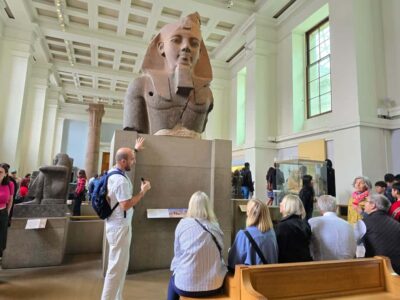
British Museum Guided Tour with Priority Entrance
Read our review →Other lists this tour turns up in