
REVIEW · BRITISH MUSEUM TOURS
The British Museum London: Private Guided Tour – 3 hour
Five thousand years fit inside three focused hours. This private British Museum tour gives you a guide-led path through famous objects from Egypt, Greece, Rome, China, and Britain. I like the small private group, which keeps the visit personal, and I like the chance to see major pieces with historical context instead of wandering past them alone.
I also like the practical meeting point at the rear entrance on Montague Place, where your guide waits with a card bearing your name. The main consideration is time: three hours is long enough for the essential highlights, but not enough for every gallery or temporary exhibition. Those temporary shows require a separate ticket.
In This Review
- Key points to know before booking
- Why a private three-hour visit works well
- Meeting at Montague Place
- The British Museum’s global collection
- The Rosetta Stone and the power of writing
- Egyptian art, mummies, and ancient belief
- The Parthenon Marbles and difficult museum questions
- Lewis Chessmen and the charm of smaller objects
- Sutton Hoo, Waddesdon, and Britain’s own treasures
- Chinese art and the tour’s worldwide reach
- What the $263 price really buys you
- Who should book this British Museum tour
- Should you book it?
- FAQ
- How long is the British Museum private guided tour?
- Where does the tour begin?
- How will I recognize the guide?
- Is museum entry included?
- Are temporary exhibitions included?
- How many people can join the private group?
- What language is the tour offered in?
- Is the tour wheelchair accessible?
- Can I cancel for a refund?
Key points to know before booking
- Robert Miller receives the strongest praise: Two published comments single him out for his storytelling, historical insight, and engaging style.
- The tour covers major world treasures: Expect the Rosetta Stone, Parthenon Marbles, Egyptian mummies, Lewis Chessmen, Sutton Hoo Treasure, and more.
- Your group gets a private guide: The $263 price covers up to five people, making the per-person cost much better for a full group.
- The meeting point avoids the main queue: Meet at the rear entrance on Montague Place with the guide’s name card.
- The focus is on permanent collections: Entry to temporary exhibitions is not included.
- The format is accessible by wheelchair: The tour is offered in English, but it is not suitable for people with visual or hearing impairments.
Why a private three-hour visit works well
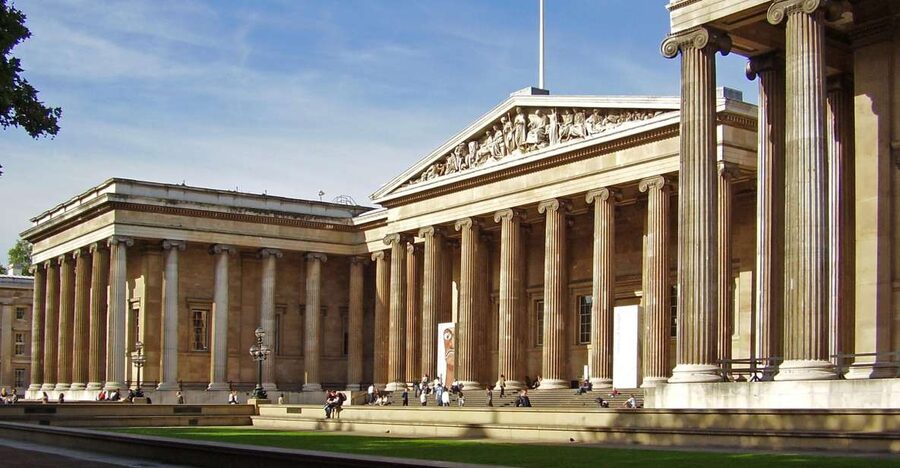
The British Museum can feel like a small city of objects. Its collections span major civilizations and roughly 5,000 years of human history, so a first visit can quickly become a march from one famous object to another with little sense of connection.
A private guide changes that rhythm. Instead of trying to decide what matters most, you have someone choosing a route and explaining why each object belongs in the larger story. That is especially useful here because the collection includes objects from very different places and periods. The Rosetta Stone, an Egyptian mummy, a Greek temple sculpture, a medieval chess piece, and an Anglo-Saxon burial treasure do not explain themselves.
You can ask questions as you go, and the group does not need to match the pace of strangers. That matters for families, couples, and small groups with different levels of interest in ancient history. You can spend a little longer on the pieces that catch your attention and move along when a display is not holding you.
The tour is conducted in English by a live guide. The published rating is 5 from four ratings, and the strongest comments focus on the guide rather than only the collection. Robert Miller is praised by name for making the objects come alive, bringing together the main highlights, and making the visit enjoyable as well as educational.
That is an important distinction. The British Museum already has famous objects. The value of this tour depends heavily on how well the guide connects them. Robert Miller appears to be a particularly strong choice based on the available feedback, though guide quality can always vary by date and assignment.
More British Museum visits:
- London: British Museum Guided Tour
★ 4.3 · 1,182 reviews - London: Tour of the British Museum
★ 4.1 · 678 reviews - London: British Museum Audio Tour & Priority Entrance Ticket
★ 4.5 · 631 reviews
Meeting at Montague Place
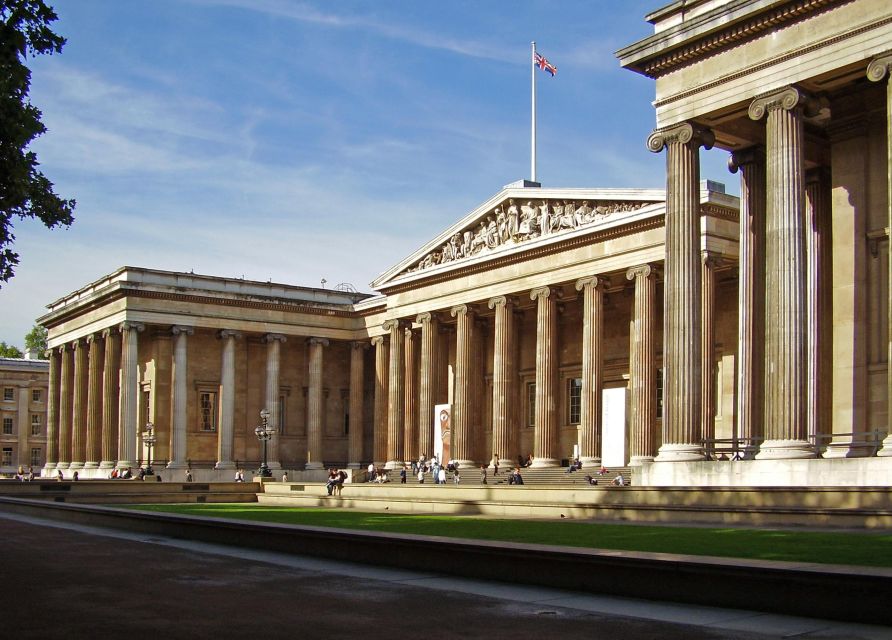
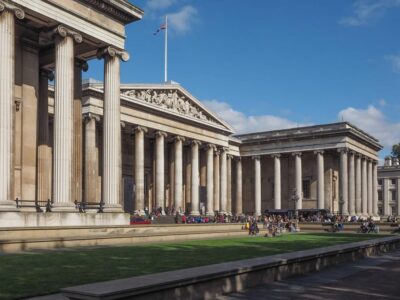
You meet at the British Museum’s rear entrance on Montague Place. Your guide holds a large card with your name printed on it, which should make the first meeting straightforward even in a busy central London setting.
The rear entrance is also described as a no-queue entrance. That can save useful time, especially on a three-hour visit. You are not spending the opening part of the tour trying to find the entrance or waiting in the main line.
The tour begins and ends at the British Museum, so there is no transport between stops. Plan to arrive at the meeting point with enough time to identify your guide. Since the tour has a fixed three-hour length, a late start can cut into the part of the museum you came to see.
The group is private, with up to five people included in the $263 price. If five people share the booking, the cost works out to $52.60 per person. A group of two pays $131.50 each, so the value improves sharply as your party gets larger.
That price includes museum entry and the private guide. It does not include entry to temporary exhibitions, so you should treat those as a separate plan and expense.
The British Museum’s global collection
The opening part of the tour places the museum’s objects within a broad world story. You will see items from several of the major civilizations of the last 5,000 years, rather than focusing on one country or one period.
That range is the museum’s great strength, but it can also be its challenge. The collection is so wide that independent visitors may leave with a list of famous names but little idea of how the pieces relate to one another. A guide helps establish the historical setting before the tour moves to individual treasures.
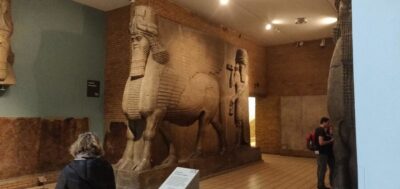
Expect the route to include ancient Egyptian, Greek, Roman, Chinese, British, and other cultural material. The point is not simply to count famous objects. It is to understand what they reveal about belief, power, art, technology, writing, and everyday life.
The three-hour format should suit you if this is your first visit and you want a strong introduction. It is less suitable if you want to inspect every gallery slowly or spend most of your day with one collection. You can return independently after the tour if you want more time, but the guided visit itself is built around the major highlights.
The Rosetta Stone and the power of writing
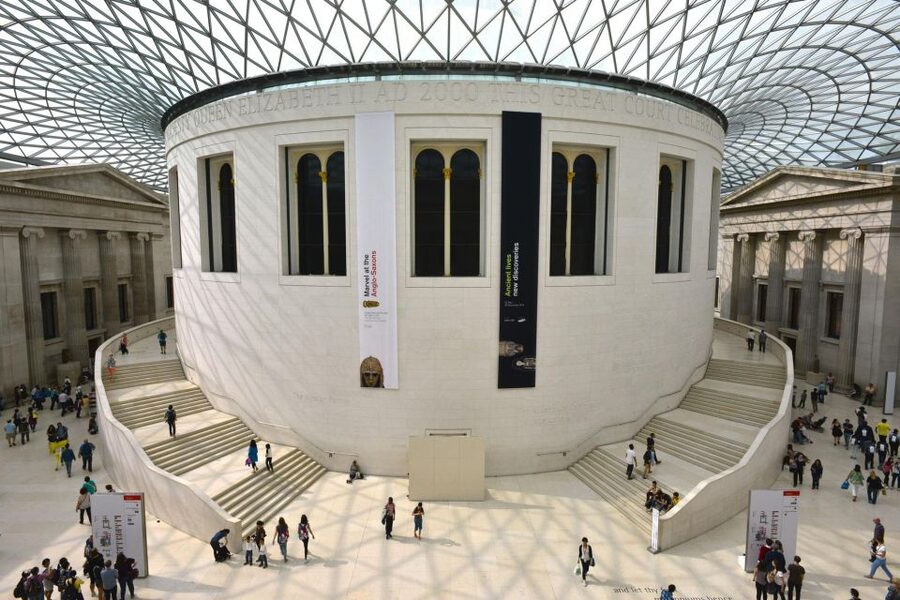
The Rosetta Stone is one of the central objects on the route. Its importance comes from the role it played in helping scholars understand Egyptian hieroglyphs. Seeing it with a guide gives you a chance to grasp why a single inscribed stone became so important to the study of ancient Egypt.
This is exactly the kind of object that benefits from explanation. Without context, it is a dark stone covered in writing. With a guide, you can better appreciate the problem it helped solve and the connection between different forms of ancient text.
The Rosetta Stone is also a good example of the tour’s likely pattern: a famous object, followed by an explanation of its place in a much larger historical question. You will not simply be shown where it is. The aim is to understand why it matters.
More Museum Tours in London:
- London: Chelsea Football Club Stadium and Museum Tour
★ 4.8 · 4,576 reviews - London Transport Museum Entrance Ticket
★ 4.5 · 1,323 reviews - London: Jack the Ripper Museum Tickets
★ 4.2 · 894 reviews - Afternoon Tea at the British Museum
★ 4.2 · 511 reviews
Egyptian art, mummies, and ancient belief
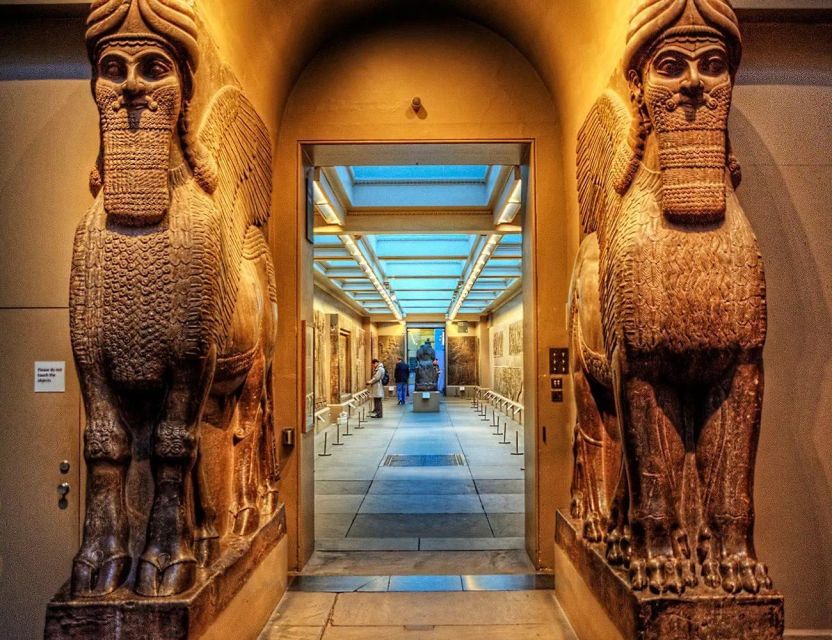
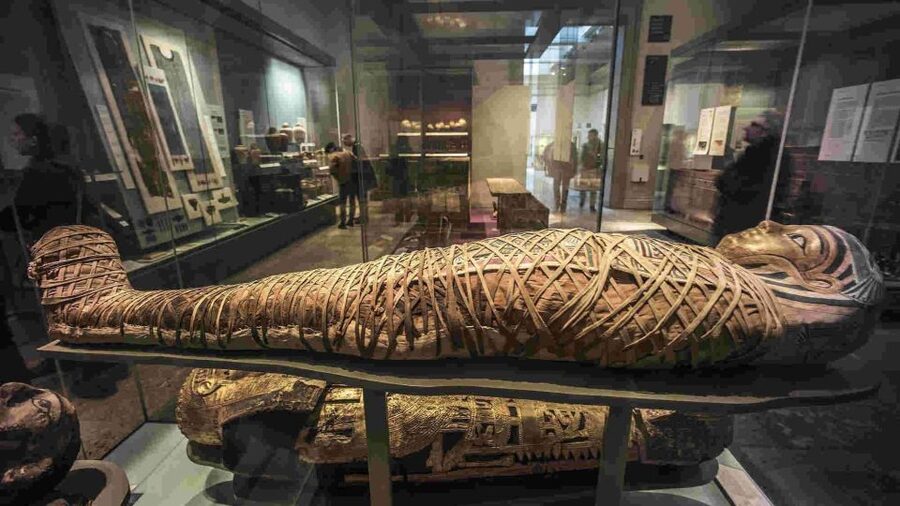
The Egyptian galleries add a different mood to the visit. You will see Egyptian art and mummies, with the guide explaining the beliefs and customs that shaped them.
Mummies can draw attention because they are visually striking, but the surrounding objects help explain the society that produced them. Egyptian art is tied to religion, rulers, death, and the hope of continued existence. A guided visit gives those displays a clearer frame.
You should also expect this part of the tour to appeal to a wide range of interests. Children often respond to mummies, while adults may appreciate the art, writing, and religious ideas behind them. The guide’s job is to connect those entry points rather than treat the displays as isolated curiosities.
The museum contains more Egyptian material than any three-hour route can cover. That is a benefit of having a guide, since the route can concentrate on key examples rather than leaving you to choose from a large number of galleries.
The Parthenon Marbles and difficult museum questions
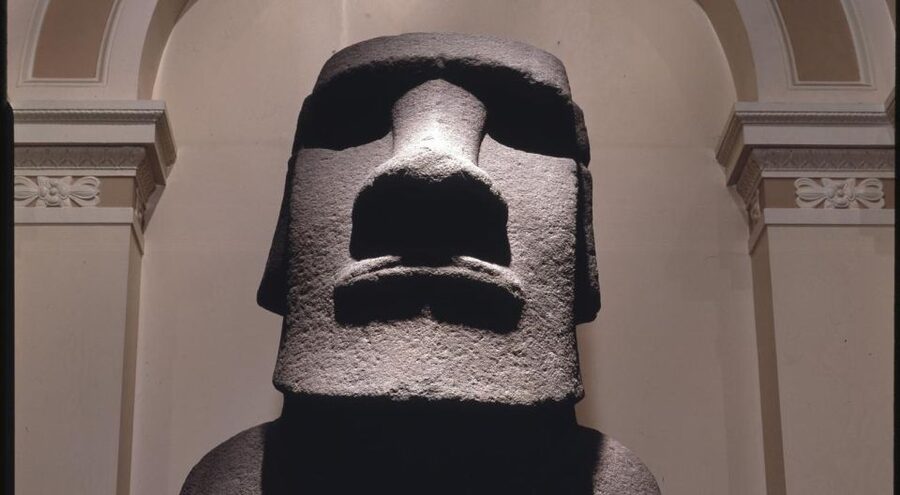
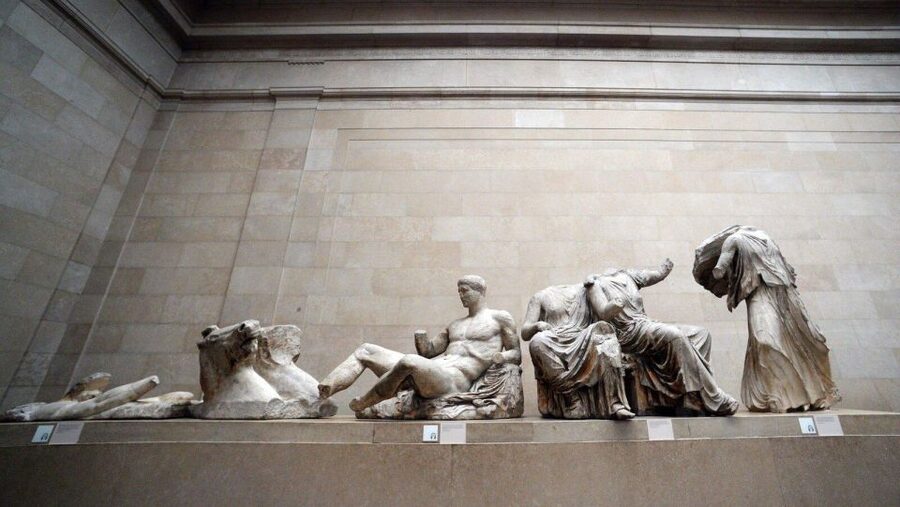
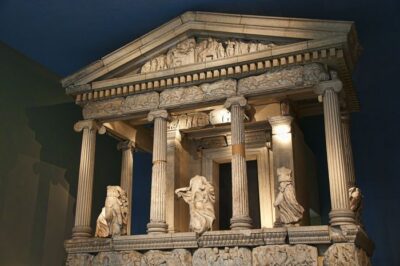
The Parthenon Marbles, also called the Elgin Marbles, are among the museum’s most famous and debated holdings. The tour includes them and places them in the context of ancient Greek art and the museum’s wider collection.
These sculptures are important for their artistic quality and for what they reveal about the Parthenon, ancient Athens, and classical Greek culture. They also raise questions about ownership, removal, and the role of major museums in displaying objects from other countries.
A good guide should help you look at both parts of the subject: the art itself and the continuing argument around it. The supplied information promises historical context, which is particularly useful here because the marbles are not merely beautiful fragments. They carry a complicated modern story as well.
You will also see ancient Greek and Roman masterpieces beyond the Parthenon displays. The route gives you a chance to compare the artistic traditions of these cultures and to see how the museum presents them together.
Lewis Chessmen and the charm of smaller objects
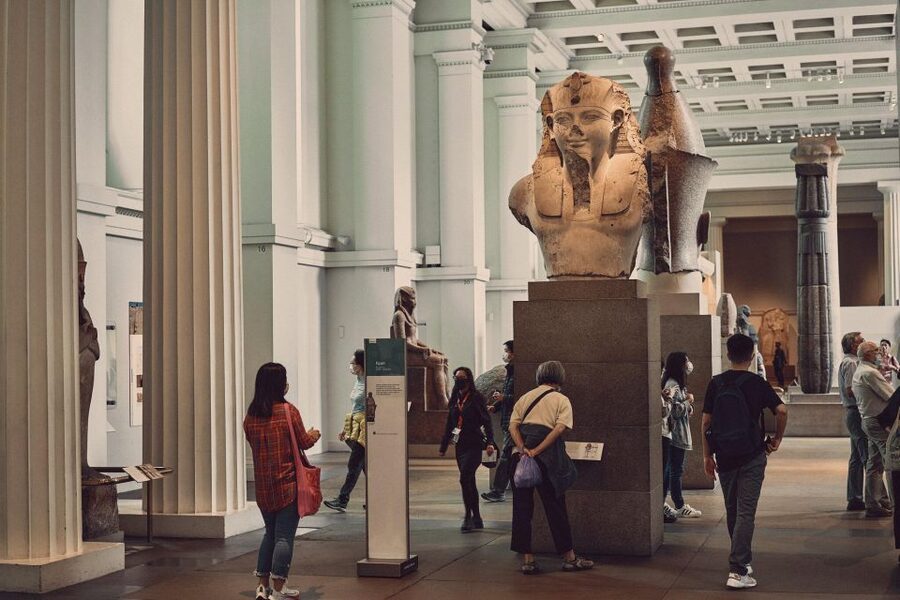
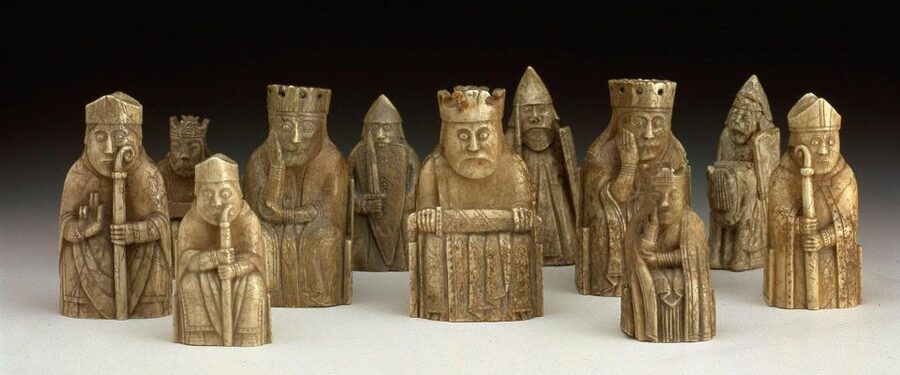
The Lewis Chessmen offer a welcome change from monumental sculpture and royal tombs. These carved chess pieces are famous, but they also feel intimate. You can look at individual faces and imagine how a game might have brought them into ordinary life.
Their inclusion shows that the tour is not limited to the biggest or oldest objects. Smaller pieces can reveal social habits, craftsmanship, play, and status. They also provide a pause from the grand scale of Egyptian and Greek art.
The Lewis Chessmen may be especially appealing if you enjoy objects that combine history with personality. A guide can explain where they fit in the British collection and why they have held public attention for so long.
Sutton Hoo, Waddesdon, and Britain’s own treasures
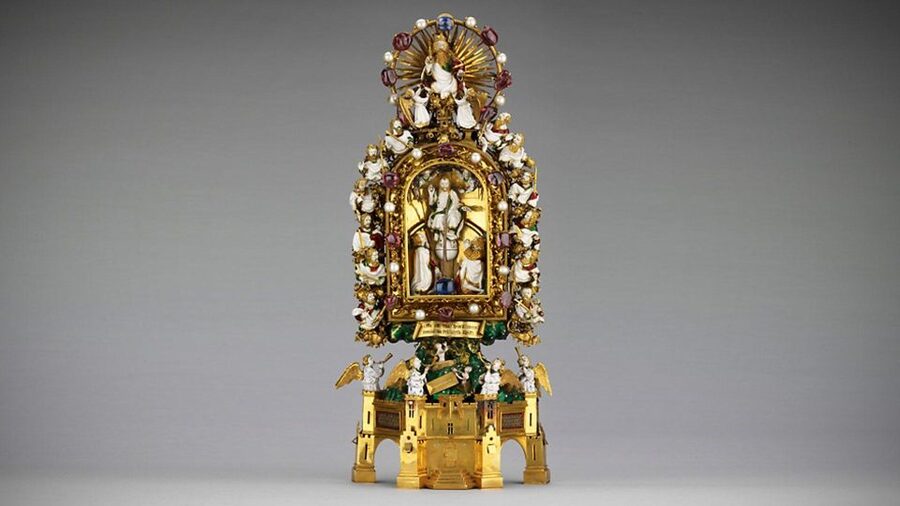
The Sutton Hoo Treasure brings the tour to a major British archaeological find. It is associated with an Anglo-Saxon burial and offers a look at early medieval Britain through objects connected with power, ceremony, and long-distance links.
Placed alongside Egyptian, Greek, Roman, and Chinese works, Sutton Hoo helps prevent the museum from feeling like a collection devoted only to the ancient Mediterranean. You get a wider view of Britain’s place in the past and of the objects that survived from it.
The Waddesdon Bequest adds another layer. It is a notable collection within the museum and gives you a chance to see decorative and artistic objects from a later tradition. Together, Waddesdon and Sutton Hoo show that the British Museum is not just a place for antiquities.
These stops are useful for visitors who want some British material in a tour otherwise spread across the world. They also break up the familiar sequence of mummies, Greek sculpture, and Roman art.
Chinese art and the tour’s worldwide reach
Chinese works of art extend the visit beyond the best-known European and Egyptian displays. Their inclusion supports the tour’s promise to cover treasures from around the world, not just the objects most often shown in guidebooks.
The Chinese galleries can be easy to overlook when a first-time visitor is focused on the Rosetta Stone and Parthenon Marbles. A guide gives them a place in the route and helps you understand why they belong in a survey of global art and culture.
This broad coverage is one of the tour’s best features. You are not just checking off London’s famous museum objects. You are seeing how different societies expressed ideas through art, writing, ritual, craftsmanship, and technology.
What the $263 price really buys you
At first glance, $263 may seem high for a museum visit. The calculation changes if you have four or five people sharing the booking. At the full group limit, the cost is $52.60 per person for three hours, including museum entry and a private English-speaking guide.
You are paying for direction and time management as much as admission. A guide can take you straight to important sections and provide context while you are looking at the objects. That is useful if you have only one London day or if the museum feels too large to tackle alone.
For two people, the cost is harder to justify unless you place a high value on private attention. A self-guided museum visit costs less, but it will not give you the same structured route or the chance to ask a personal guide questions throughout.
The tour is a stronger buy for a family or group of friends than for a solo visitor. It also suits anyone who prefers a focused introduction before exploring independently.
You can reserve now and pay later, which keeps your plans flexible. Cancellation is free up to 24 hours before the tour for a full refund. Starting times vary, so you need to check availability when choosing a date.
Who should book this British Museum tour
I would choose this experience if you want the museum’s major highlights without spending hours planning your own route. It is especially useful for first-time visitors, small groups, families, and anyone who enjoys history more when a real person explains the objects.
It also suits visitors who want a private setting. You are not trying to hear a guide over a large group, and you can ask about the pieces that interest you most.
I would think twice if your main goal is a temporary exhibition, since that entry is not included. I would also reconsider if you want a slow, specialist visit to one narrow period. Three hours gives you breadth, not a complete study of any single collection.
The tour is wheelchair accessible. It is not suitable for people with visual or hearing impairments, and the guide language is English only.
Should you book it?
Book it if you have up to five people, want the main British Museum treasures explained clearly, and value a private guide more than the lowest possible price. The strongest reason to choose it is the focused route, with Robert Miller receiving particularly warm praise for making the history engaging.
Skip it if you prefer to wander alone, need access to temporary exhibitions, or plan to spend a full day studying one gallery. For a small group with limited London time, though, this is a practical way to make sense of a huge museum without letting its size take over your day.
FAQ
How long is the British Museum private guided tour?
The guided tour lasts three hours.
Where does the tour begin?
You meet at the rear entrance of the British Museum on Montague Place.
How will I recognize the guide?
The guide will hold a large card with your name printed on it.
Is museum entry included?
Yes. Entry to the British Museum is included in the tour price.
Are temporary exhibitions included?
No. Entry to temporary exhibitions is not included.
How many people can join the private group?
The price covers a private group of up to five people.
What language is the tour offered in?
The live guided tour is offered in English.
Is the tour wheelchair accessible?
Yes. The activity is wheelchair accessible.
Can I cancel for a refund?
Yes. You can cancel up to 24 hours in advance for a full refund.
Just added in London
- The Best of British Cooking Class & Dining Experience★ 5.0 · 1 review
- London: Live Comedy Show at Big Belly Bar and Comedy Club★ 4.5 · 80 reviews
- London: British Museum Highlights Guided Small Group Tour★ 4.9 · 113 reviews
- The Beatles London Walking Tour★ 4.2 · 147 reviews
- The Best Highlights of London Walking Tour & Boat Cruise★ 5.0 · 1 review
- Iconic London: Bard, Beatles, Bond & Baker Street★ 4.9 · 15 reviews
- The Authentic Walking Tour with Indian Tasting Meal★ 4.8 · 4 reviews
- London: Tate Britain Official Discovery Tour★ 4.7 · 7 reviews
British Museum Tours, compared.
British Museum Audio Tour & Priority Entrance Ticket
Read our review →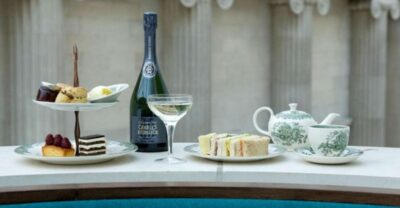
British Museum Archaeology Course and Guided Tour
Read our review →
British Museum Highlights Guided Small Group Tour
Read our review →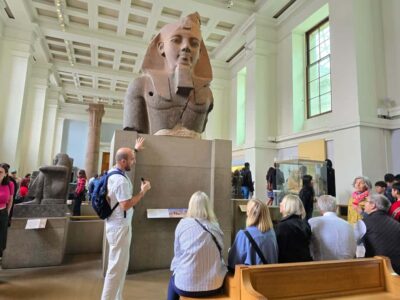
British Museum Guided Tour with Priority Entrance
Read our review →Other lists this tour turns up in