
REVIEW · BRITISH MUSEUM TOURS
Explore History: British Museum’s Rosetta, Mummies & More
Ancient stone, marble, and mummies tell the story. This two-hour British Museum tour takes you from the Great Court to some of the museum’s most famous objects, with an English-speaking guide explaining why each one matters. I like the focused route through the Rosetta Stone and Egyptian mummies, and I like that the tour also reaches British and Assyrian collections rather than staying with the usual Greek and Egyptian highlights.
The price is $88 per person, which is a fair deal if you want a guide to give shape to a huge museum. The main drawback is time: two hours passes quickly here, and the museum involves plenty of walking. You also need to keep your chosen time flexible, since an unavailable slot may be moved to another time on the same day.
In This Review
- Key points at a glance
- Starting at Great Russell Street
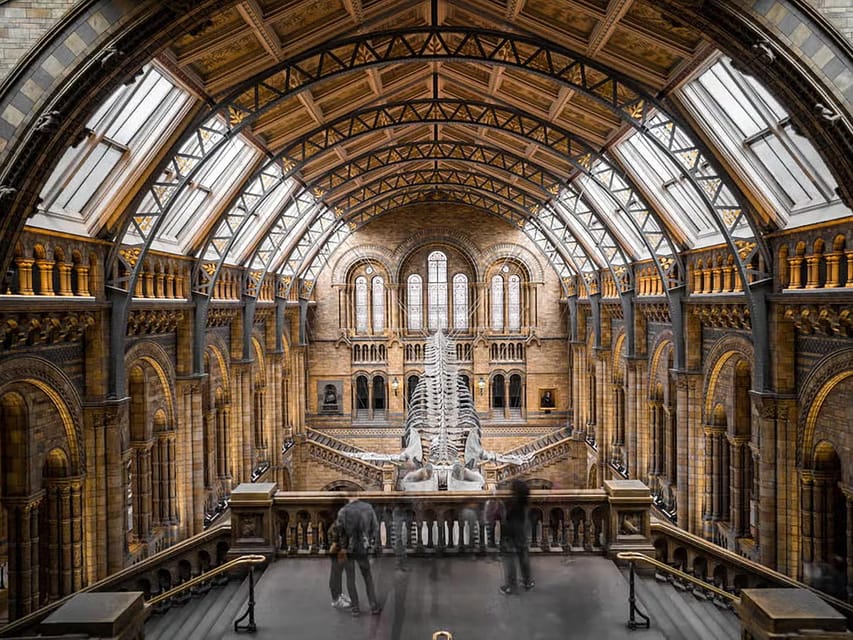
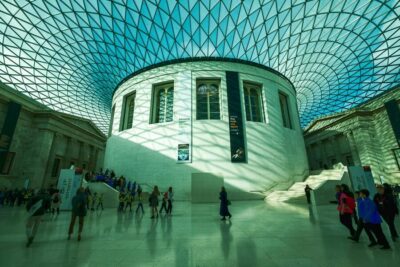
- The Great Court and Norman Foster’s roof
- The Rosetta Stone and three ancient scripts
- Parthenon sculptures and the question of ownership
- Egyptian mummies and burial beliefs
- Sutton Hoo and Anglo-Saxon England
- Winged Bulls from Khorsabad
- Is $88 a good value for two hours?
- Timing, walking, and the fast-entry detail
- Who should book this British Museum tour?
- Should you book it?
- FAQ
- How long does the British Museum tour last?
- Where does the tour meet?
- How early should I arrive?
- Is transportation included?
- What language is the tour offered in?
- Is the tour private?
- Is the tour suitable for wheelchair users?
- Can I cancel for a full refund?
- What happens if my chosen time is unavailable?
Key points at a glance

- The Great Court sets the tone: Norman Foster’s glass roof covers the largest covered square in Europe, with the old Reading Room at its center.
- The Rosetta Stone is the essential stop: Three scripts on one stone helped scholars understand ancient Egyptian hieroglyphs.
- The Parthenon sculptures come with a live debate: Your guide explains both their artistic importance and the dispute over their removal from Athens.
- Egyptian mummies add human detail: Burial objects and preserved bodies show how ancient Egyptians viewed death and the afterlife.
- Sutton Hoo brings the story home: Anglo-Saxon burial treasures connect the museum’s world collections to England’s own past.
- The route includes Assyrian power: The Winged Bulls from Khorsabad are among the most imposing objects on the tour.
Starting at Great Russell Street
You meet your guide on the stairs at the British Museum’s main entrance, after passing through security. Arrive at least 15 minutes before your booked time. That cushion matters because a late arrival can be hard to fix once the group has gone inside.
The meeting point is on Great Russell Street in South East England, right at the museum entrance. There is no transfer included, so you make your own way there and return to the same area after the tour.
Bring a passport or ID card. The information provided specifically asks you to carry one, so do not leave it behind at your hotel. Wear comfortable shoes, too. This is a walking tour through a very large building, and the galleries are spread out rather than arranged as one compact room.
The tour is not private. You share the guide with other people, which helps keep the price below that of a private museum visit but means the pace and questions are shaped by the whole group.
More History Tours in London
- London: Historic Pubs of Central London Walking Tour
★ 4.9 · 1,065 reviews - London: Soho Music and Historic Pubs Walking Tour
★ 4.9 · 836 reviews - London: Rock ‘n’ Roll History Tour
★ 4.6 · 645 reviews
The Great Court and Norman Foster’s roof
The Great Court is a fine first stop because it gives you a sense of the British Museum’s scale before the objects begin competing for your attention. A glass and steel roof fills the atrium with daylight, turning what was once an open courtyard into the largest covered square in Europe.
At the center is the circular Reading Room. It was once used by major historical figures, including Karl Marx. Even if architecture is not your main reason for visiting, this opening scene helps explain why the museum feels like an institution as much as an exhibition space.
I like beginning here because the building itself becomes part of the tour. You are not simply walking into a string of display cases. You are entering a place shaped by scholarship, public access, and the collecting habits of a major national museum.
The drawback is that the Great Court can make the museum feel easier to navigate than it really is. Once you leave this central area, the building spreads into many galleries. A guide is useful here because you can focus on the key rooms instead of spending your two hours trying to find them.
The Rosetta Stone and three ancient scripts
The Rosetta Stone is the tour’s clearest example of how one object can change the study of an entire civilization. Discovered in 1799, the stone carries the same decree in three scripts. That combination gave scholars the evidence they needed to work out ancient Egyptian hieroglyphs.
Your guide explains why the stone mattered instead of leaving you to admire a dark slab behind glass. The object is not large in the way many first-time visitors expect, but its importance is enormous. It connected a readable script with two forms of Egyptian writing that had puzzled scholars for centuries.
I find this stop especially useful for anyone who has looked at hieroglyphs and thought of them as decorative pictures. The guide can show you that they formed a working writing system, and that the stone provided the comparison needed to make sense of it.
The Rosetta Stone is also one of the museum’s busiest attractions. You may need to look over other people’s shoulders, and you should not expect a quiet, private encounter. The guide’s explanation is the part that makes the stop worthwhile, especially when the object itself is surrounded by a crowd.
Parthenon sculptures and the question of ownership
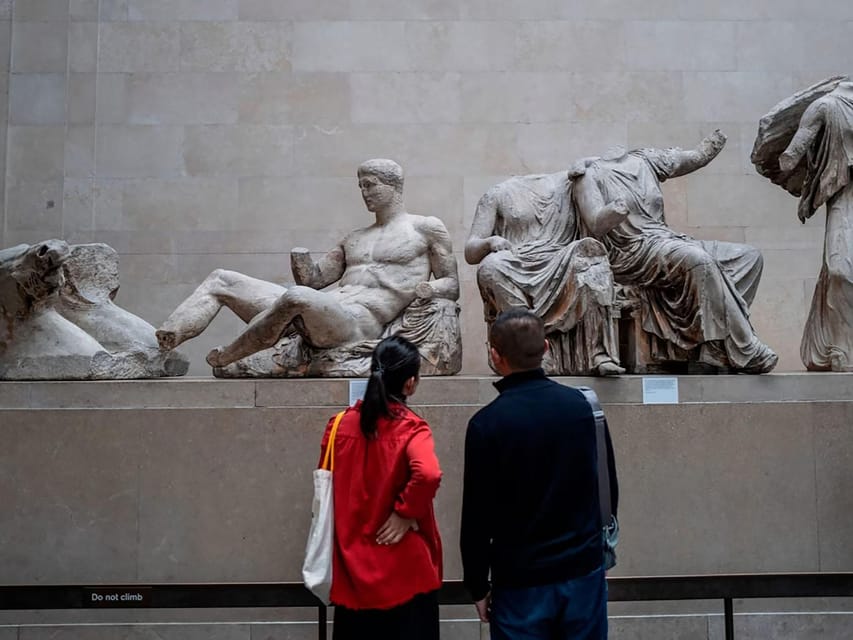
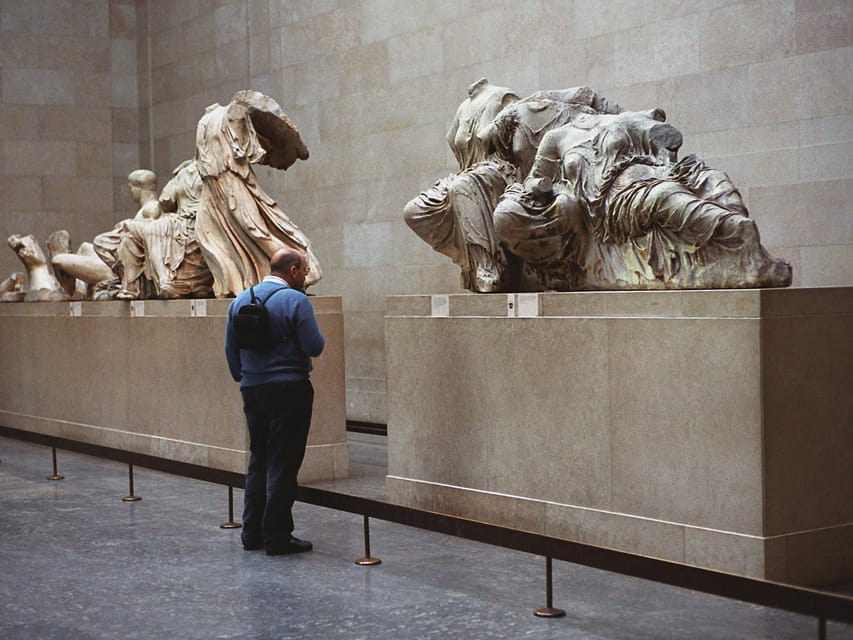
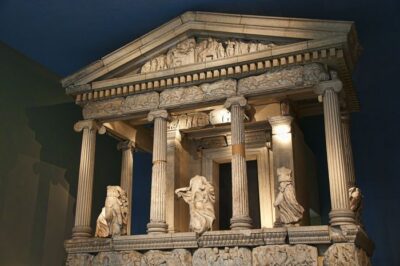
The Parthenon sculptures offer a different kind of museum lesson. These marble statues and friezes once formed part of the Parthenon in Athens. They depict gods, heroes, and scenes of mythical conflict with a level of detail that makes the ancient work feel immediate.
The collection is also tied to a continuing dispute. Lord Elgin, the British ambassador to the Ottoman Empire, removed the sculptures from Greece in the early 19th century. Your guide places that act in its historical setting and explains why the sculptures remain controversial.
This is one reason I value a guided visit here. You get more than a quick look at beautiful marble. You are asked to consider how objects reached museums, who had the authority to remove them, and whether a famous work should remain where it was found or be displayed in an international collection.
The gallery can be visually overwhelming. There are many figures, fragments, and architectural pieces, and two hours does not allow for every detail. Let the guide select the important sections, then take a moment to look closely at the carved bodies, clothing, and movement.
Do not expect the tour to settle the ownership question for you. A good visit should leave you with a clearer grasp of the argument, not a forced answer. That balance is more useful than treating the sculptures as beautiful objects without a complicated past.
More British Museum visits:
- London: British Museum Guided Tour
★ 4.3 · 1,182 reviews - London: Tour of the British Museum
★ 4.1 · 678 reviews - London: British Museum Audio Tour & Priority Entrance Ticket
★ 4.5 · 631 reviews - Afternoon Tea at the British Museum
★ 4.2 · 511 reviews
Egyptian mummies and burial beliefs
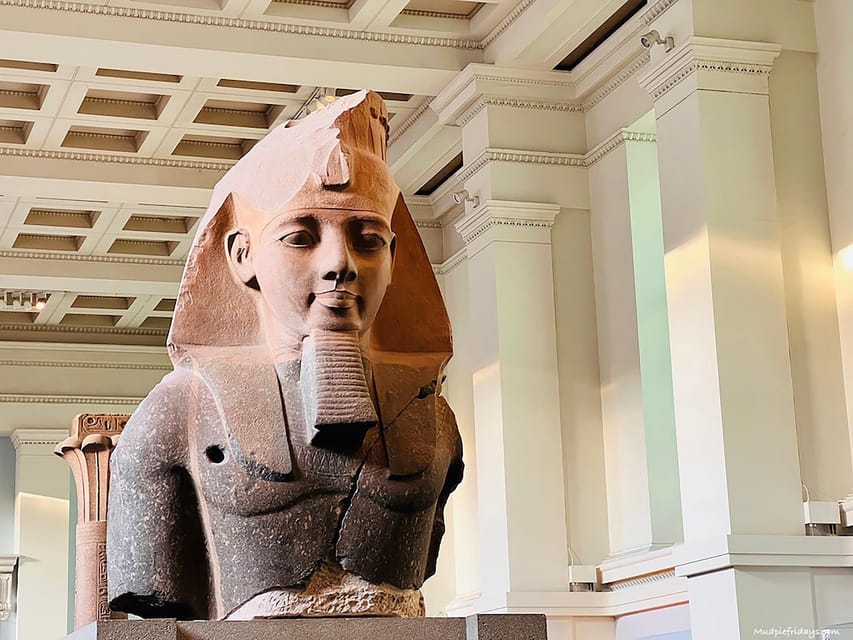
The Ancient Egyptian galleries are among the tour’s strongest sections. Here you see mummies, burial objects, and material connected with beliefs about death and the afterlife. The collection includes preserved people as well as sacred animals, giving you a broader picture than a display devoted only to pharaohs.
Mummies can be startling in person. They are not simply old bodies under glass. They show the care given to preservation and point toward a belief system in which the body, identity, and afterlife were closely connected.
Your guide explains the process that allowed these remains to survive for thousands of years. That context matters because the objects around the mummies are not random decorations. Burial goods, containers, and related items reflect ideas about status, protection, and the journey after death.
This part of the tour may not suit every visitor. Some people find the direct sight of human remains uncomfortable, while others find it the most memorable part of the museum. If you prefer a gentler museum experience, you may want to tell the guide before the group reaches this area.
The Egyptian galleries are also a place where the two-hour limit becomes obvious. You could spend much longer here, but the tour gives you a structured introduction rather than a complete study of ancient Egypt. If this is your main interest, plan to return on your own after the guided visit, provided your schedule allows.
Sutton Hoo and Anglo-Saxon England
Sutton Hoo gives the tour a welcome change of scale and setting. The burial site was discovered in Suffolk in 1939 and is one of the most important archaeological finds of the 20th century. Its treasures shed light on Anglo-Saxon England, linking the museum’s ancient collections to the history of the British Isles.
This stop is valuable because it pushes back against the idea that the museum is only about Egypt, Greece, and Rome. The burial treasures show a complex society with ceremony, rank, craftsmanship, and long-distance connections.
You get a chance to think about how archaeology reconstructs a culture from objects left in the ground. A burial site may offer no written biography, yet the objects can reveal a great deal about power, belief, and social position.
Sutton Hoo is also a good reminder that British history did not begin with grand stone temples. Anglo-Saxon England had its own traditions and artistic achievements. The exhibit gives the tour a stronger local connection after the earlier stops in Egypt and Greece.
Winged Bulls from Khorsabad
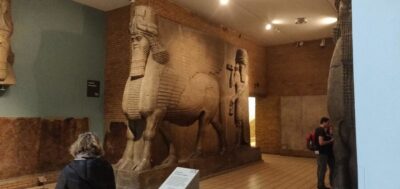
The Winged Bulls from Khorsabad bring the power of ancient Assyria into the route. These large guardian figures were symbols of Assyrian authority, and their size makes them hard to treat as ordinary museum objects.
Look closely at their combined animal and human features. They were designed to project strength and protection, not simply to decorate a palace. The guide helps you understand how art could serve political power by placing imposing figures at important entrances.
This stop also adds variety to the tour. After the familiar name of the Rosetta Stone and the smooth marble of the Parthenon sculptures, the Winged Bulls feel heavier, more architectural, and more openly forceful.
Because the museum is so large, the exact order and amount of time at each collection can depend on the group. The key point is that the tour brings together Egyptian, Greek, British, and Assyrian material in one short visit. That range is one of its main strengths.
Is $88 a good value for two hours?
At $88 per person, this is not a budget museum stroll. You are paying for a guided experience through a major collection, not simply access to a building. The value depends on how much help you want choosing what to see.
I think the price makes the most sense for a first visit. The British Museum is huge, and famous objects are not always close together. A guide saves you from wandering between galleries and gives you the background that display labels cannot always provide in a few lines.
The cost is harder to justify if you are already comfortable navigating museums or plan to spend a full day studying one collection. In that case, you may prefer to set your own pace and return to objects whenever you like.
The tour earns its price best when the guide is strong. A recent German-speaking booking singled out Joe for explaining a great deal and making the full two hours feel short. That is exactly what you want in a museum guide: clear stories, good pacing, and enough detail to keep the objects from turning into a blur.
The tour is offered in English. If you need another language, this experience may not suit you.
Timing, walking, and the fast-entry detail
The advertised duration is two hours. That is enough for a well-chosen introduction, but not enough to cover the British Museum in any complete way. You should expect a brisk route and a focus on major highlights.
The museum requires a lot of walking, so comfortable shoes are essential. The tour is not suitable for wheelchair users according to the provided conditions. If mobility is a concern, you should check before booking rather than assuming the route can be adapted.
A priority queue may be included when the activity is described as skip the line. This does not mean you walk straight past every person. It means you use a faster queue with other people who have selected the same option.
Time slots also need attention. If the time you choose is unavailable, you may be moved to the first available time on the same day. For example, a requested 10:00 start could be changed to 14:00. Last-minute bookings can be moved to the following day if no seats remain, so this is not the best choice for a tightly timed London visit.
You can cancel up to 24 hours before the activity for a full refund, and reserve now while paying later. Those terms help if your schedule is still shifting, but they do not remove the need to check the final start time.
Who should book this British Museum tour?
I would recommend it to a first-time British Museum visitor who wants the major objects explained without spending hours planning a route. It also suits anyone who likes history told through individual objects rather than through a long chronological lecture.
Families with older children may find the Rosetta Stone, mummies, and Winged Bulls easier to enjoy with a guide’s stories. The Parthenon section is particularly useful for anyone interested in art, archaeology, or the ethics of museum collections.
This is less suitable for a visitor who wants a slow, quiet experience. The group is not private, the museum can be crowded, and the route covers a lot of ground. It is also not a good fit if you need wheelchair access or cannot manage extended walking.
Should you book it?
Book this tour if you want a fast, guided introduction to the British Museum’s biggest stories. The mix is strong: the Rosetta Stone for language, the Parthenon sculptures for art and ownership, Egyptian mummies for burial beliefs, Sutton Hoo for Anglo-Saxon England, and the Winged Bulls for Assyrian power.
Skip it if you already know the museum well, want to choose every gallery yourself, or need a flexible accessibility plan. For most first-time visitors, $88 is reasonable when a good guide, such as Joe, turns two busy hours into a clear route through objects that can otherwise feel scattered and hard to place.
FAQ
How long does the British Museum tour last?
The guided tour lasts two hours.
Where does the tour meet?
Meet your guide on the stairs at the British Museum’s main entrance on Great Russell Street, after security checks.
How early should I arrive?
You should arrive at least 15 minutes before your scheduled start time.
Is transportation included?
No. Transfers are not included. You make your own way to the museum and return to Great Russell Street after the tour.
What language is the tour offered in?
The live guided tour is offered in English.
Is the tour private?
No. This is a shared tour with other participants.
Is the tour suitable for wheelchair users?
No. The activity is listed as not suitable for wheelchair users.
Can I cancel for a full refund?
Yes. You can cancel up to 24 hours in advance for a full refund.
What happens if my chosen time is unavailable?
You may be transferred to another available time on the same day. With last-minute bookings, you may instead be placed on the following day if no seats are available.
More Museum Tours in London
- London: Chelsea Football Club Stadium and Museum Tour
★ 4.8 · 4,576 reviews - London Transport Museum Entrance Ticket
★ 4.5 · 1,323 reviews - London: Jack the Ripper Museum Tickets
★ 4.2 · 894 reviews - London: Paradox Museum Entry Ticket
★ 3.9 · 441 reviews
Just added in London
- The Best of British Cooking Class & Dining Experience★ 5.0 · 1 review
- London: Live Comedy Show at Big Belly Bar and Comedy Club★ 4.5 · 80 reviews
- London: British Museum Highlights Guided Small Group Tour★ 4.9 · 113 reviews
- The Beatles London Walking Tour★ 4.2 · 147 reviews
- The Best Highlights of London Walking Tour & Boat Cruise★ 5.0 · 1 review
- The Authentic Walking Tour with Indian Tasting Meal★ 4.8 · 4 reviews
- Iconic London: Bard, Beatles, Bond & Baker Street★ 4.9 · 15 reviews
- London: Tate Britain Official Discovery Tour★ 4.7 · 7 reviews
British Museum Tours, compared.

British Museum Audio Tour & Priority Entrance Ticket
Read our review →
British Museum Archaeology Course and Guided Tour
Read our review →
British Museum Highlights Guided Small Group Tour
Read our review →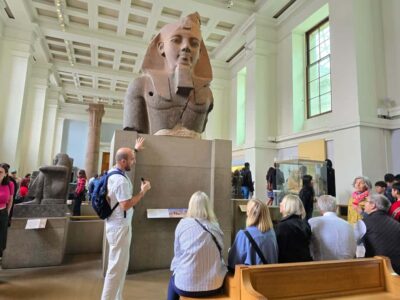
British Museum Guided Tour with Priority Entrance
Read our review →Other lists this tour turns up in